Work

NID Ahmedabad

Helios

A redesign of the immersion water-heating rod that tells you when the water's ready and refuses to heat when it's dry.
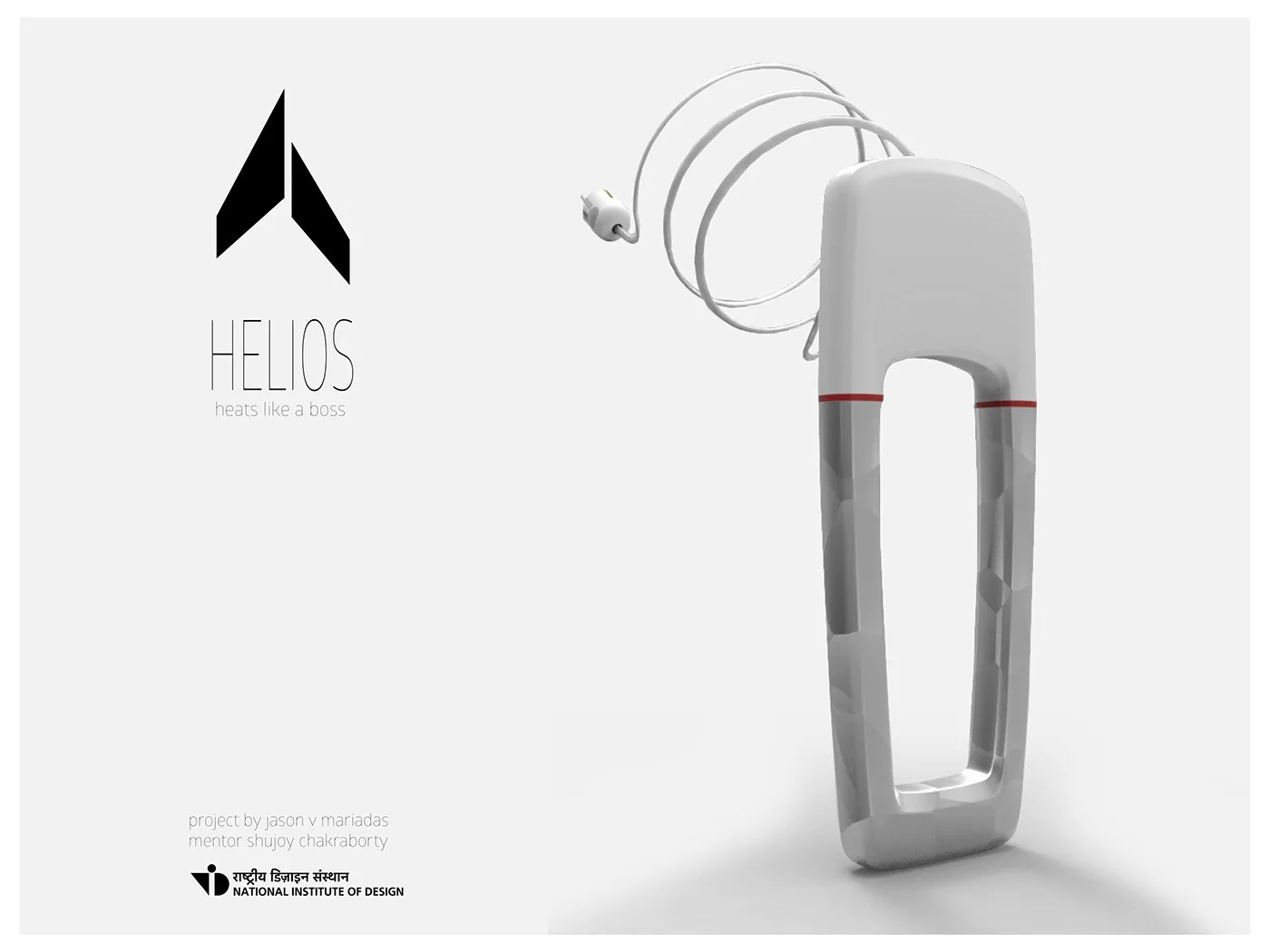
Helios, cover
Role
Industrial design, research → ideation → models → technical resolution
Year
2015

In much of India the immersion rod is how a bucket of bathwater gets hot: a bare heating coil you clip onto the rim, plug in, and wait on. It’s cheap and it works, but it gives no feedback on whether it’s on or how hot the water is, it’s often left plugged in while dry, the metal jacket cracks and scales over time, and a cracked rod in a bucket of water is a real electrocution risk. Helios is an 8-week, technically complex redesign of that rod, to address the problems and threats it poses.

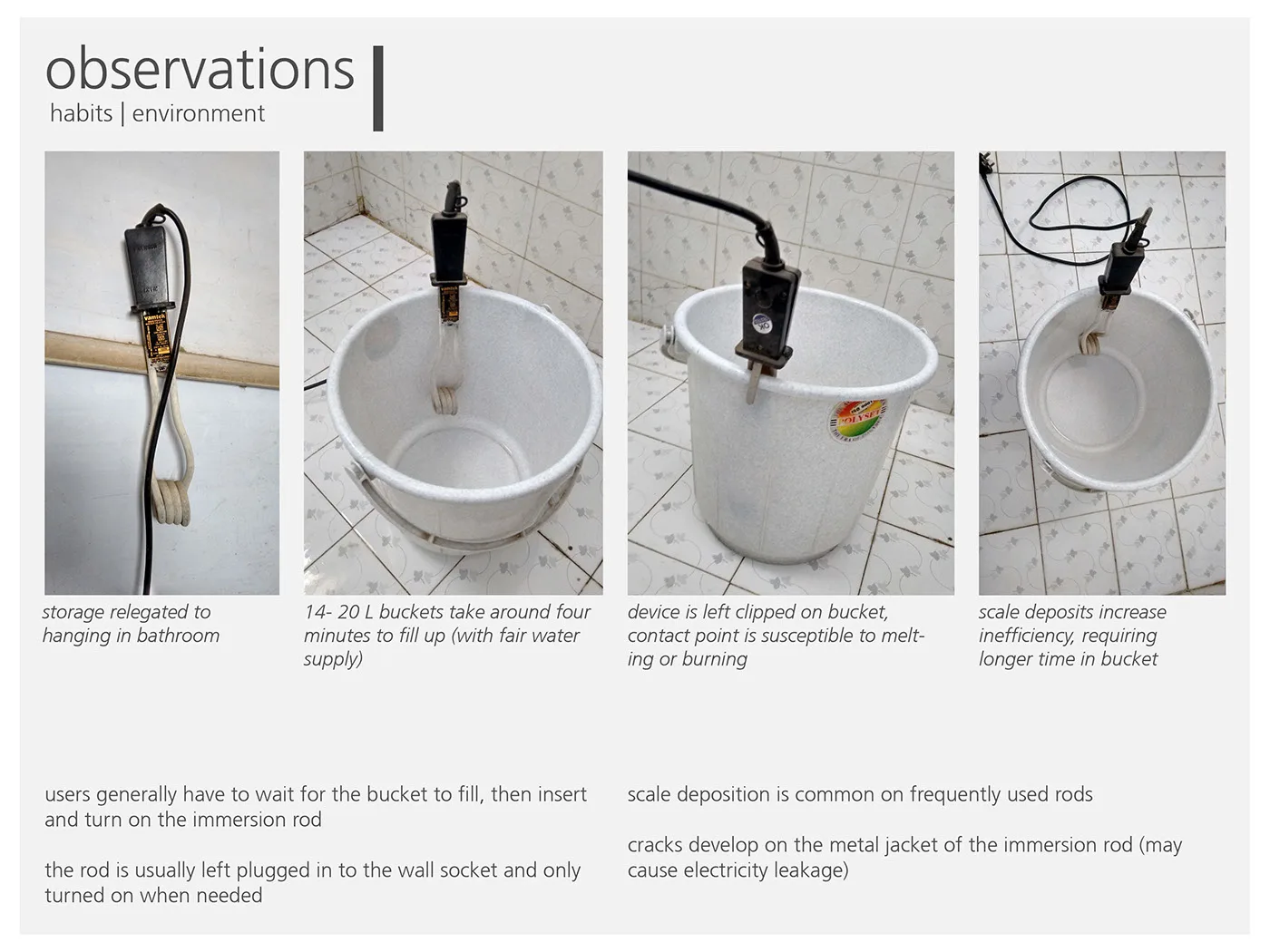
Research covered survey, study and observation. Users ranged from students (who wanted fast heating, automation and good looks) to nuclear families in rented homes (quick, repeated use), and the technical issues were consistent: time to heat, no temperature indicator, no feedback on status or power, and leakage. Watching it used in real bathrooms filled in the rest. The panels below go from those observations to the resolved device.
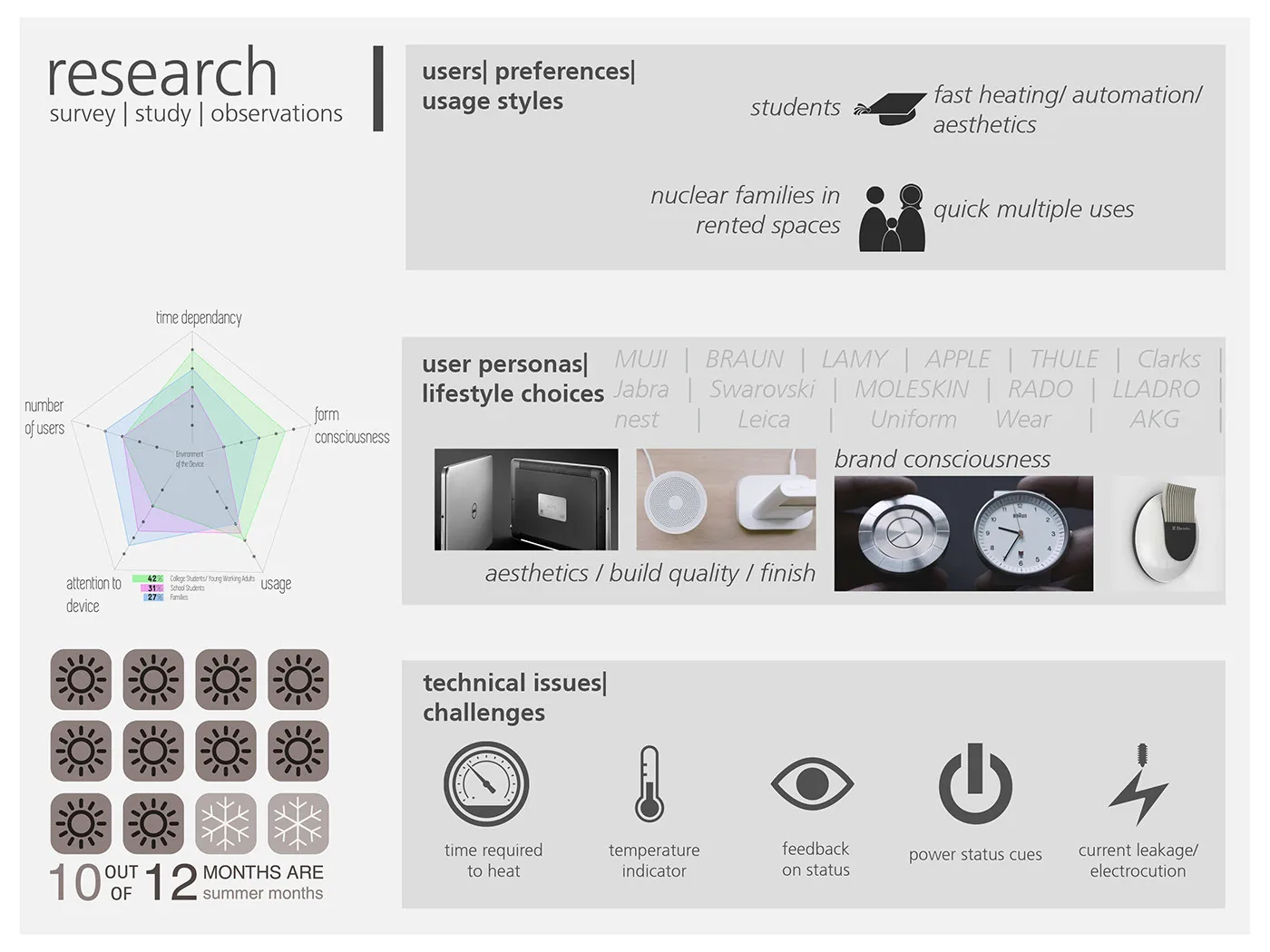
Research: user groups and their priorities, brand and lifestyle references, and the technical challenges, heating time, temperature, status feedback, power cues and current leakage.

Observations: rods stored hanging in the bathroom, 14-20 L buckets taking about four minutes to fill, the device left clipped on with a contact point prone to melting, and scale deposits slowing it down.

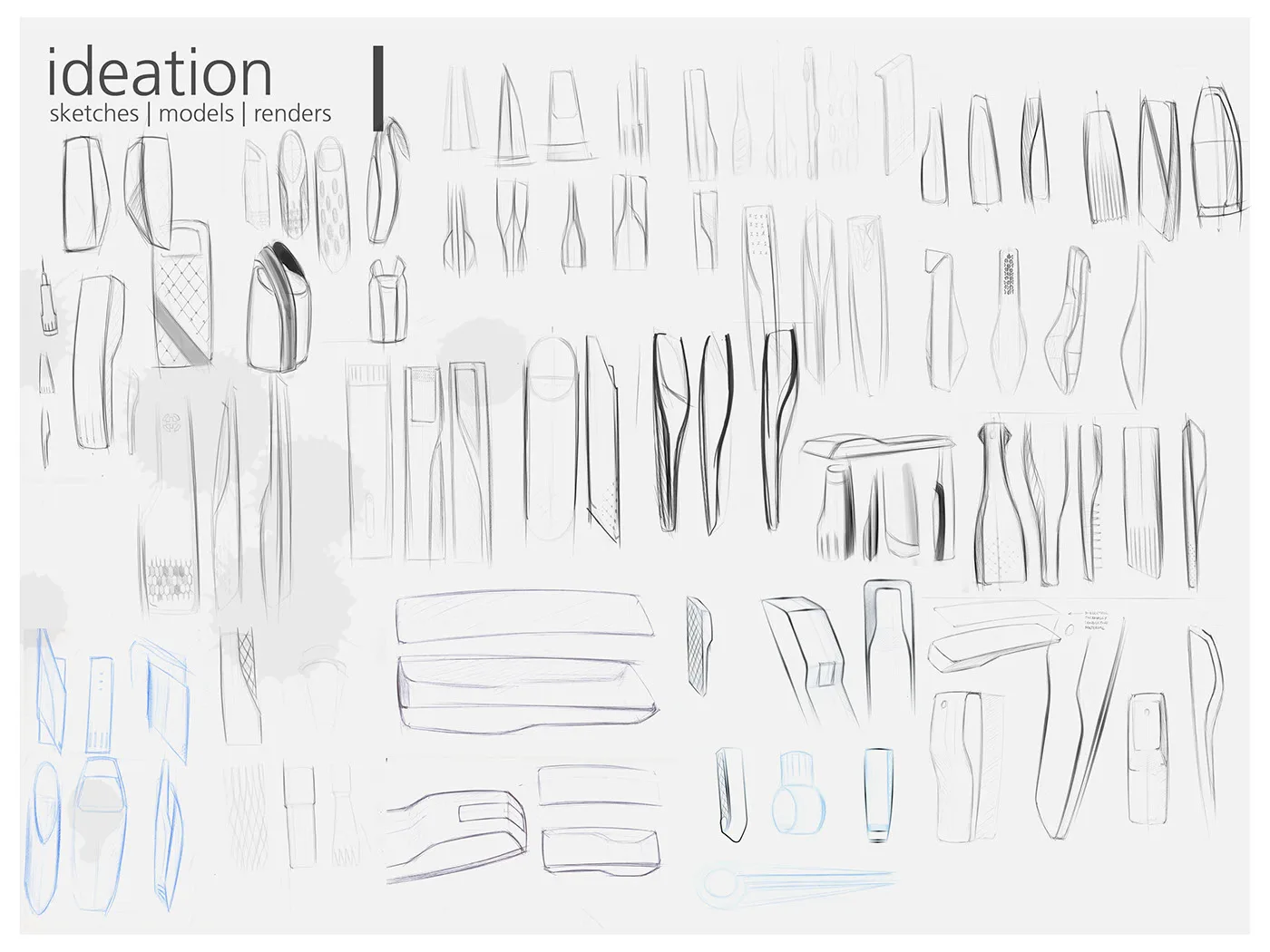
Ideation: sketches exploring the form.

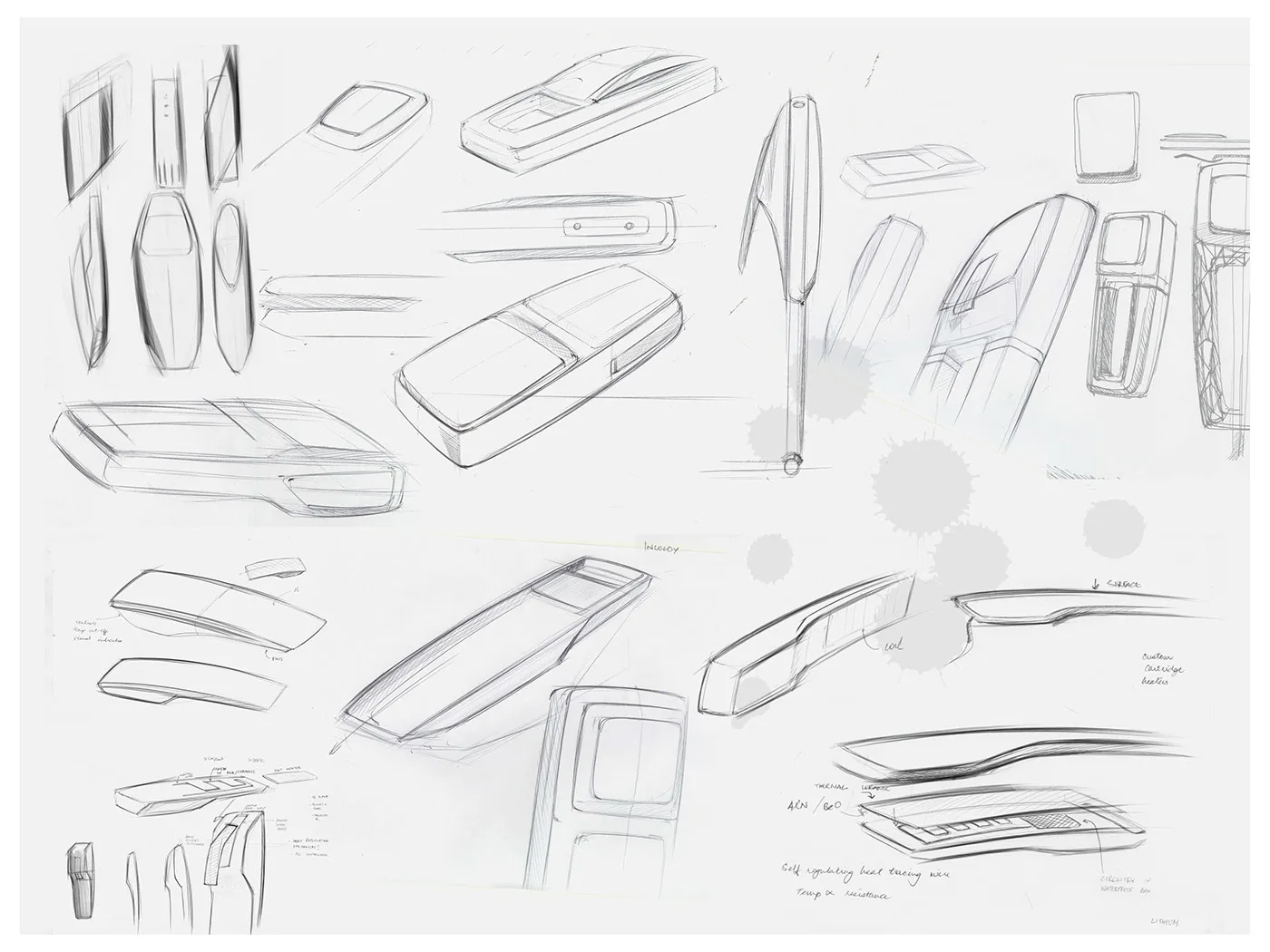
More ideation, working toward a clip-on form with a single loop.

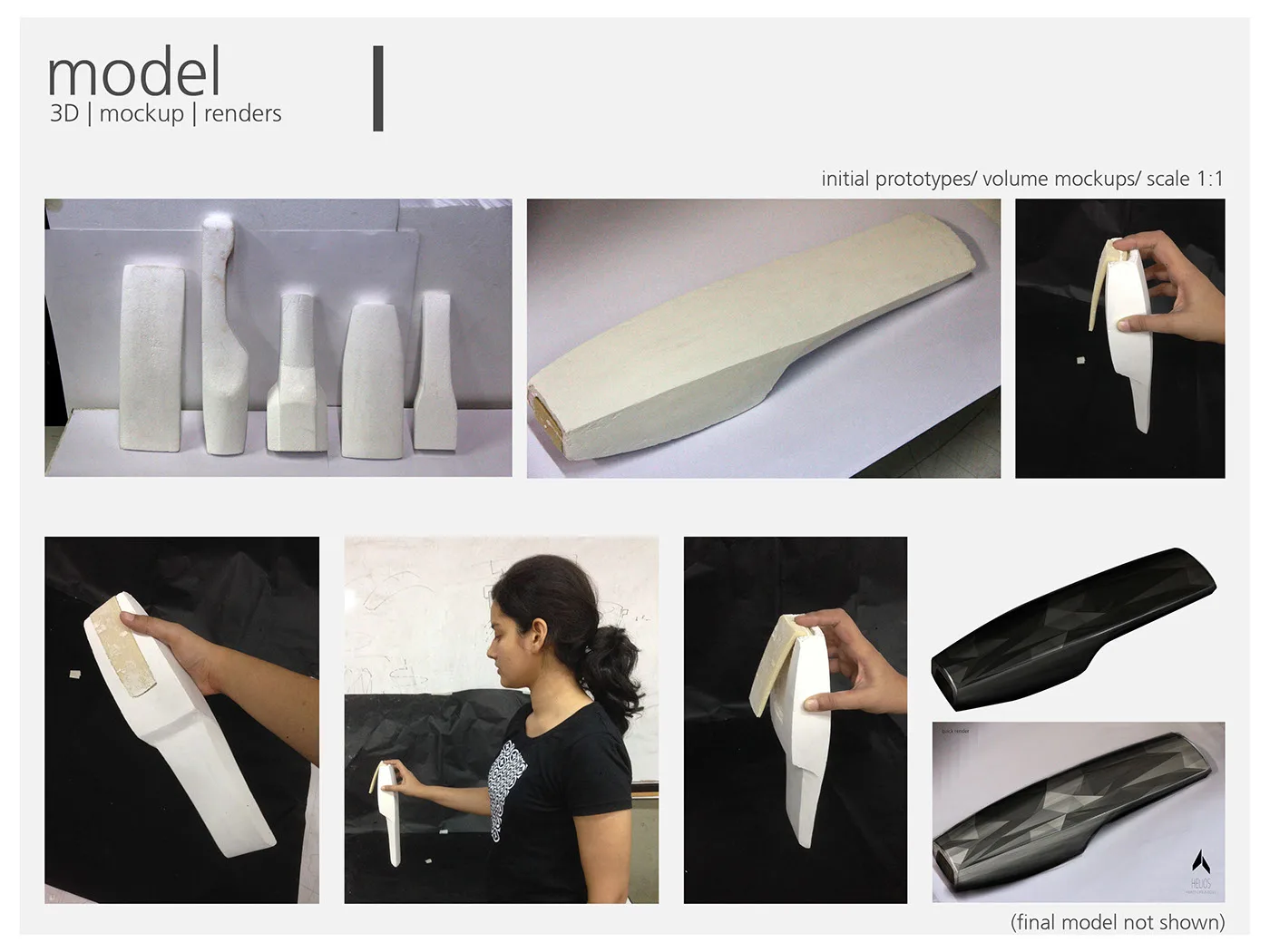
Models: 1:1 volume mock-ups and early prototypes, tested in the hand.

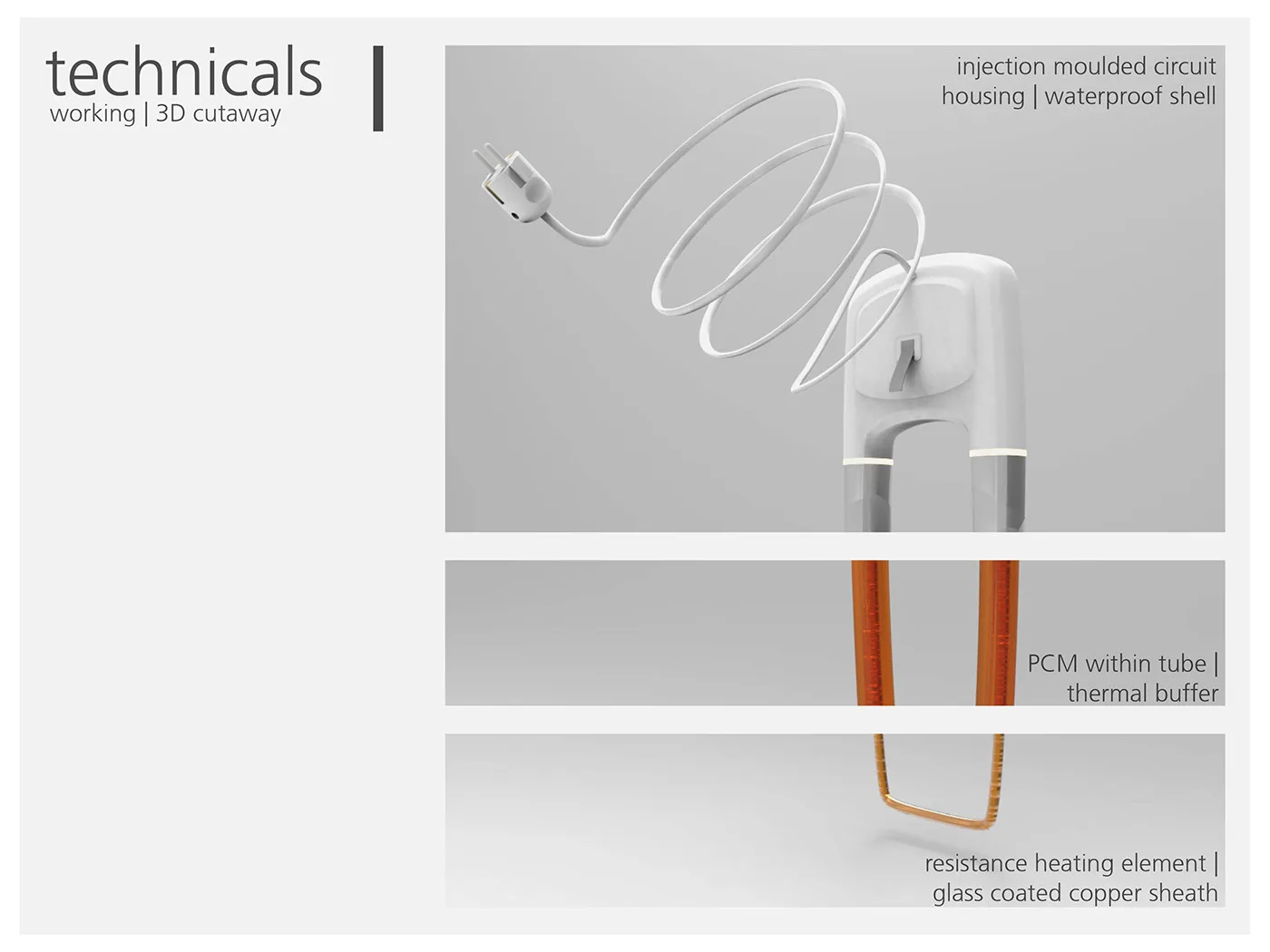
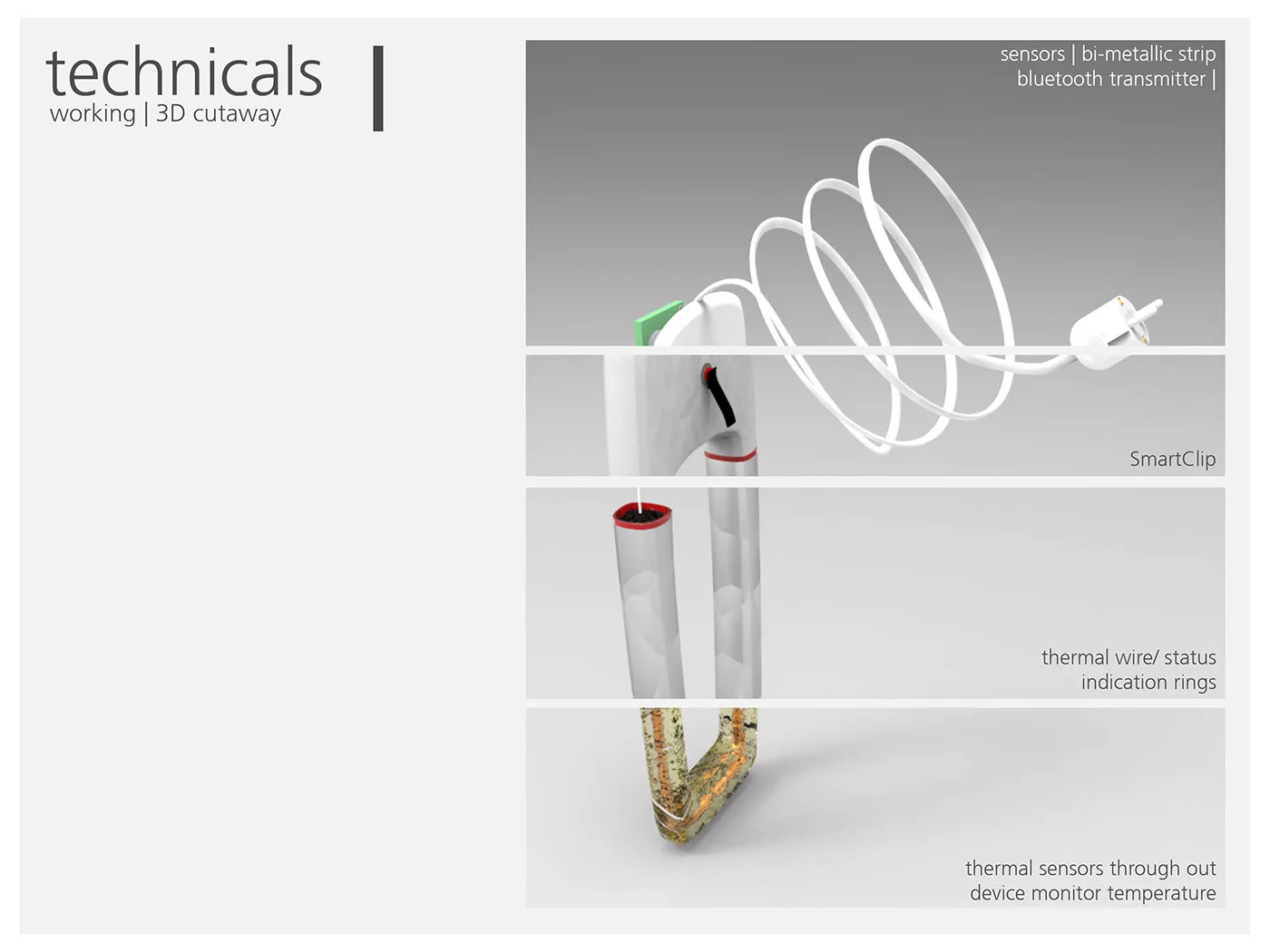
Technicals: an injection-moulded, waterproof circuit housing, a phase-change material inside the tube as a thermal buffer, and a resistance heating element in a glass-coated copper sheath.

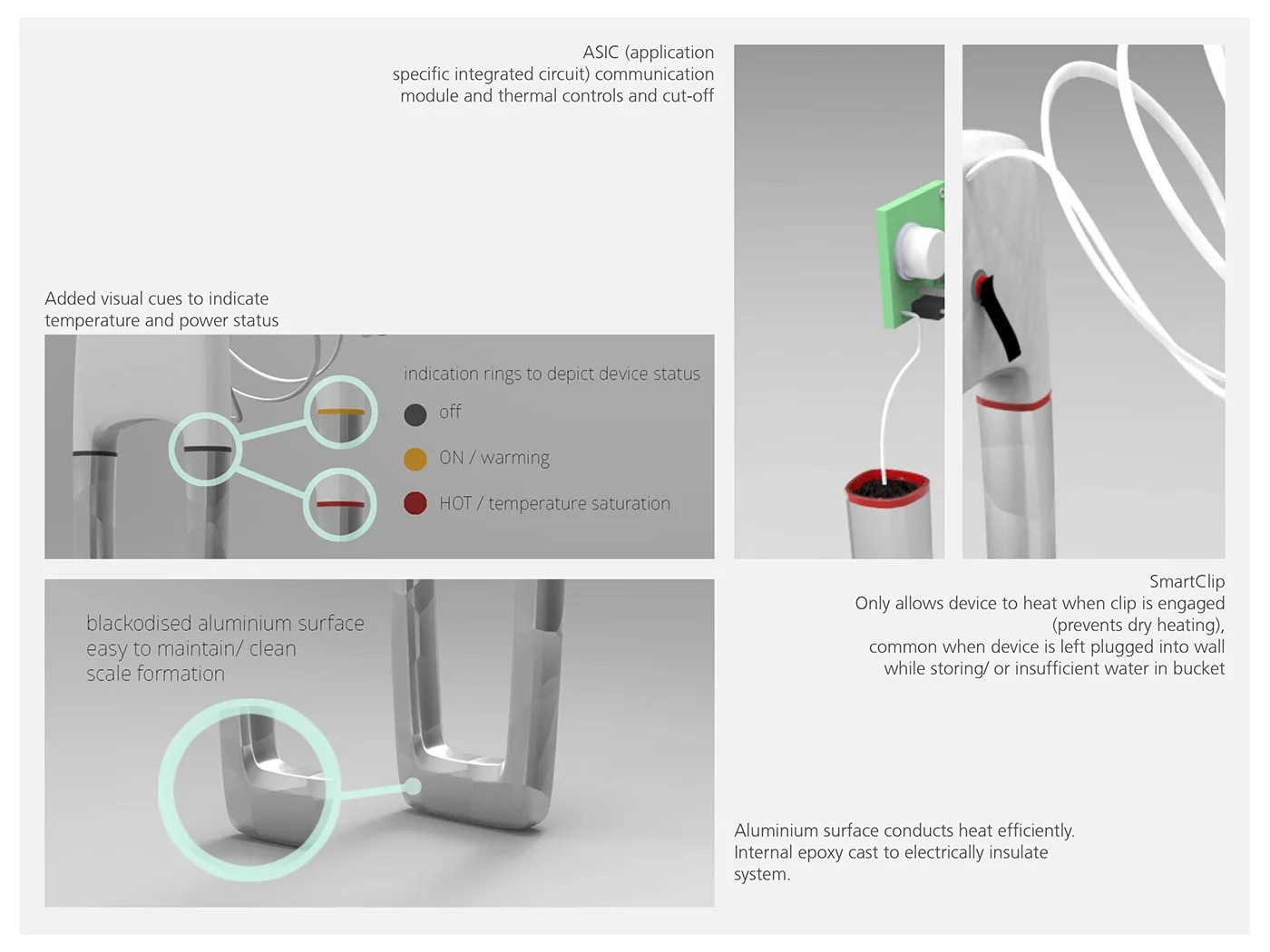
Inside: sensors, a bi-metallic strip and a Bluetooth transmitter, the SmartClip, thermal-wire status rings, and temperature sensors along the length of the device.

Status rings read off, on/warming, and hot. The SmartClip only allows heating when it's clipped on, preventing dry heating. A black-anodized aluminum surface resists scale and conducts heat well, with an epoxy core for electrical insulation.


Designed at the National Institute of Design, Ahmedabad. See the full project on Behance →

← Back to work