
 NID Ahmedabad · Blind People's Association
Pebble
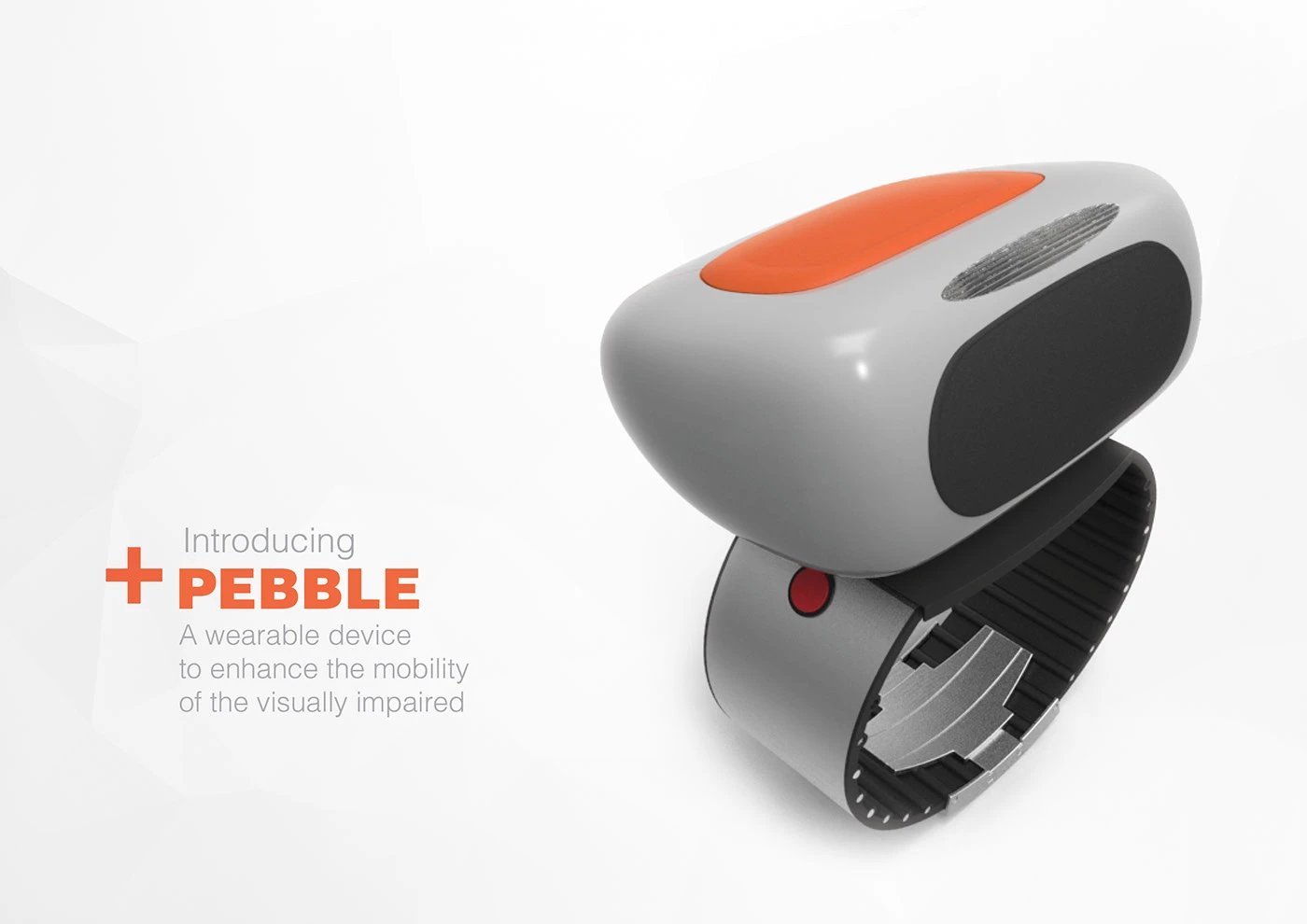
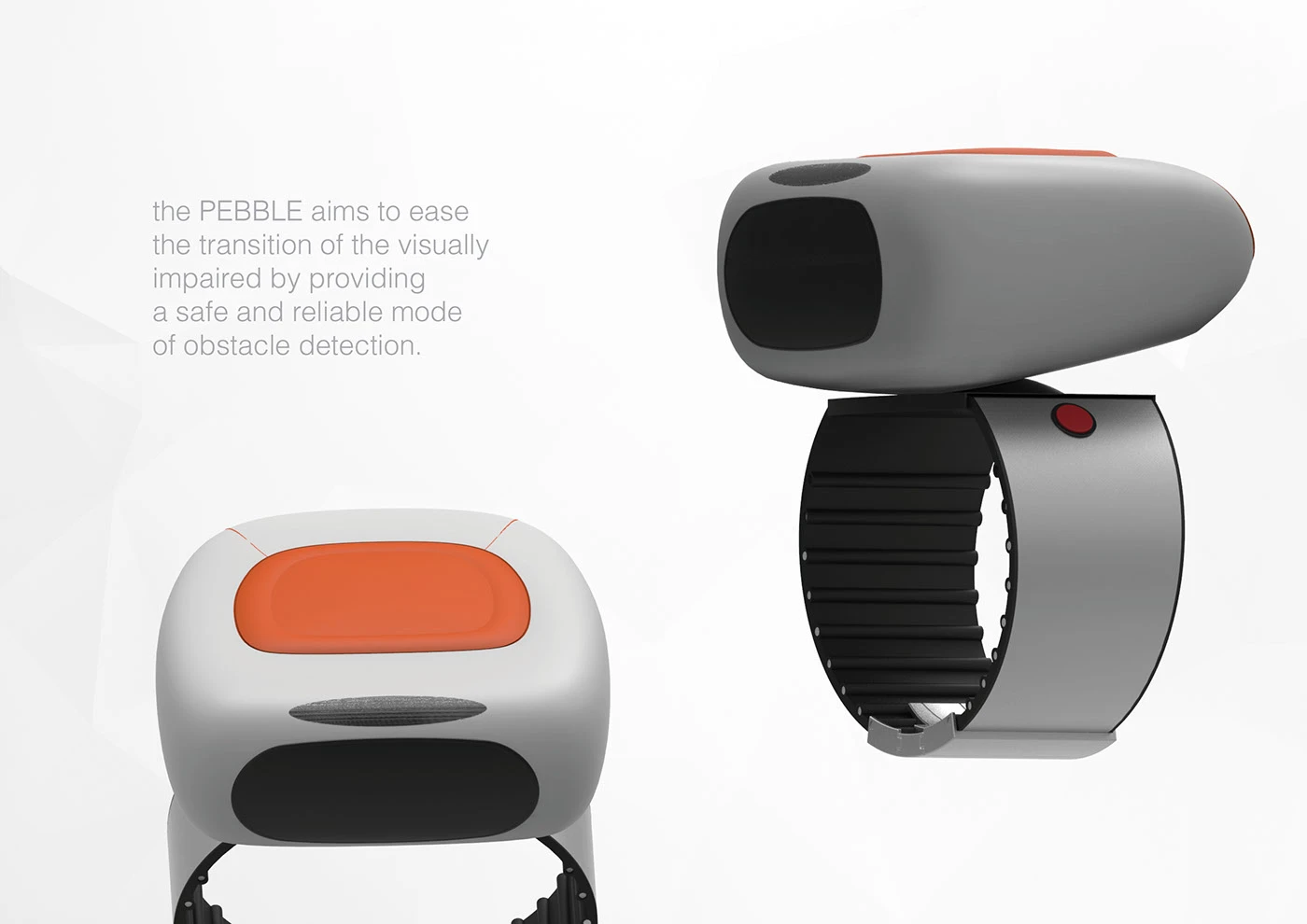
A wearable that senses the overhead and torso-level obstructions a white cane sweep can't, extending independent mobility for the visually impaired.
The white cane is a brilliant, century-old instrument, but it reads the ground, not the air. A low branch, a parked truck’s wing mirror, an open cabinet door at head height: the cane sweep never finds them. Pebble is a wearable that extends a visually impaired person’s sense of their surroundings to exactly those obstructions the cane misses.
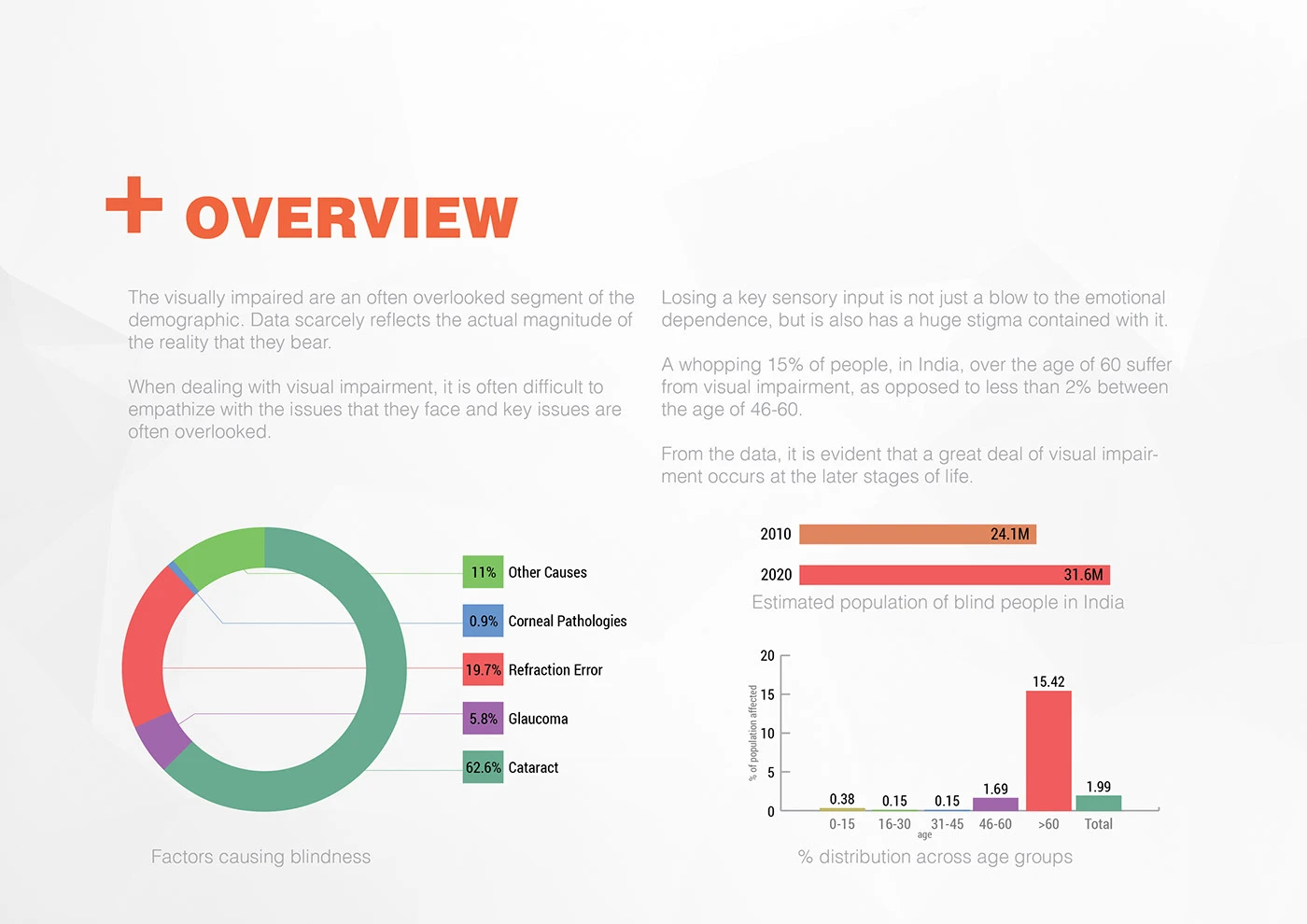
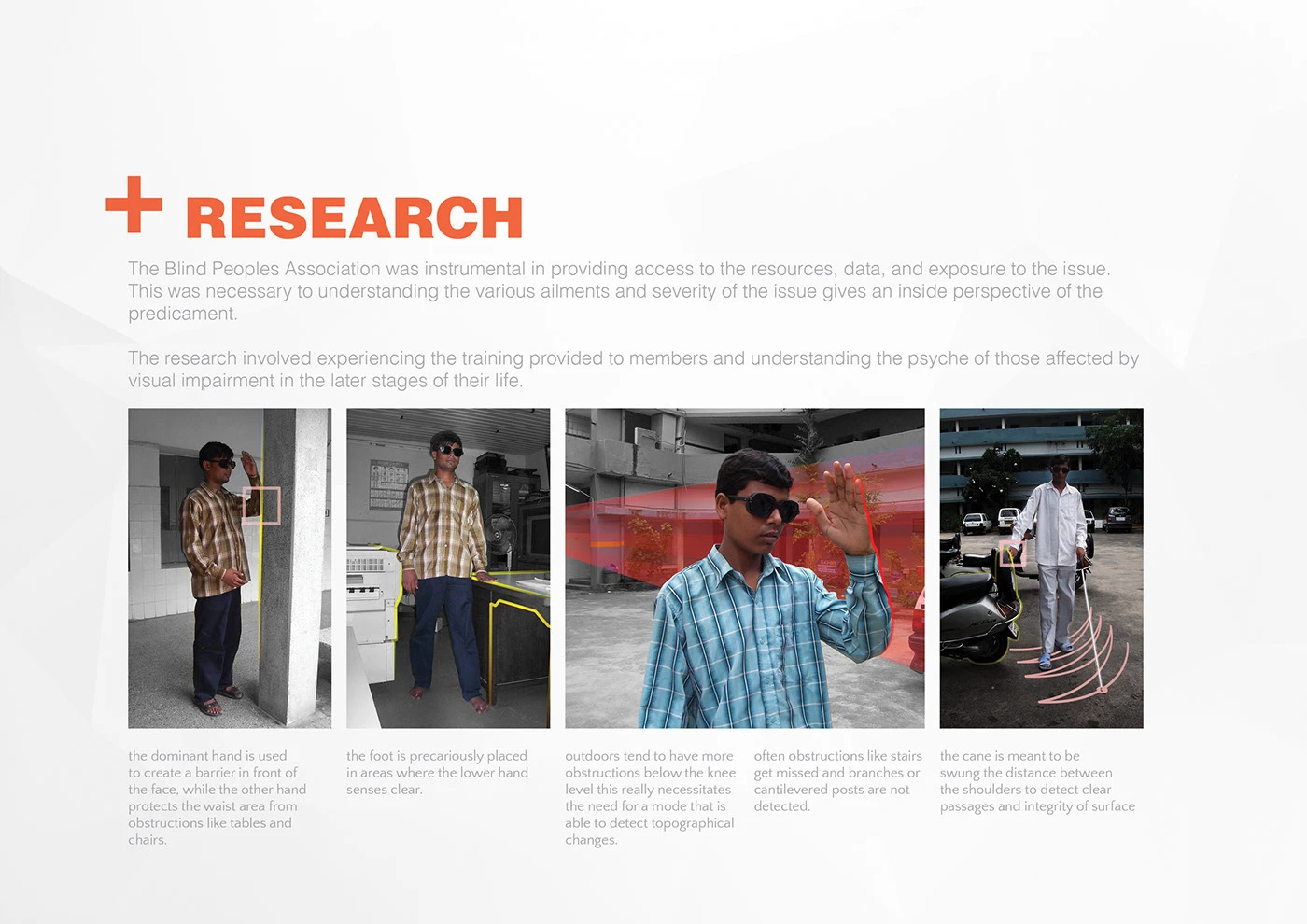
It started in the field, observing cane users with the Blind People’s Association, and was grounded in how visual impairment actually distributes across a population, not assumptions about it. The panels below walk that arc: the problem and its real scale, what watching cane users in the world surfaced, and the form and interaction that came out of it.
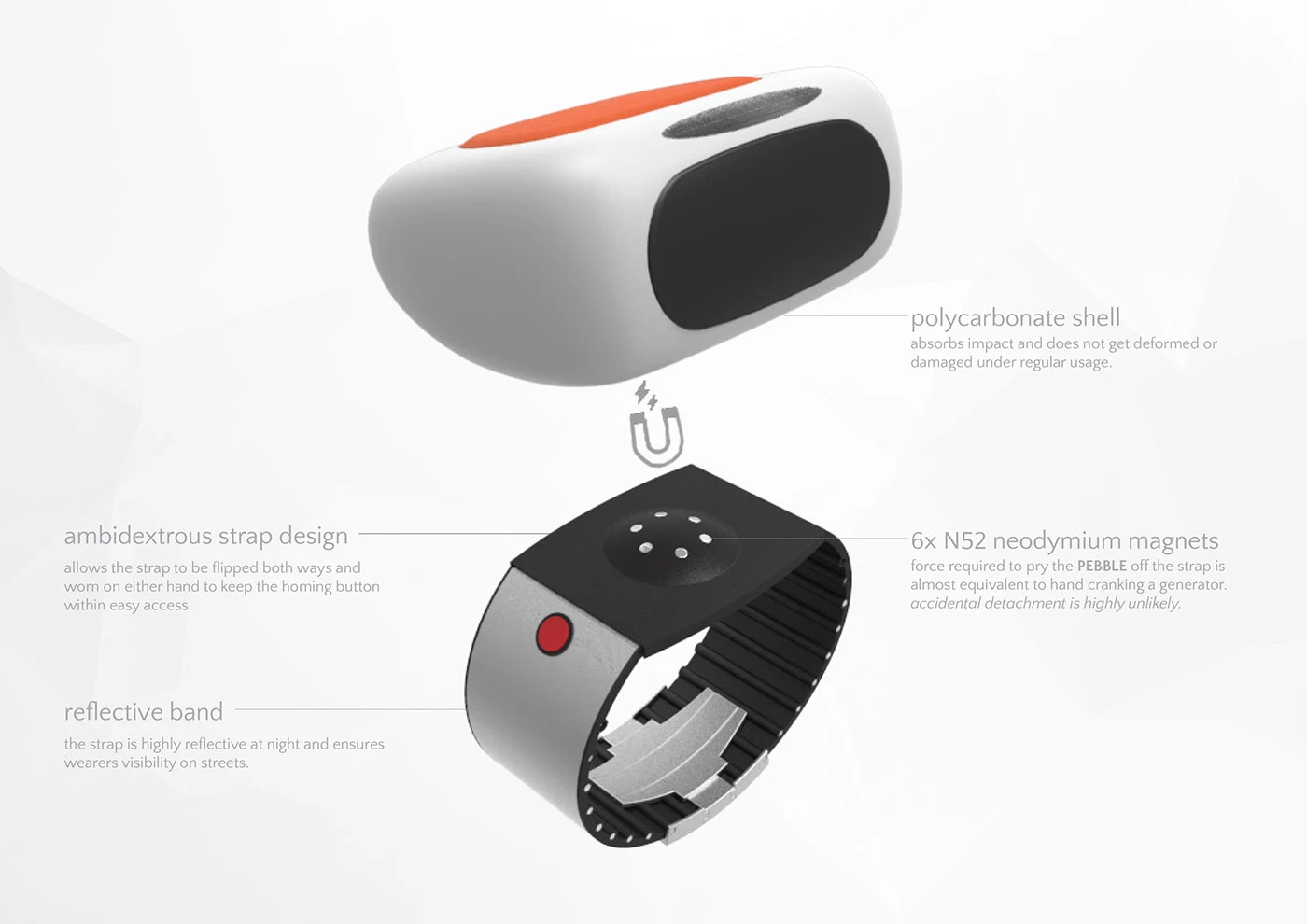
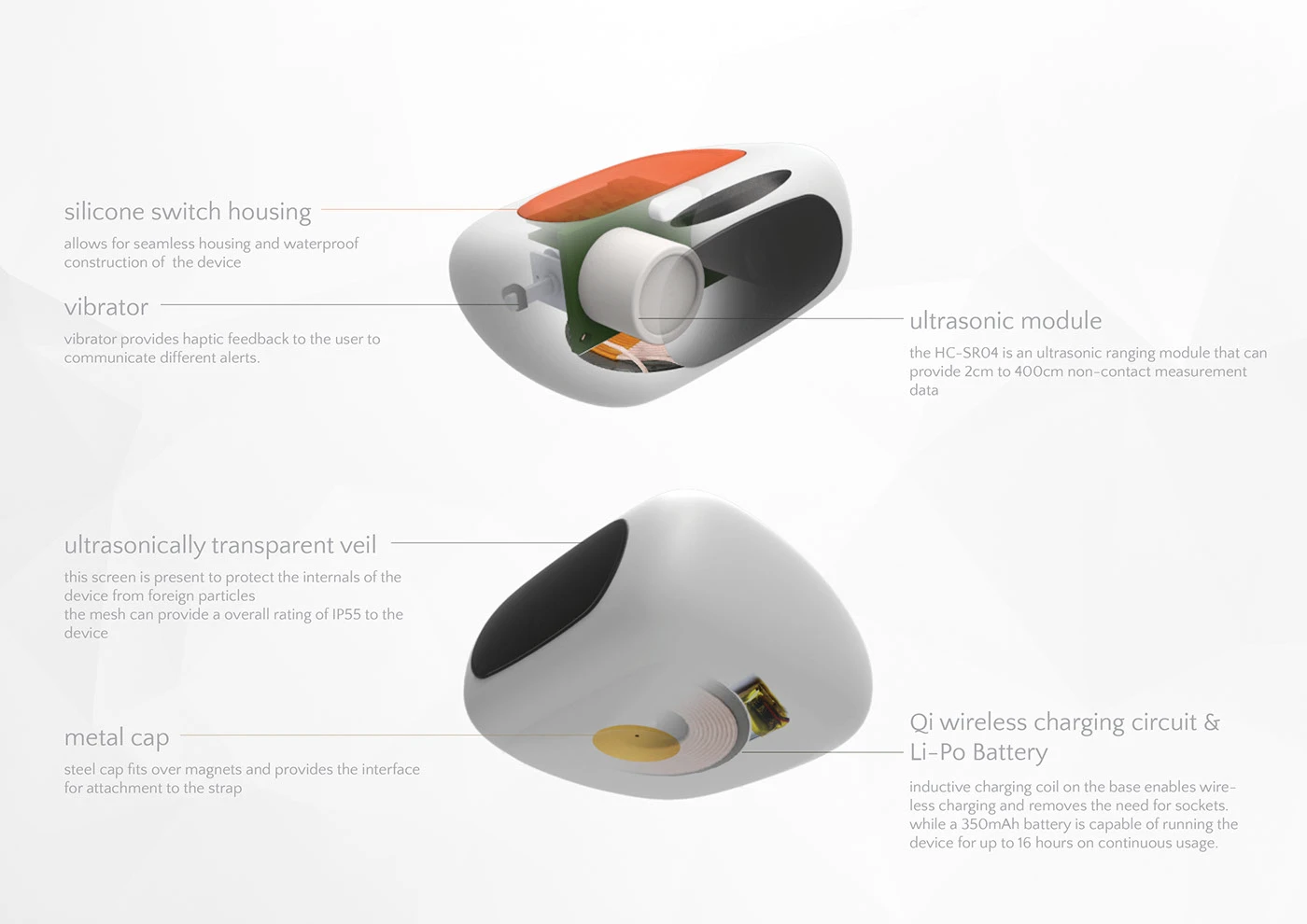
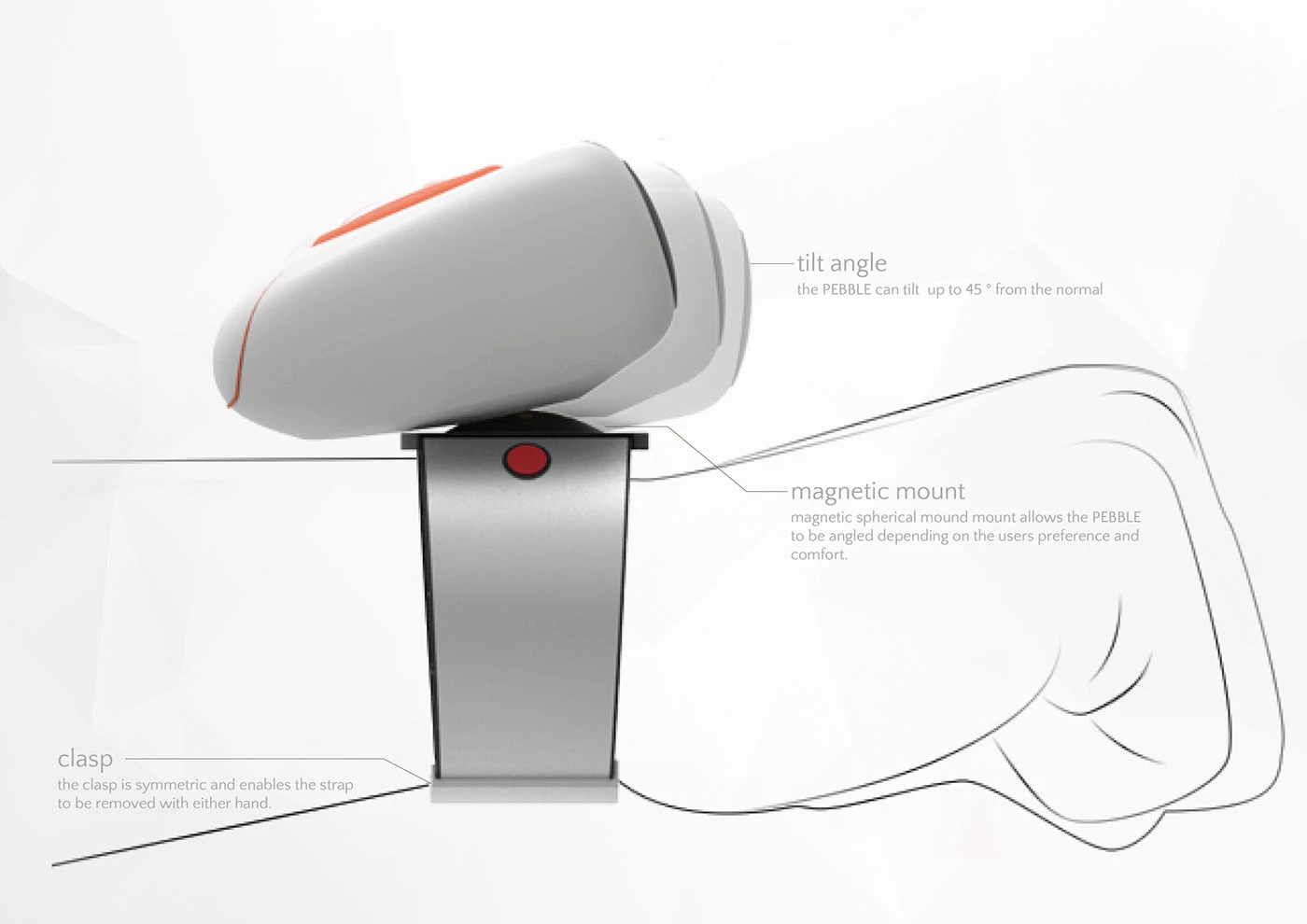
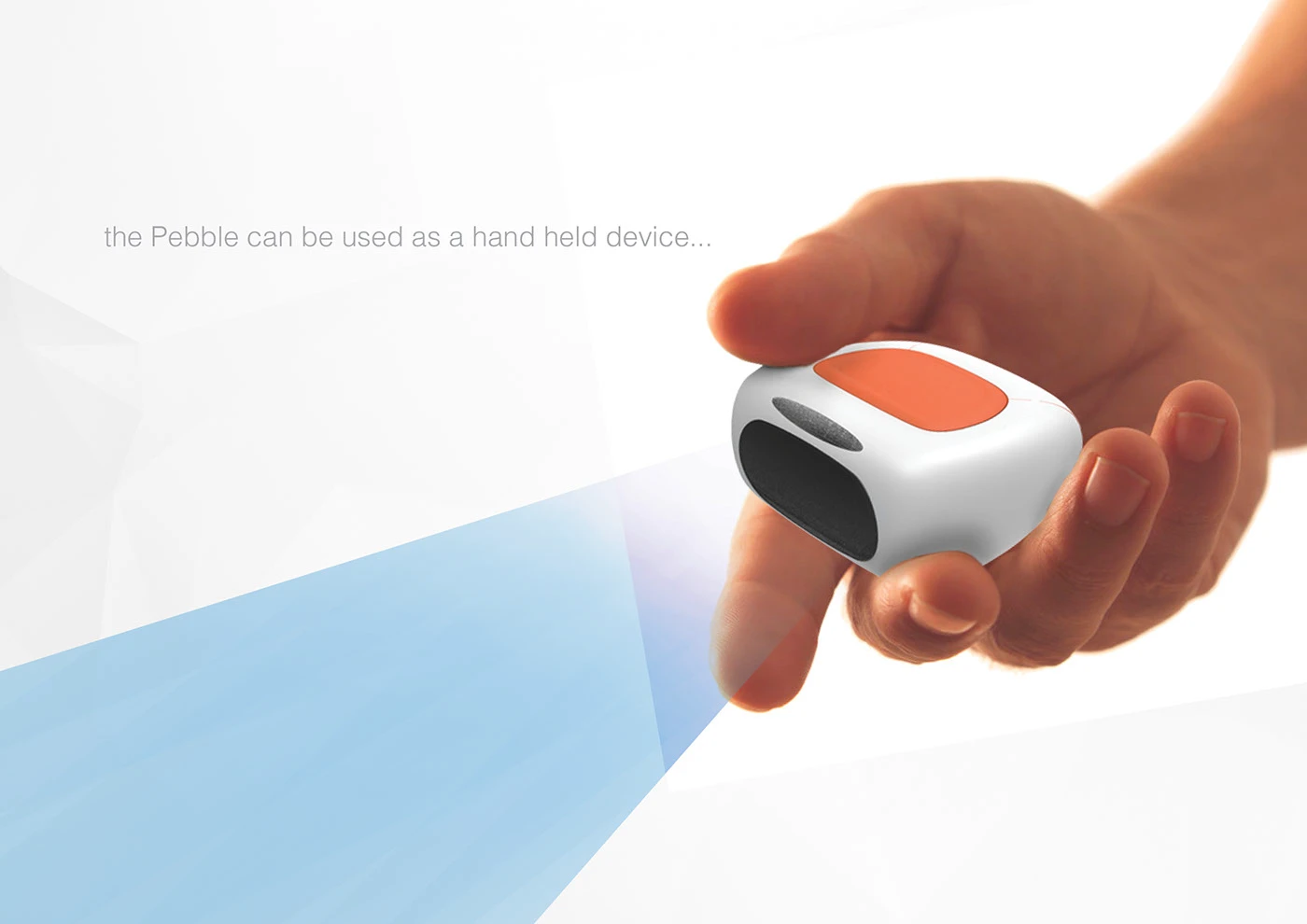
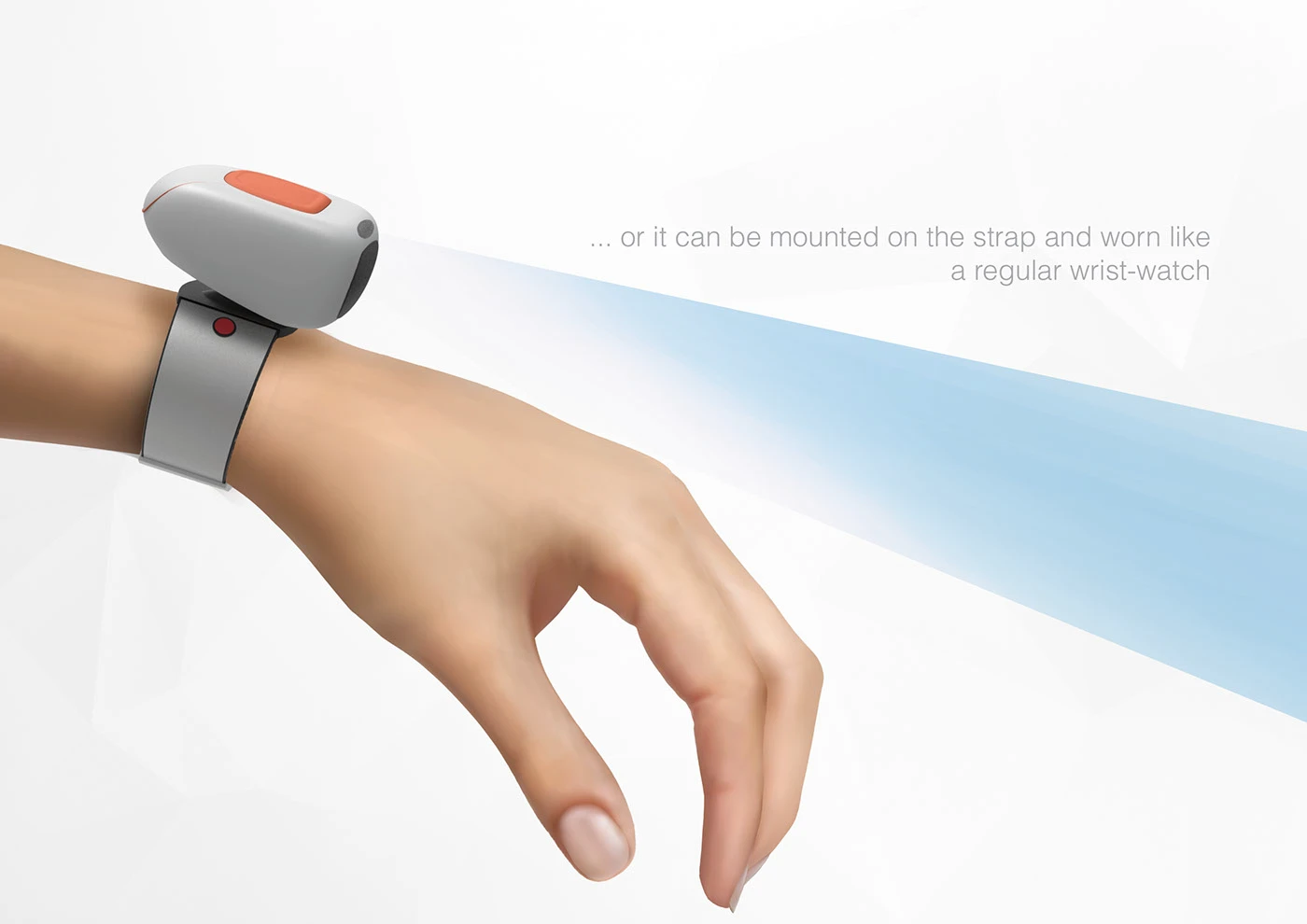
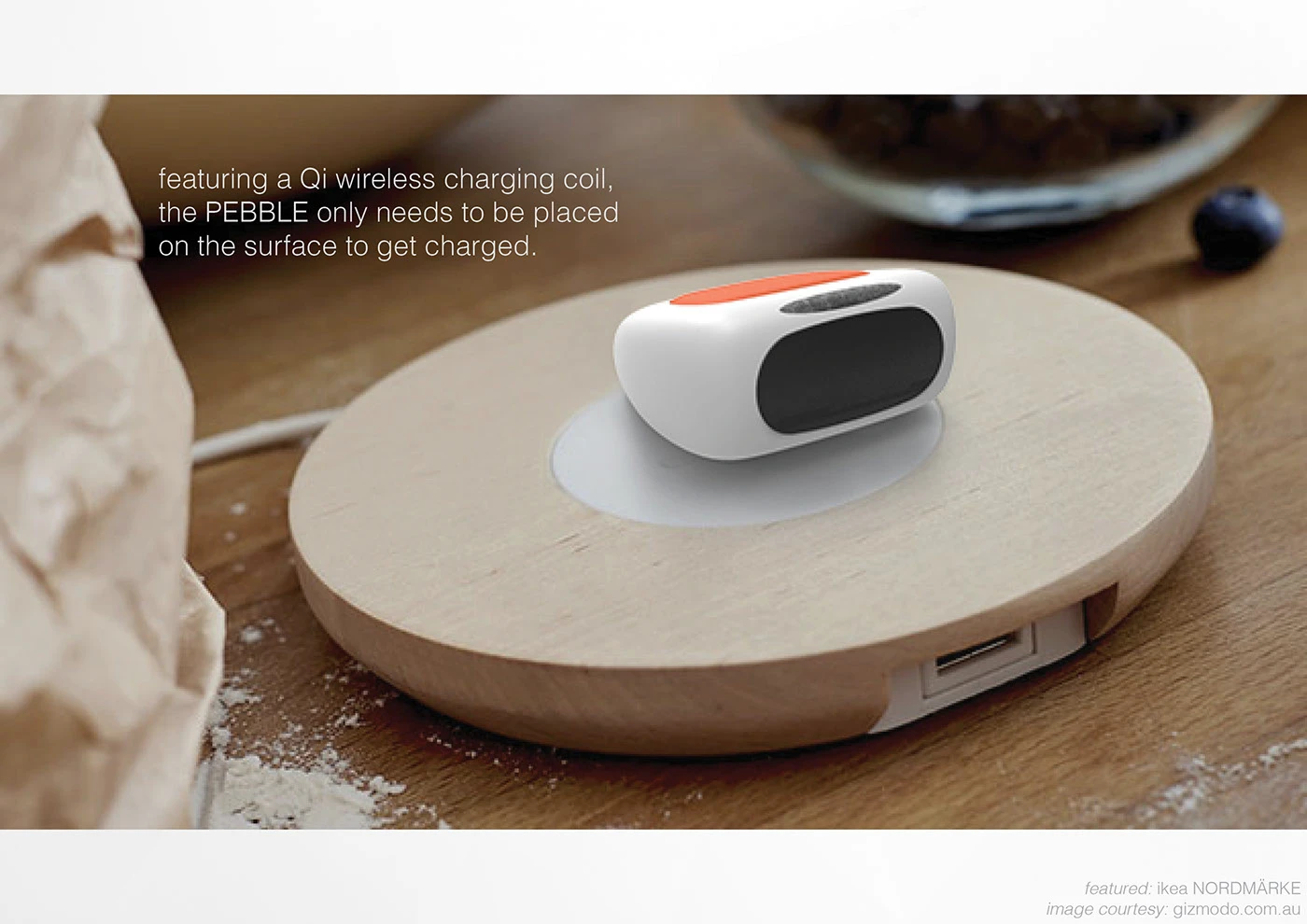
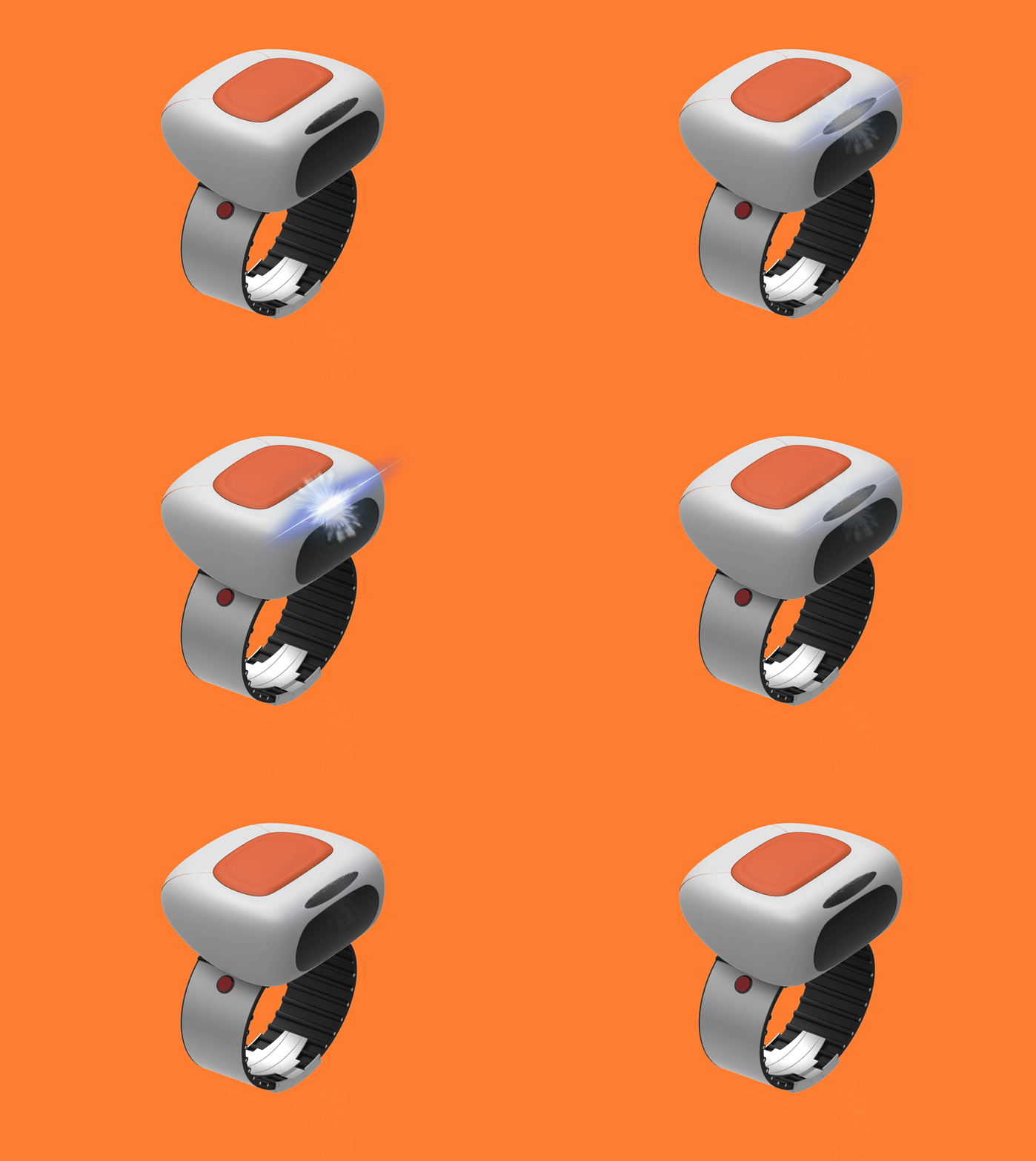
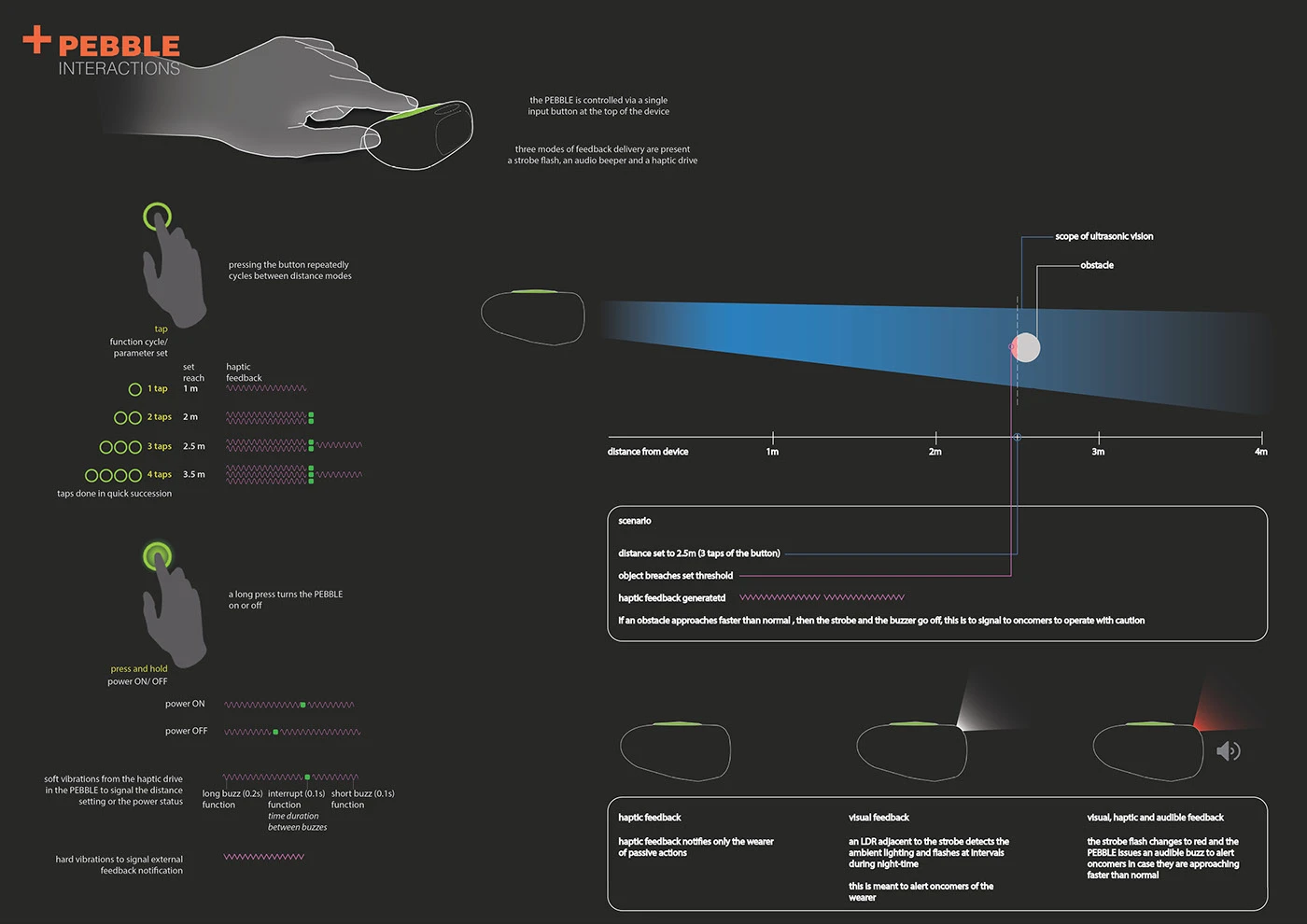
Recognized with a NASSCOM Design Award (2018). Designed at the National Institute of Design, Ahmedabad, in collaboration with the Blind People’s Association. See the full project on Behance →
Design decisions
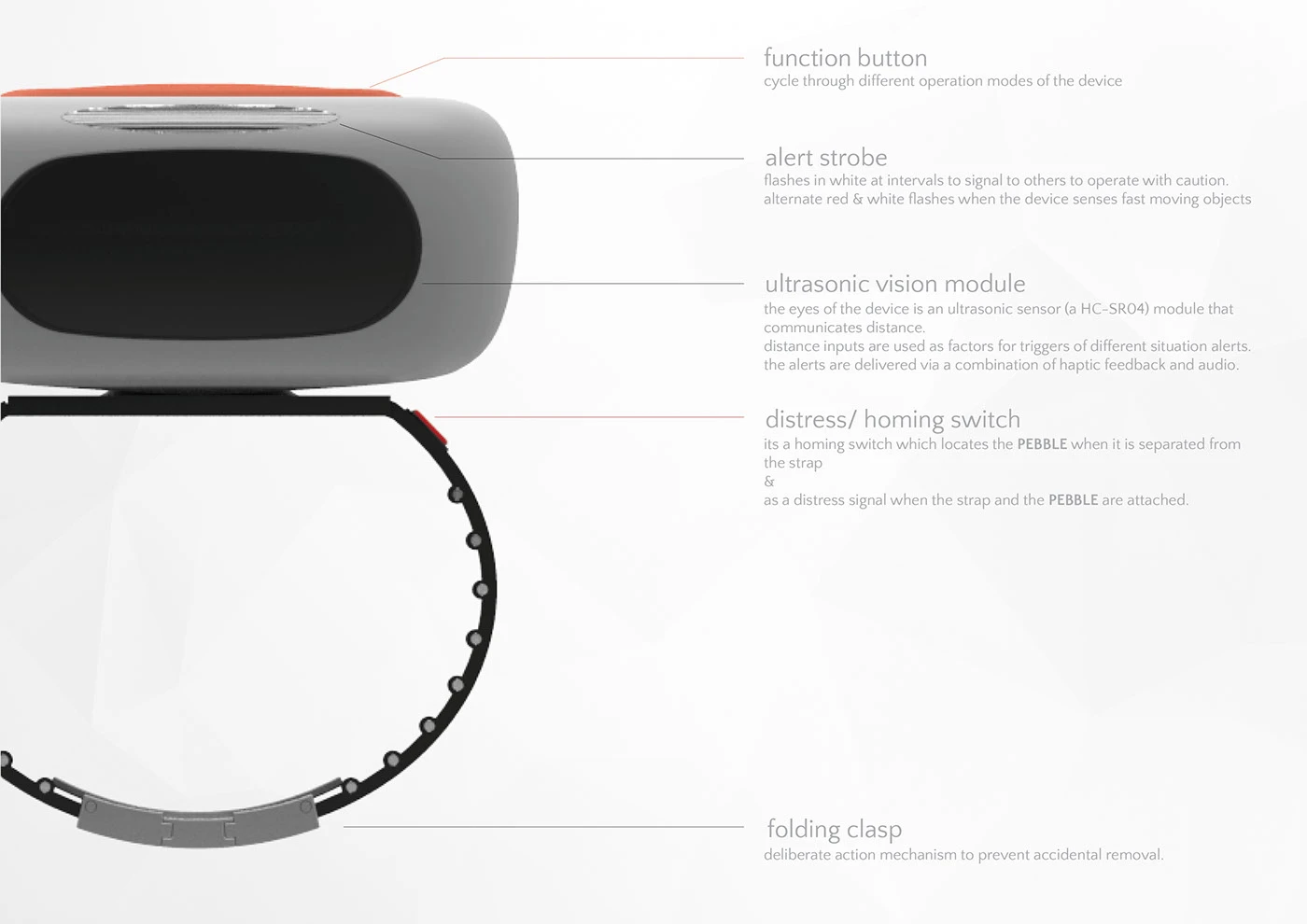
Feedback through touch, never sound. The obvious way to signal an approaching obstacle is a beep. But a cane user’s hearing is their primary sense of the world, traffic, footsteps, the echo off a wall. Adding an audio channel would compete with the one sense the device most needs to protect. The call was to make Pebble speak entirely through haptics, with intensity scaled to proximity, so awareness arrives without ever crowding hearing. The tradeoff: haptics carry less precise information than a tone could, so the form and wear position had to do more work to make a single, felt signal legible.
Augment the cane, don’t try to replace it. It would have been a bolder pitch to “replace the white cane.” I chose not to. The cane is a century-refined instrument that reads the ground better than any sensor I could ship, and asking someone to abandon a trusted tool is a heavy adoption cost. Pebble was scoped to cover only the envelope the cane can’t, torso- and head-height obstructions, and to sit alongside existing mobility habits rather than overturn them. The tradeoff was a narrower, more modest product story in exchange for something people could actually trust and adopt.
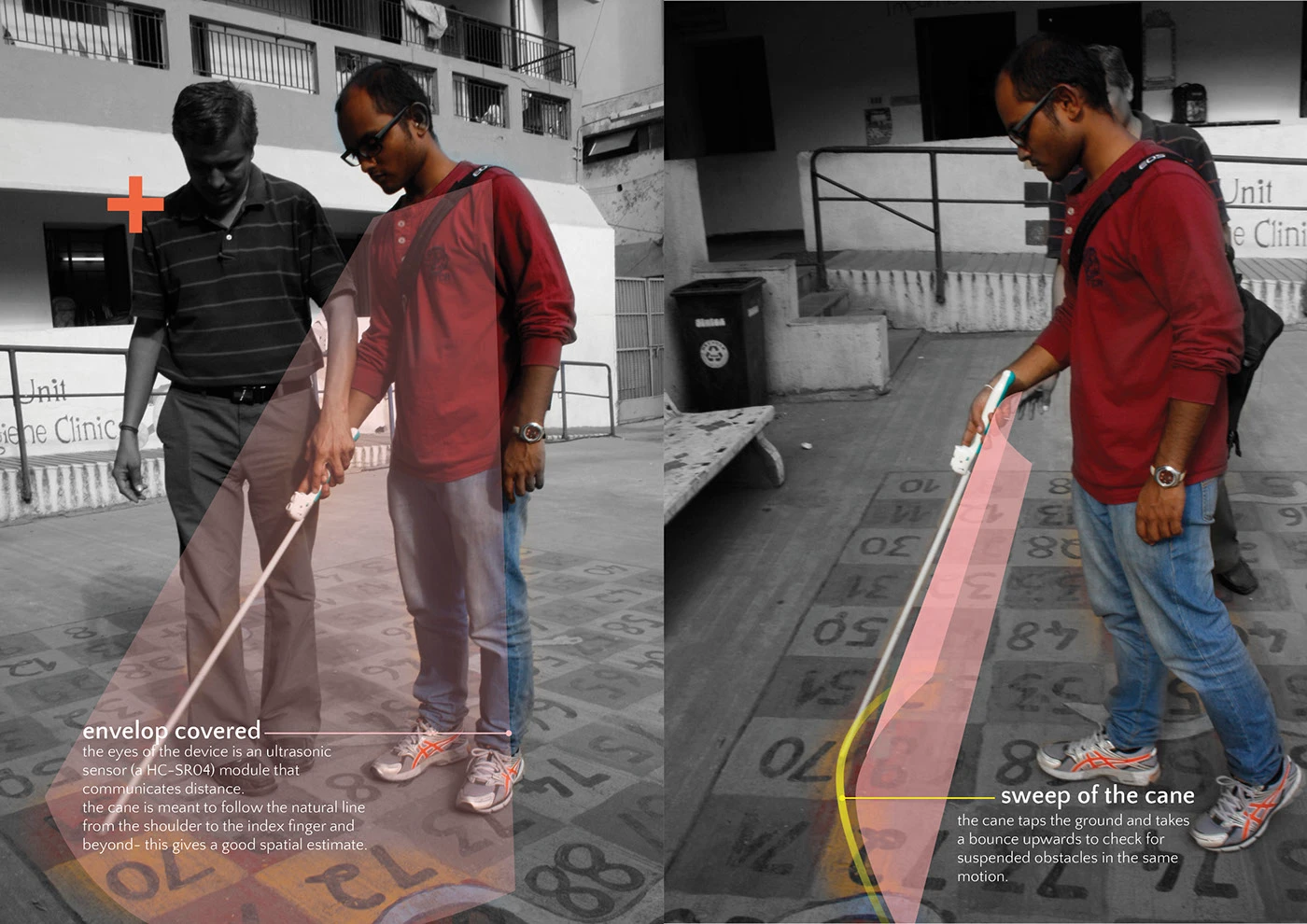
Grounded in field reality, not assumptions. The wear position and form came out of observing cane users with the Blind People’s Association and looking at how visual impairment actually distributes across a population, not a designer’s mental model of blindness. That’s what pointed the sensing at the specific “cone of awareness” a sweep leaves uncovered, and kept the device from solving a problem users didn’t have.