Work

IIT Bombay · SoundRex

PODS

A wrist-worn speaker-and-light wearable that turns a stadium crowd into a distributed sound system, even audio everywhere, and every attendee a controllable pixel of light.
PODS, cover
Role
Industrial & interaction design, research → form → CMF → interaction, end-to-end
Year
2016
Tools
Rhino, Grasshopper, Keyshot, Illustrator, Photoshop

A concert’s line-array PA broadcasts from a handful of fixed towers, so the sound has sweet spots and dry zones, and the crowd at the back hears a thinner, later show than the crowd up front. PODS flips that model: instead of a few loud sources, it puts a small speaker on every wrist, so the audience itself becomes a dense, even, body-worn sound field. Each unit also carries a light, and because the system knows where every device is, the whole crowd becomes a controllable canvas the artist can play.

It was built for SoundRex, an early-stage hardware startup, at IIT-Bombay, which meant designing the product and the framework around it: the business of distributing, charging, tracking and reclaiming tens of thousands of single-event devices. I owned the design end-to-end, research and stakeholder mapping, the body-location and ergonomics studies, the form and CMF, the internal architecture and DFM, and the charging/logistics interaction model.

The panels below walk that arc: the problem and the bet, the research that grounded it, the studies that fixed where and how it’s worn, the form and internals that came out of it, and the device finally in use in a crowd.
The pitch: dynamic, immersive, epic surround sound, over a lit-up festival crowd.

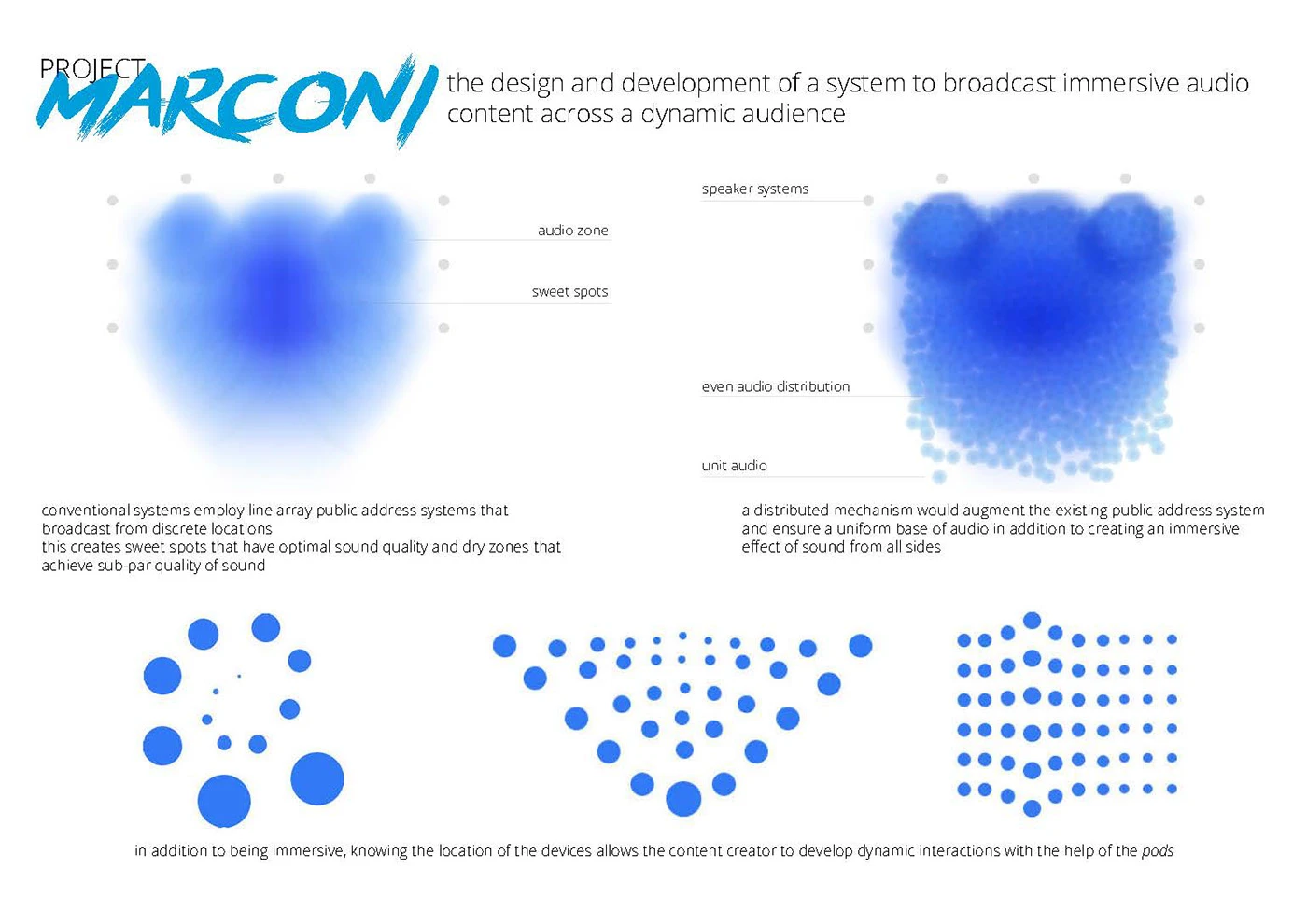
Project Marconi's brief in one page, a wrist-worn speaker-and-light wearable, called Pods, built with SoundRex at IIT-Bombay.

The reframe (Project Marconi): conventional PA systems leave sweet spots and dry zones, a distributed, body-worn mechanism augments the PA to deliver an even, immersive base of audio from every direction.

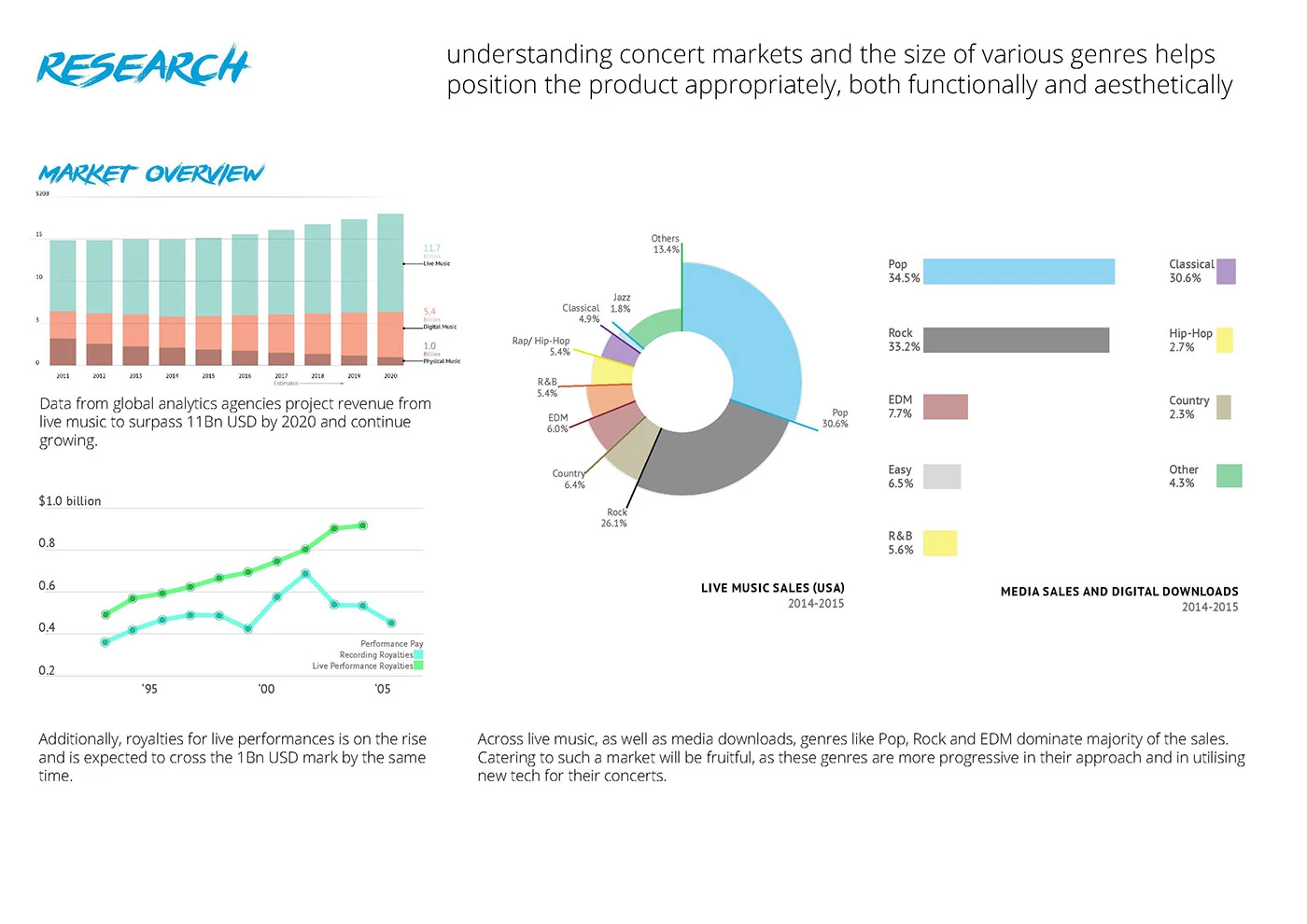
Research: sizing the live-music market and its genres, to position the product functionally and aesthetically against where the money and the early adopters are.

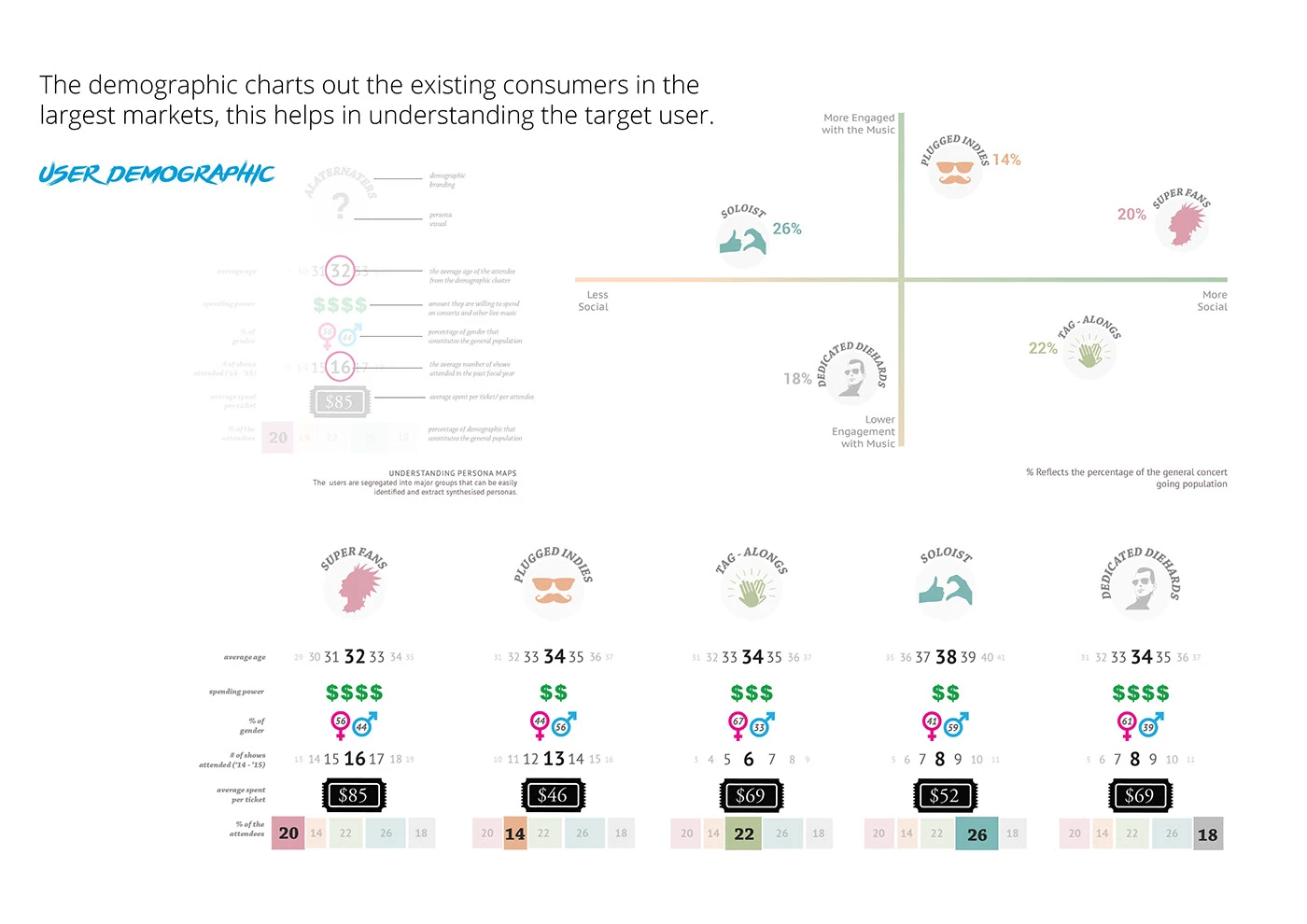
User demographic mapping, five concert-goer personas scored on spending power, social engagement and ticket spend, to see who the product was really designing for.

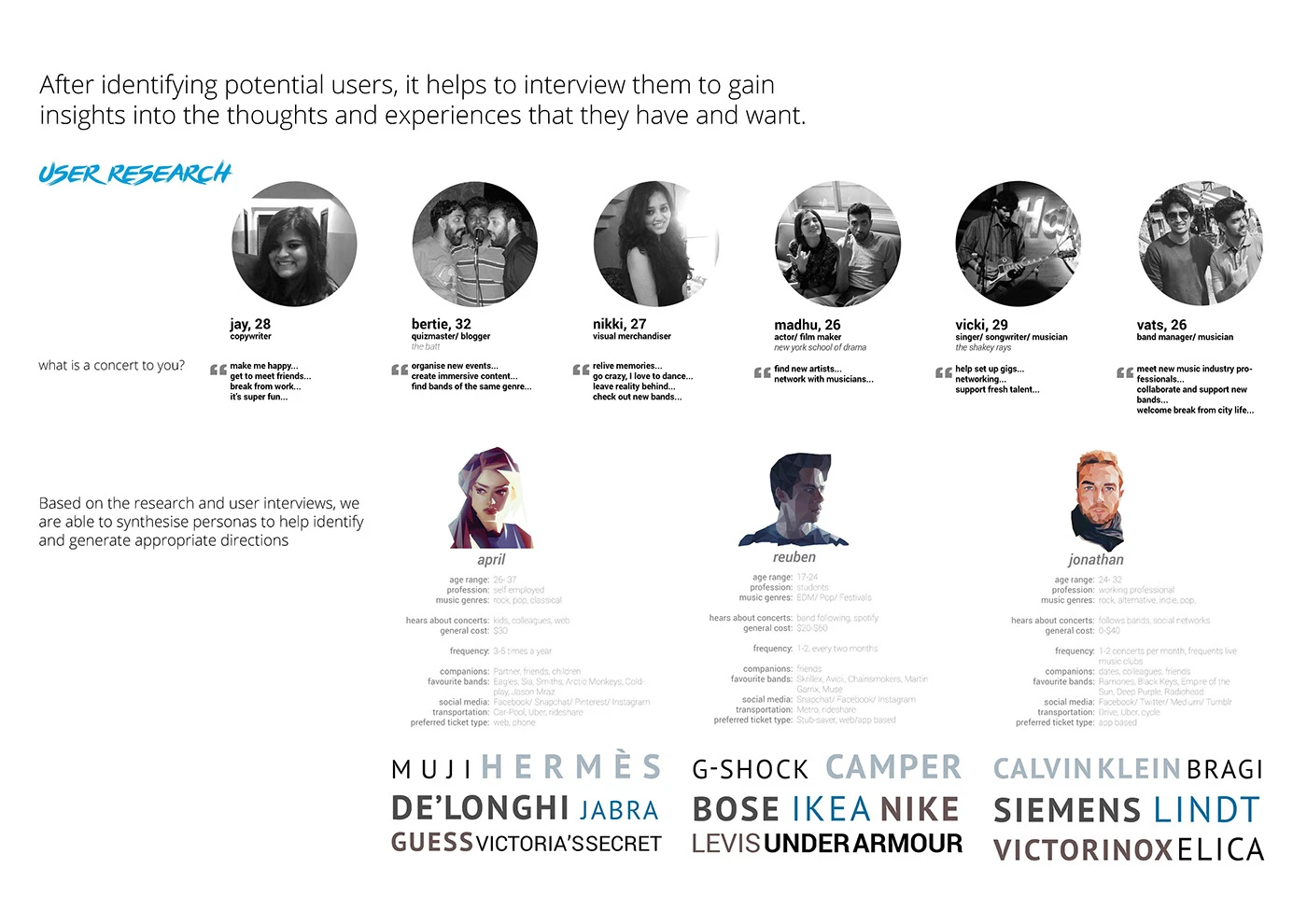
User research, interviews across concert-goers, performers and organizers, synthesized into personas (the super-fan, the soloist, the tag-along) and the brands each aspires to.

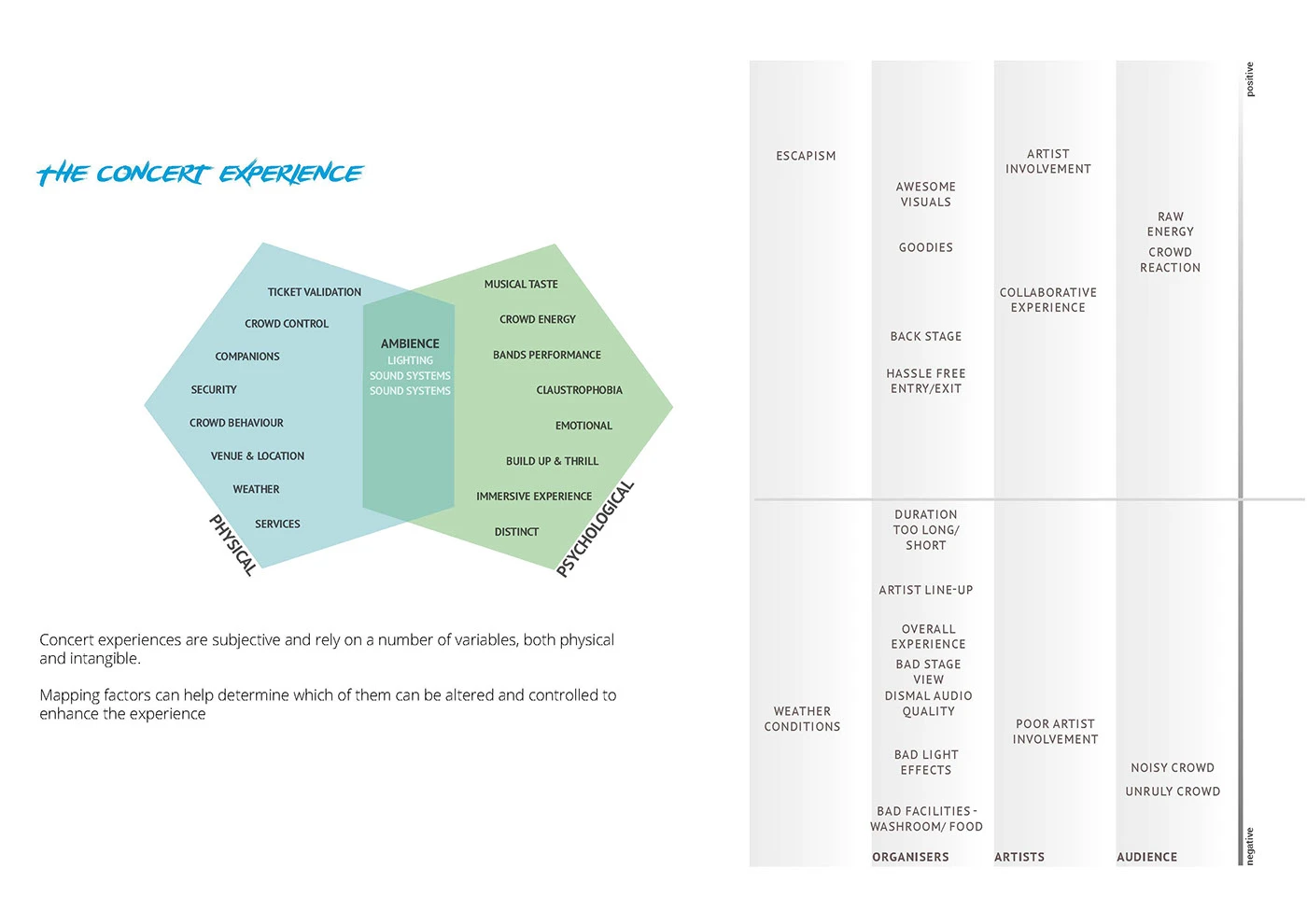
Mapping the concert experience into physical and psychological factors, and what each stakeholder can actually control, to find where a wearable could move the needle.

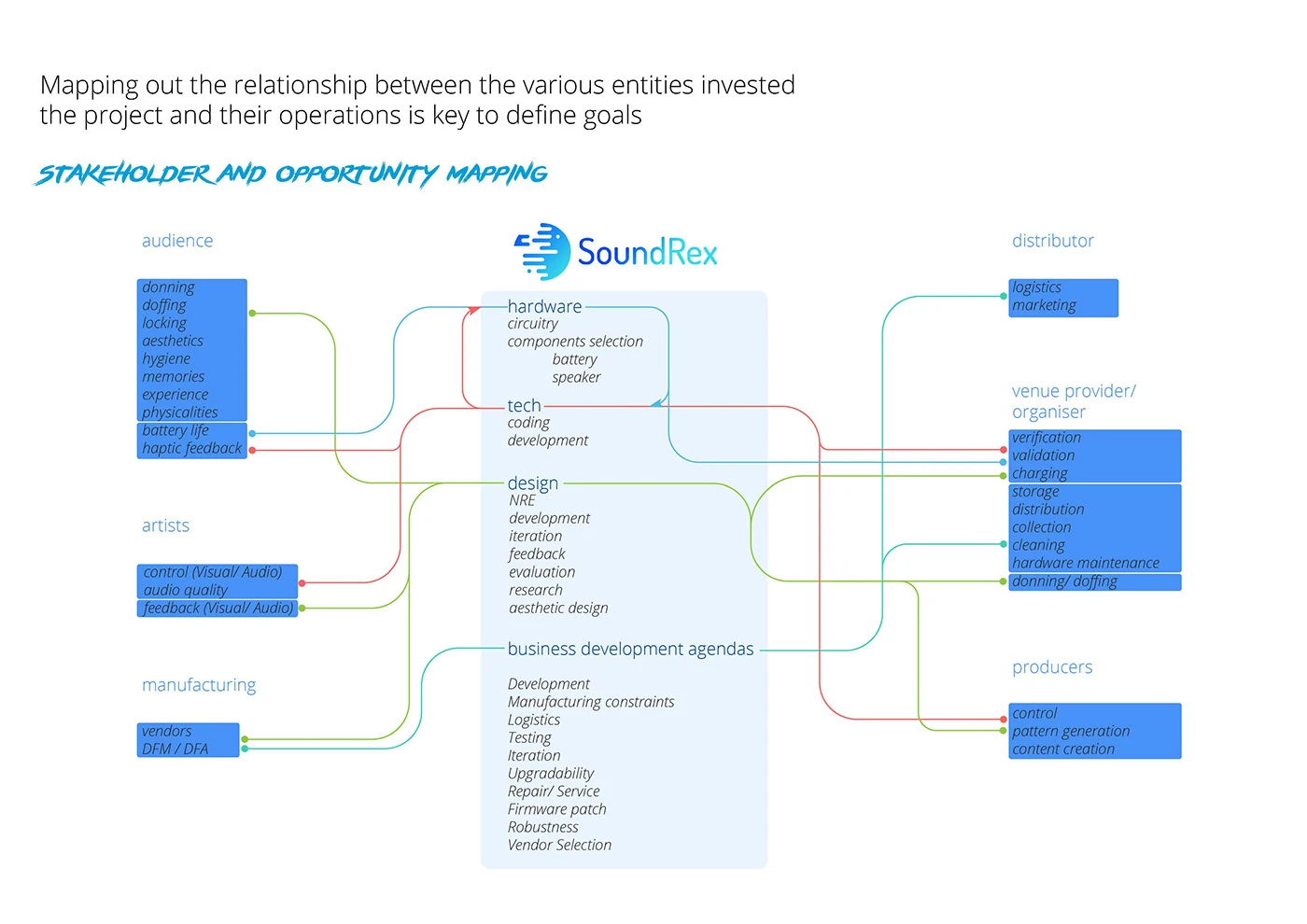
Stakeholder and opportunity mapping for SoundRex, audience, artists, operators and distributors each pull on hardware, software, design and the business model in different directions.

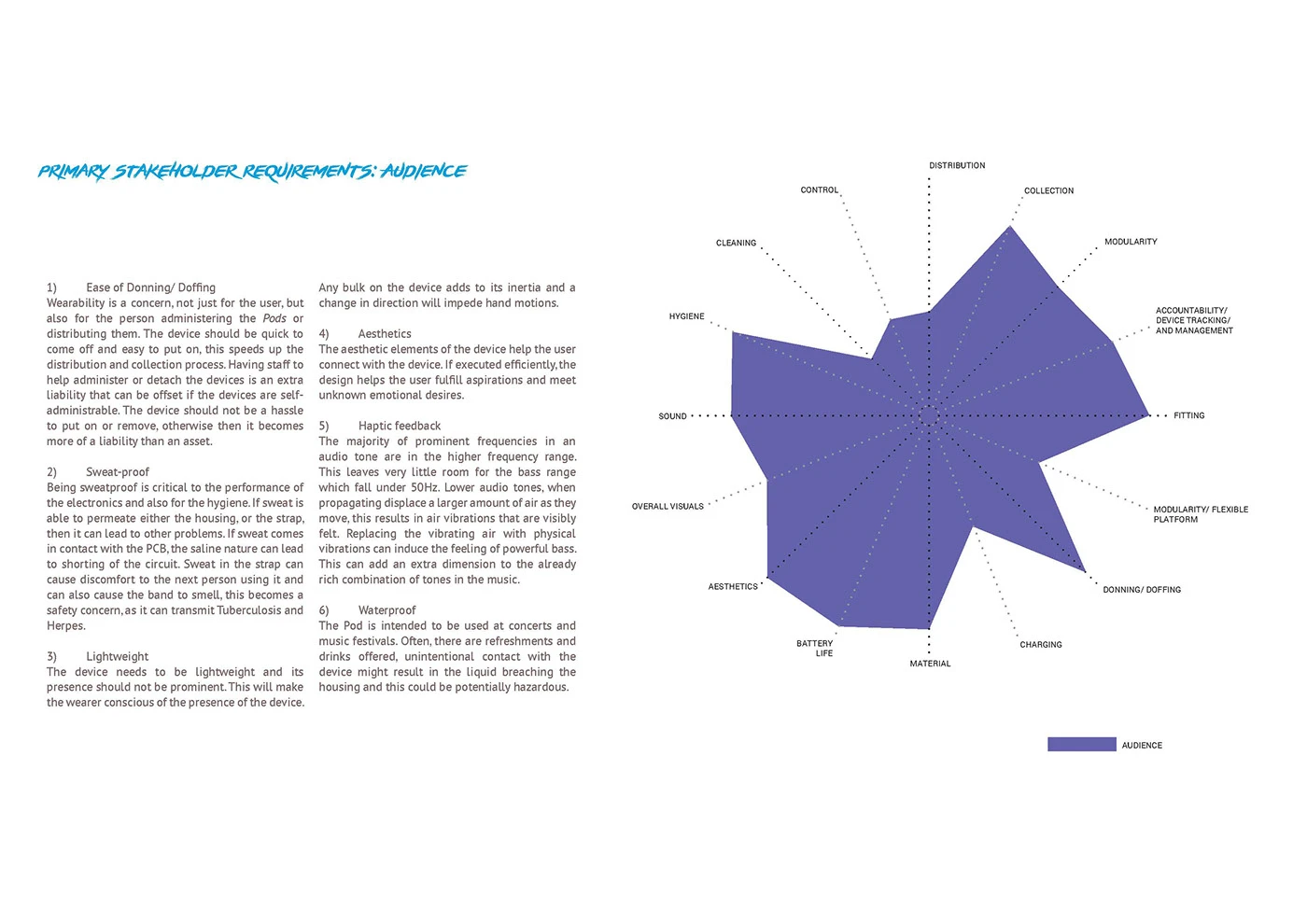
Primary stakeholder requirements, audience: donning and doffing, hygiene, weight and aesthetics weighed against what's actually feasible to build.

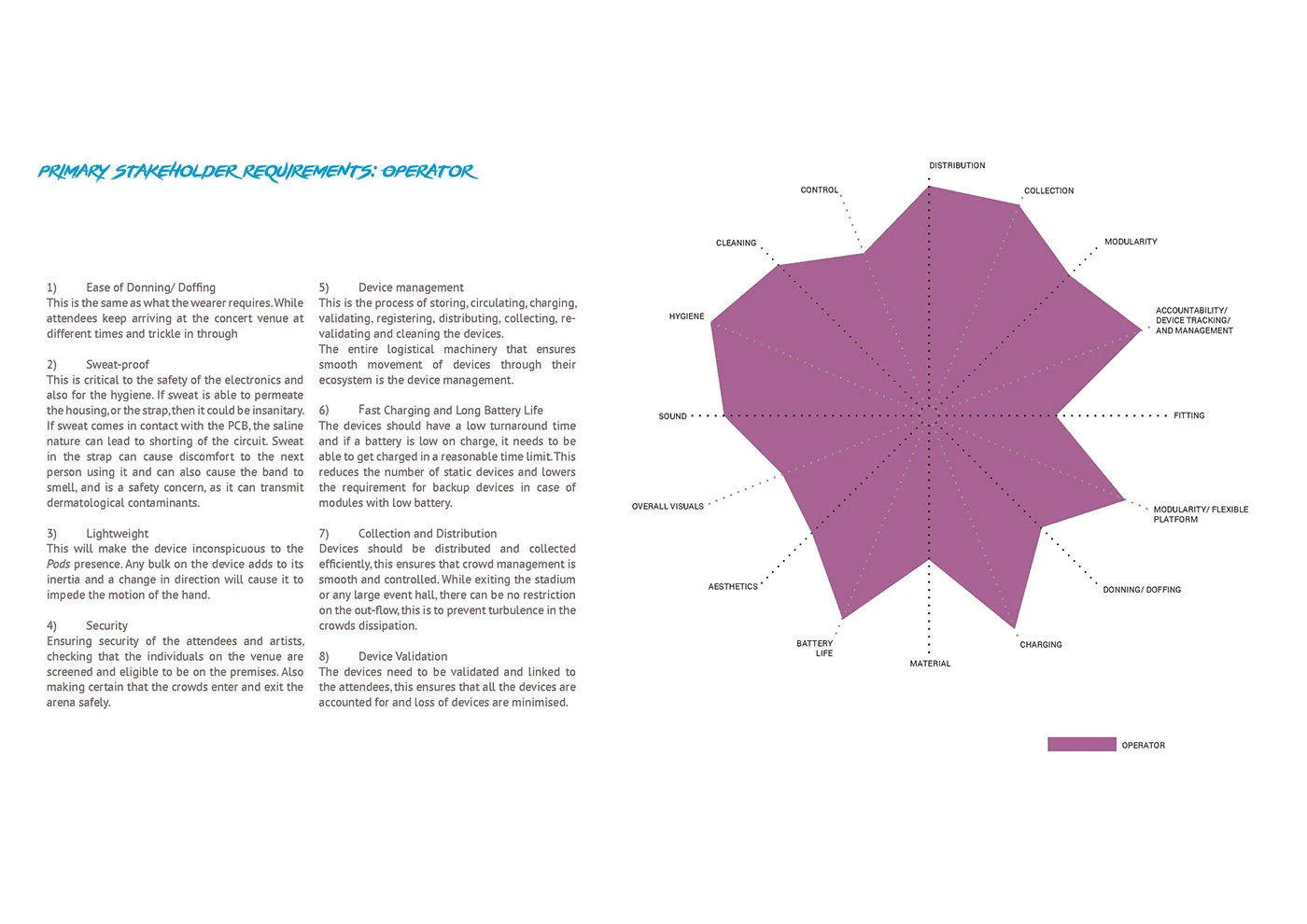
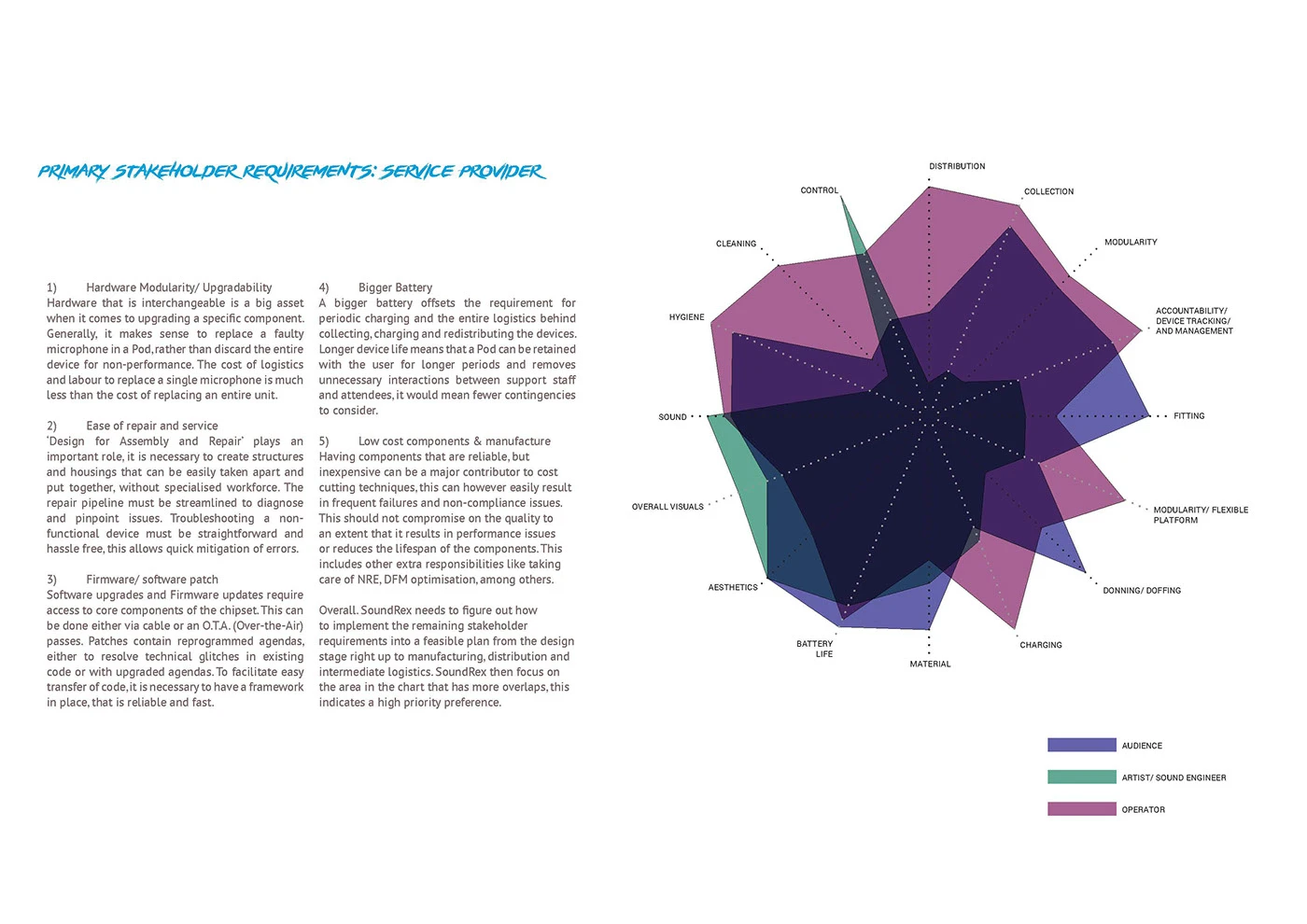
Primary stakeholder requirements, operator: distribution, charging, validation and collection at the scale of a whole event.

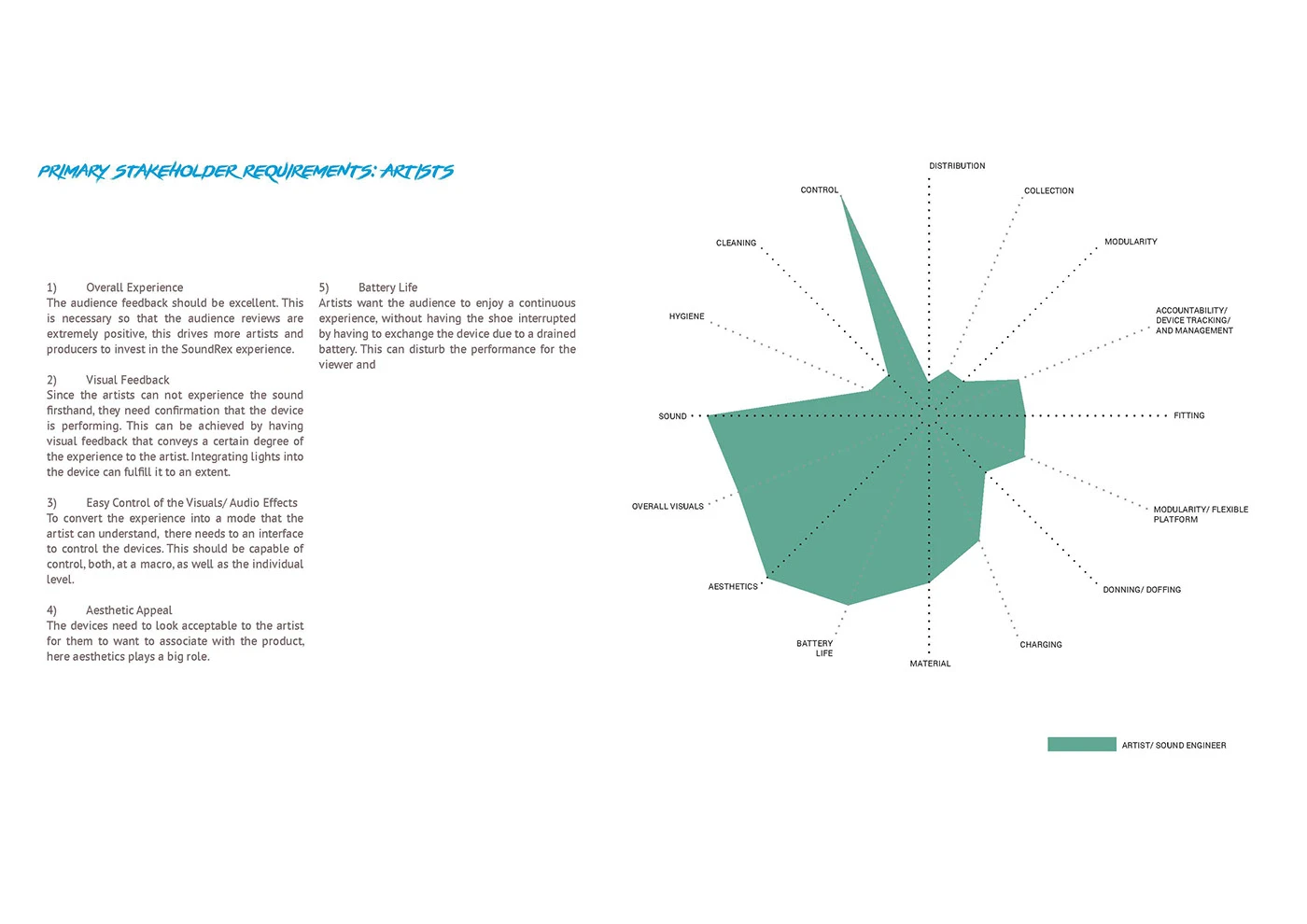
Primary stakeholder requirements, artist and sound engineer: visual feedback, control and battery life, so the performance never visibly drops out.

All three stakeholder maps overlaid, to find where audience, operator and artist priorities actually agree, and where SoundRex would have to trade one off against another.

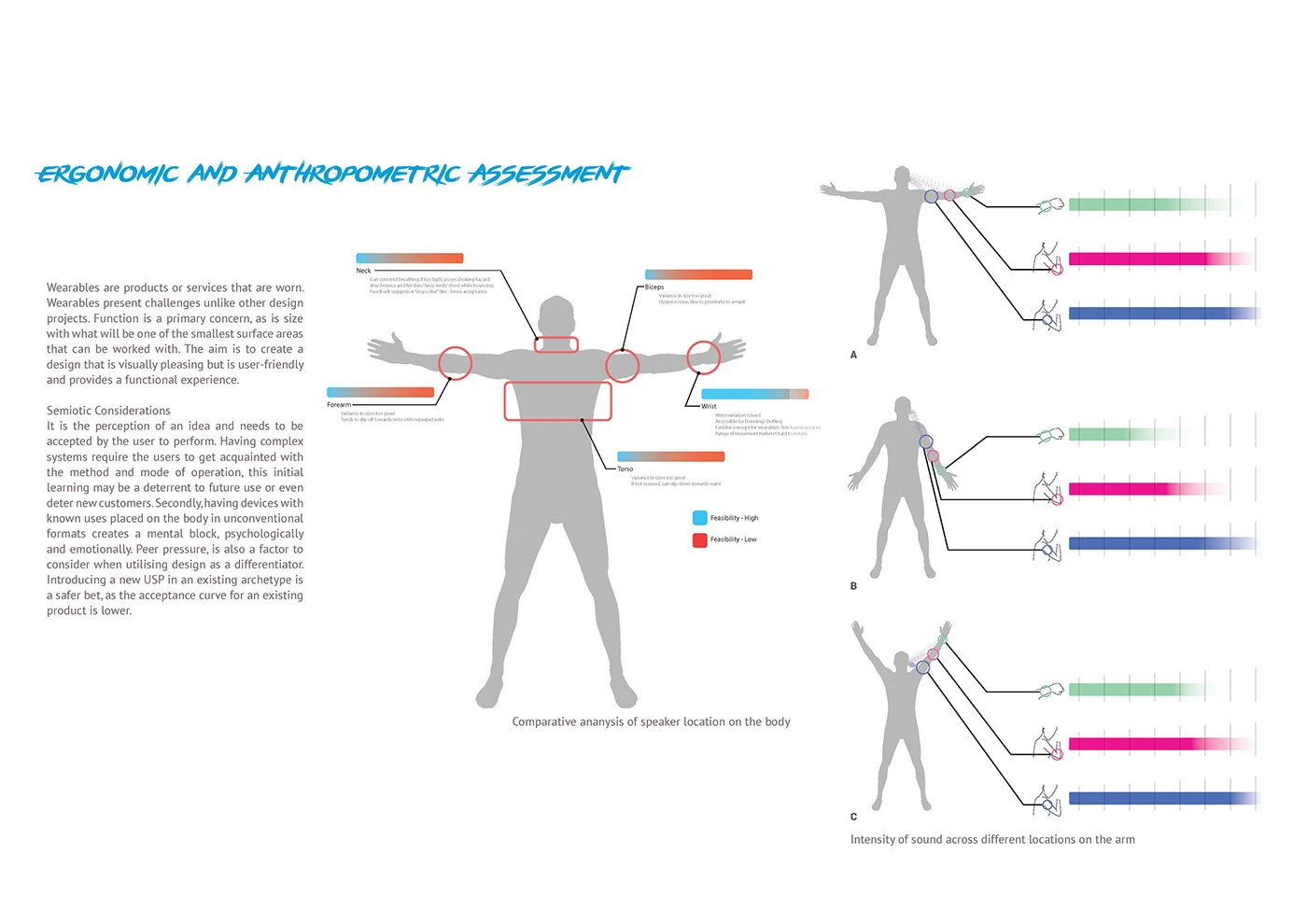
Ergonomic and anthropometric assessment: comparing speaker locations on the body, neck, biceps, torso, wrist, against feasibility, hygiene and how sound intensity carries across the arm.

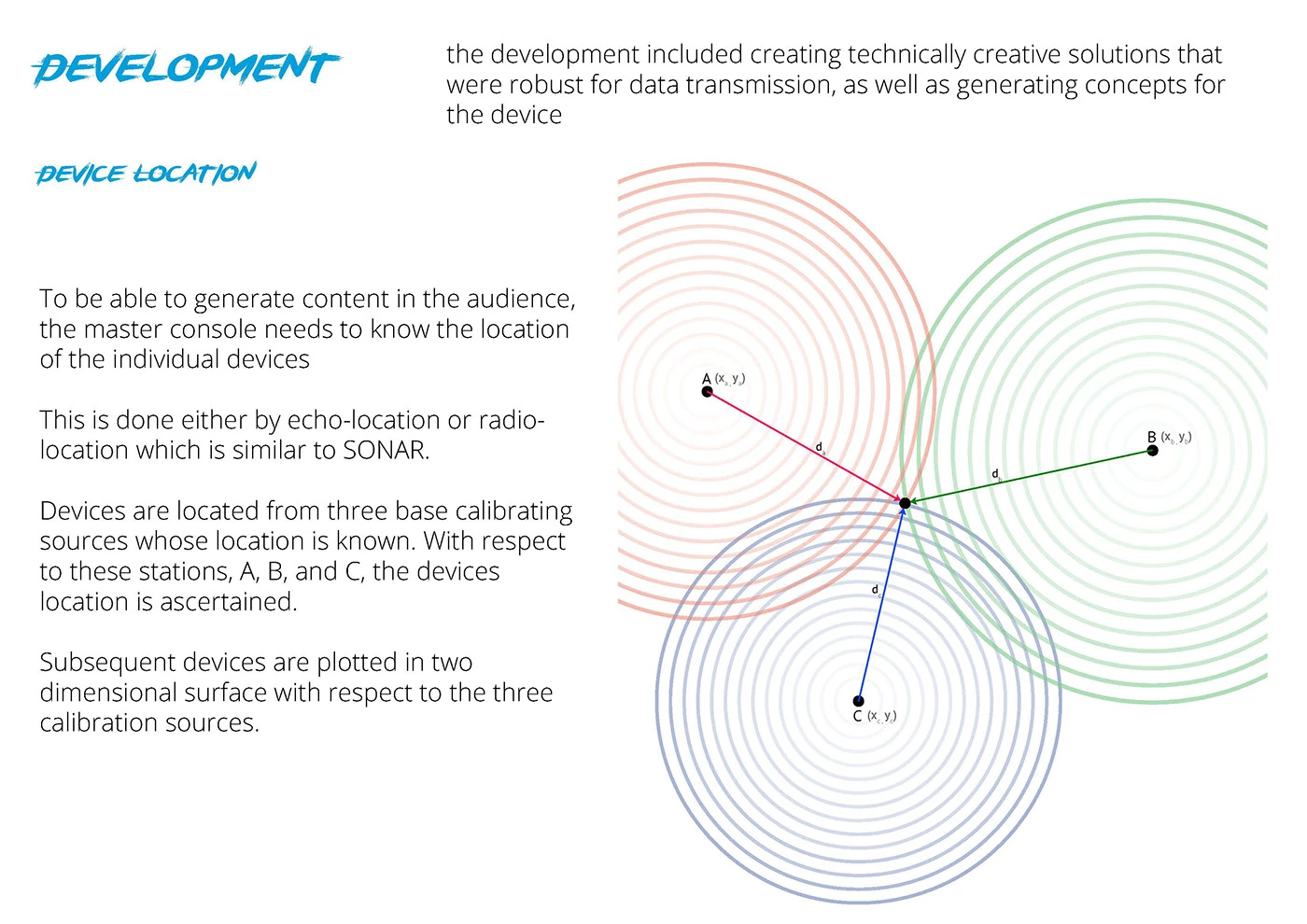
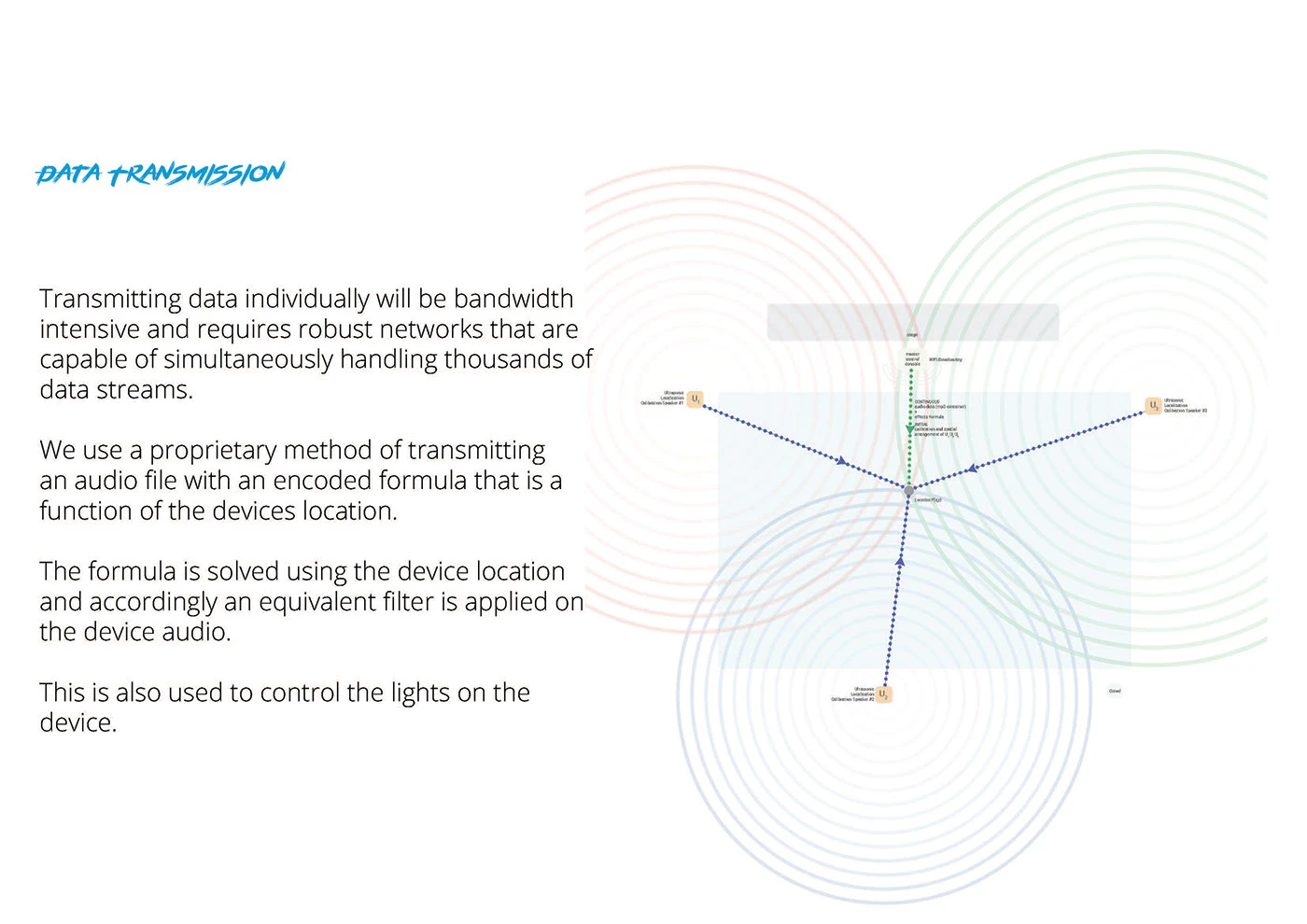
Development: locating each device by triangulating from three known points, the positioning geometry a master console needs to place content in the crowd.

Development: broadcasting to thousands of devices at once with a proprietary, location-aware audio encoding, rather than streaming to each individually.

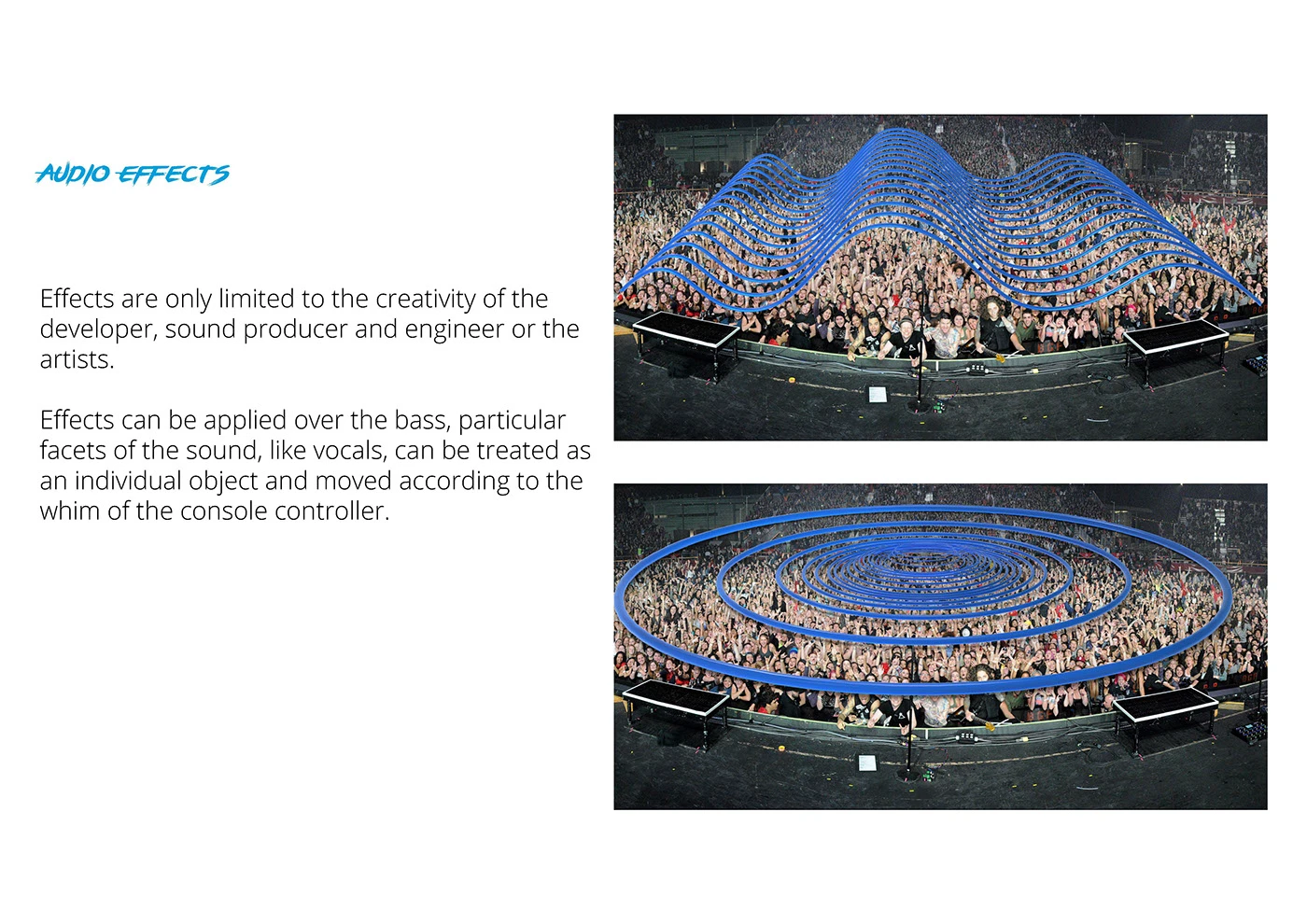
Audio effects: with location and lighting both under the console's control, effects can ripple across the crowd as waves, rings, or any pattern the artist scores.

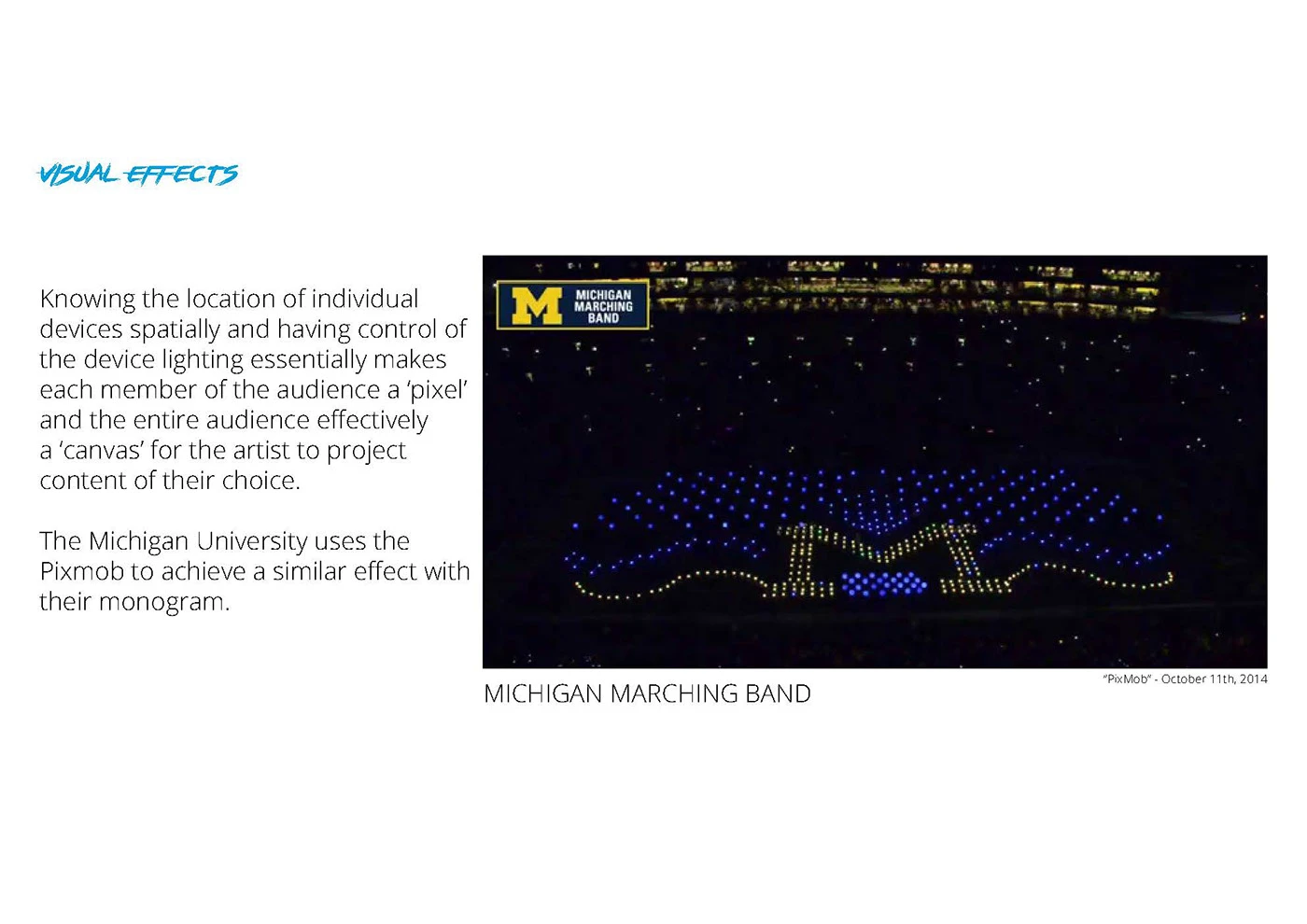
The vision: with each device located in space and individually lit, every attendee becomes a 'pixel' and the audience a 'canvas' the artist can project onto.

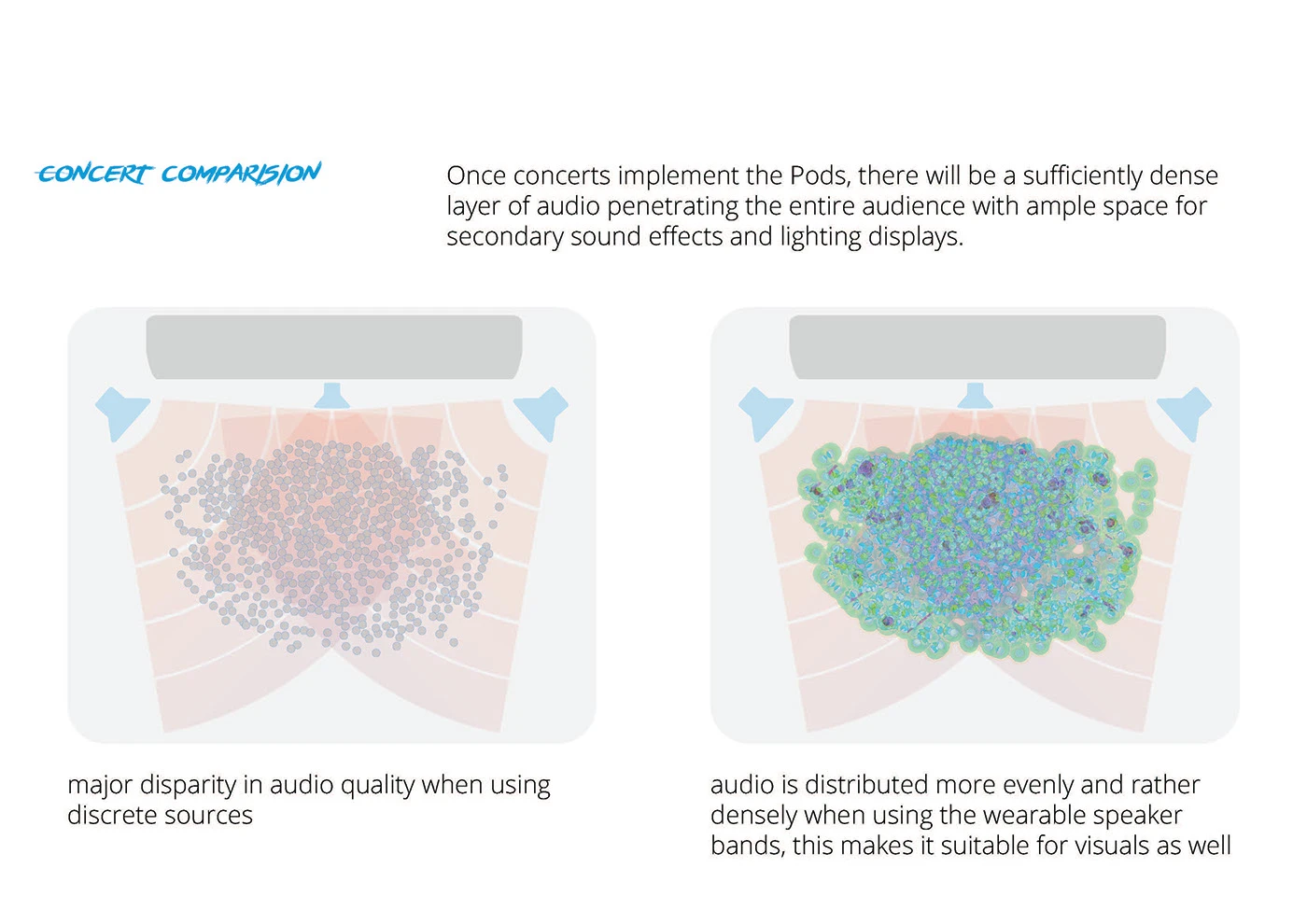
Concert comparison, discrete sources leave uneven audio; the wearable bands distribute sound densely and evenly across the whole crowd, opening room for synced lighting.

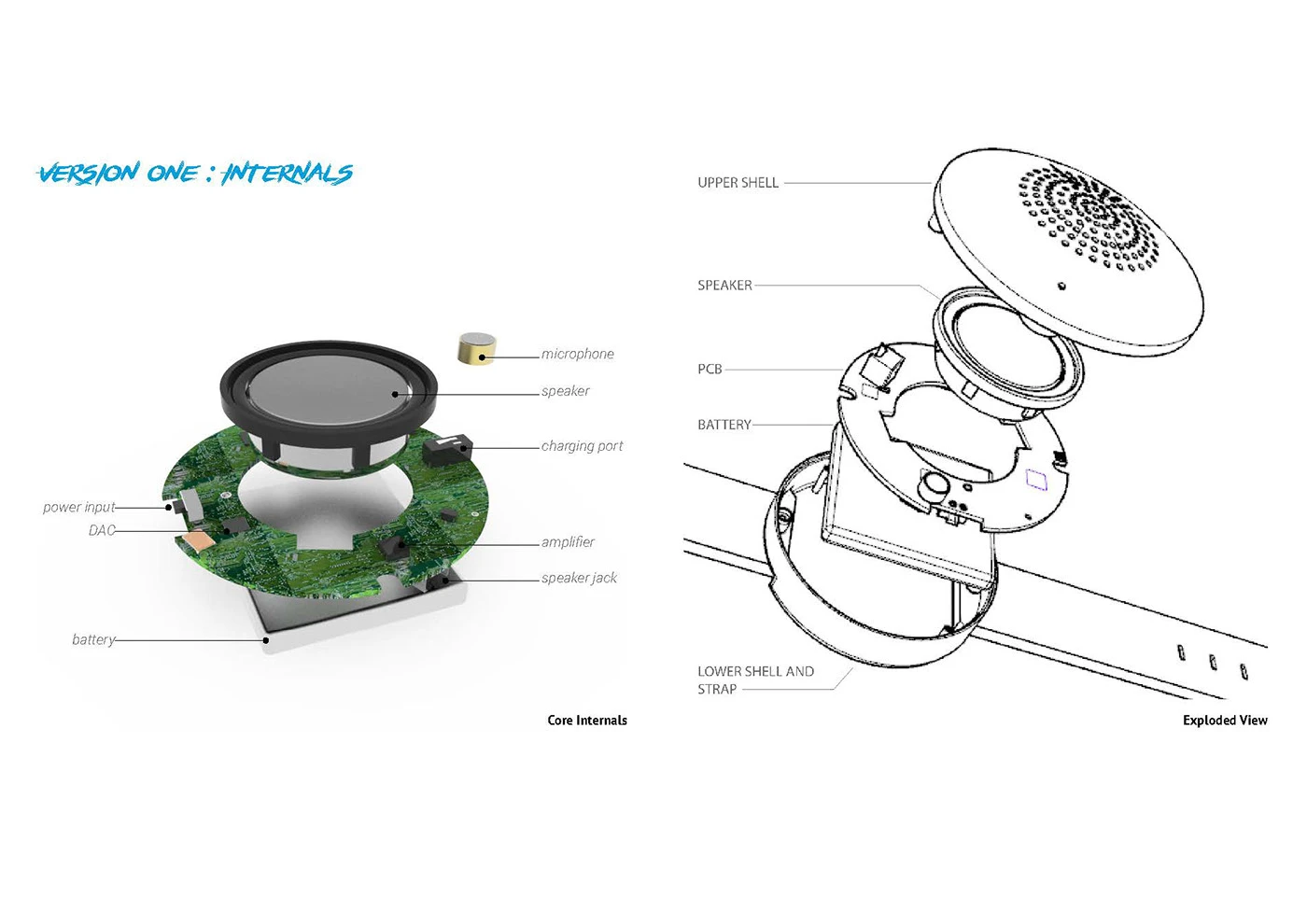
Version one internals, the first architecture: speaker, PCB, DAC, amplifier, battery and charging port packed into a wrist housing with an exploded view of shell and strap.

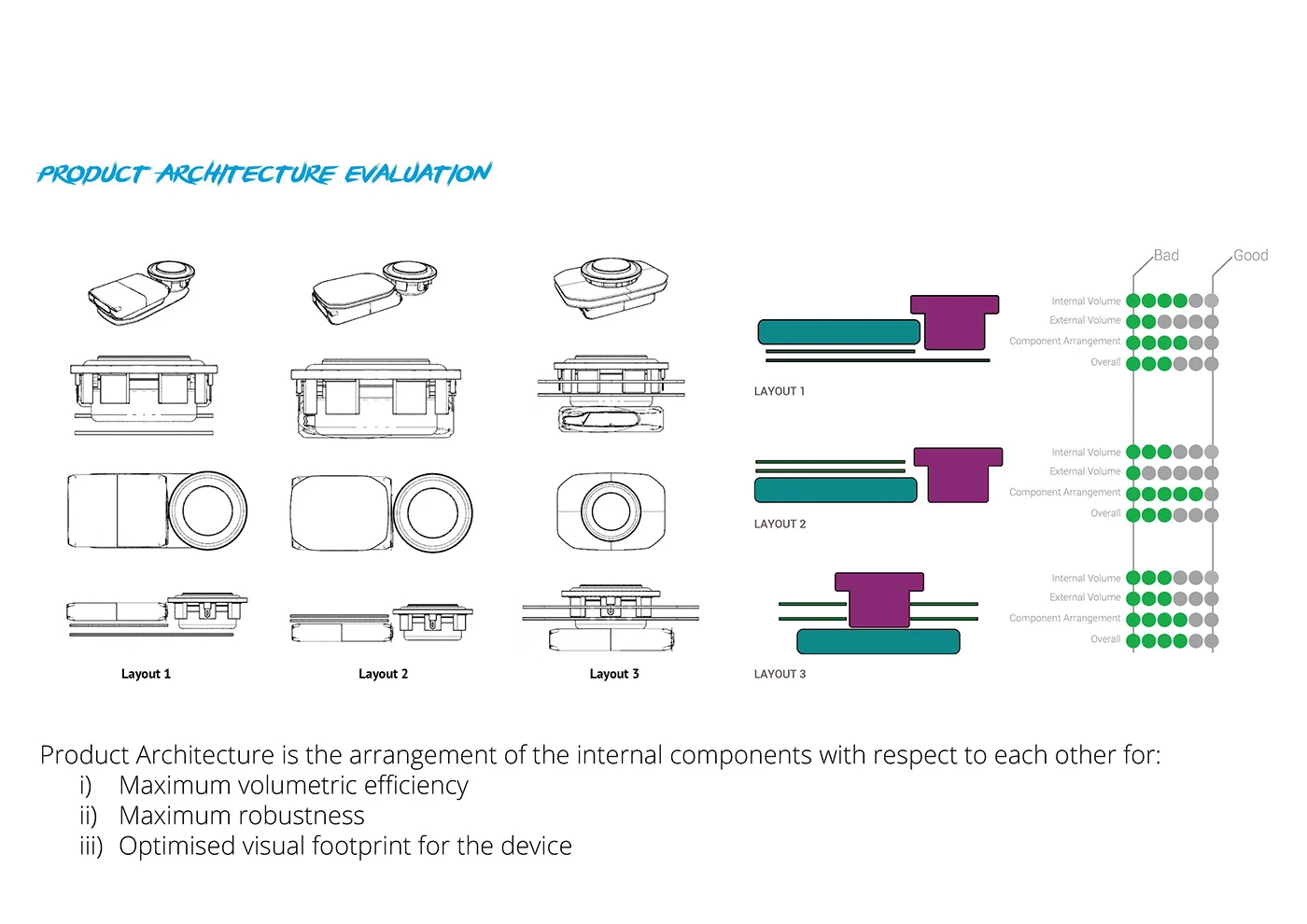
Product architecture evaluation, three internal layouts scored on internal/external volume, component arrangement and visual footprint to settle how the parts stack.

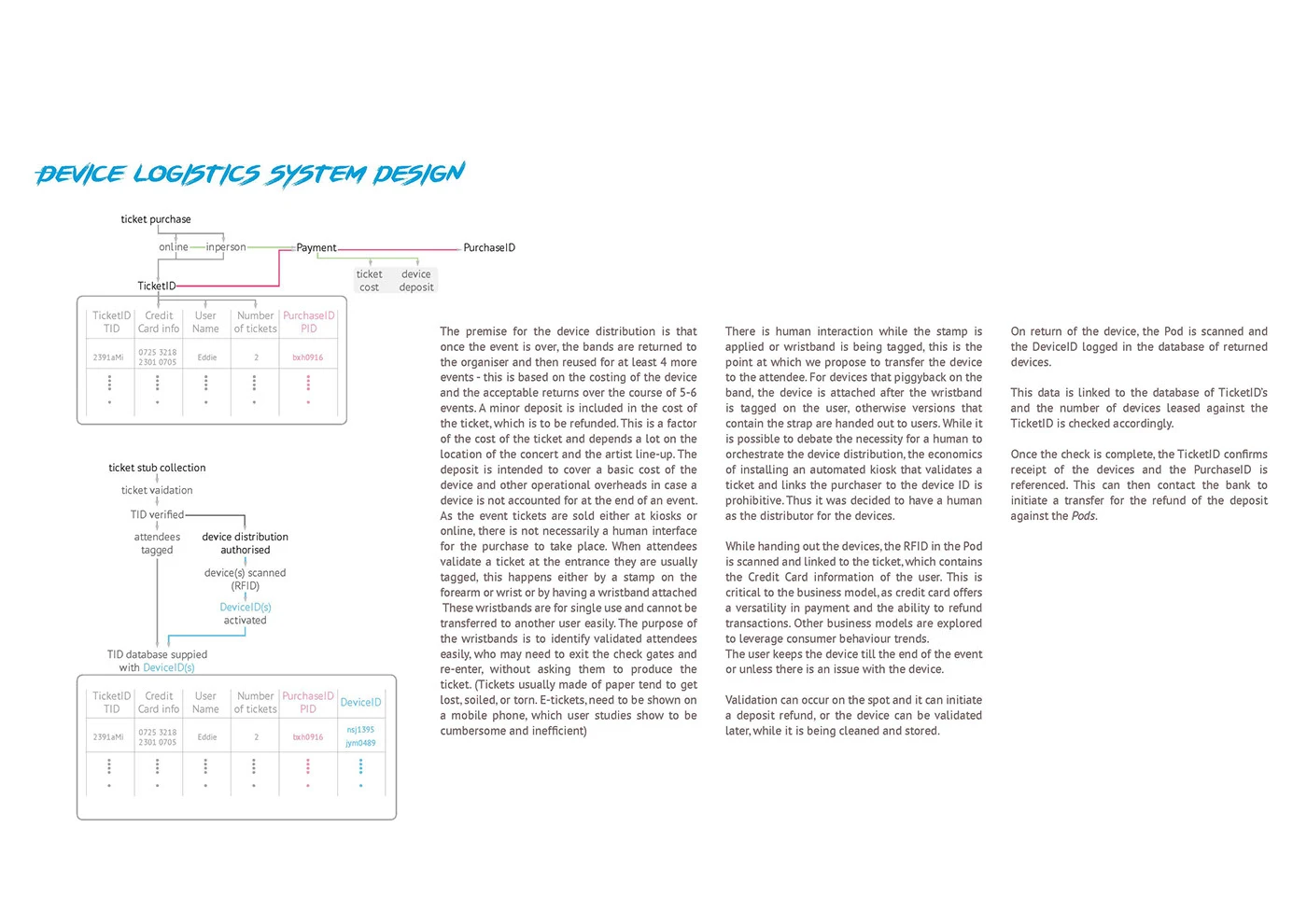
Device logistics system design: the full ticket-to-device chain, purchase, deposit, RFID tagging, distribution, and a validated return with deposit refund.

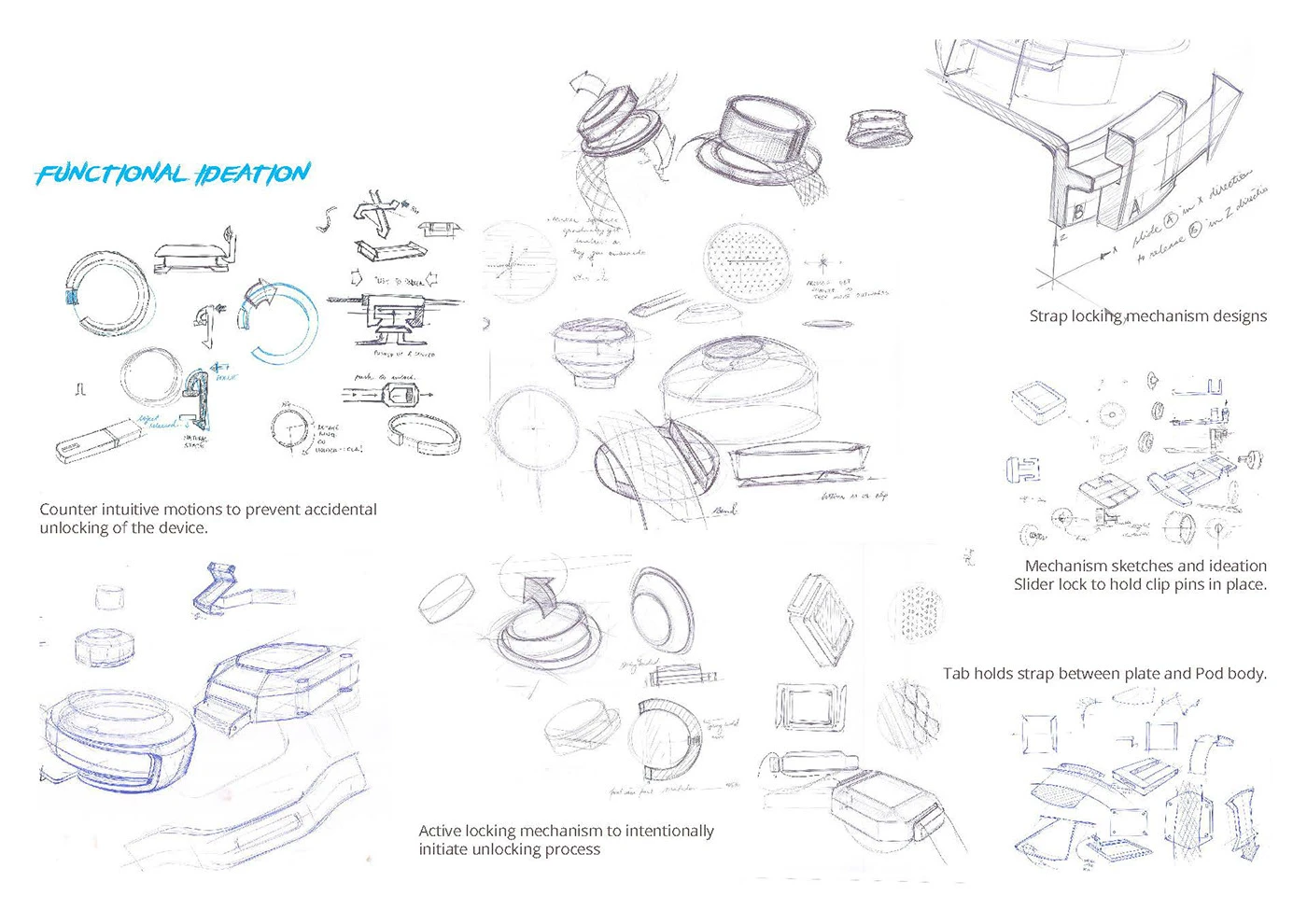
Functional ideation for the clip-release mechanism, deliberately counter-intuitive motions so the device can't unlock itself by accident.

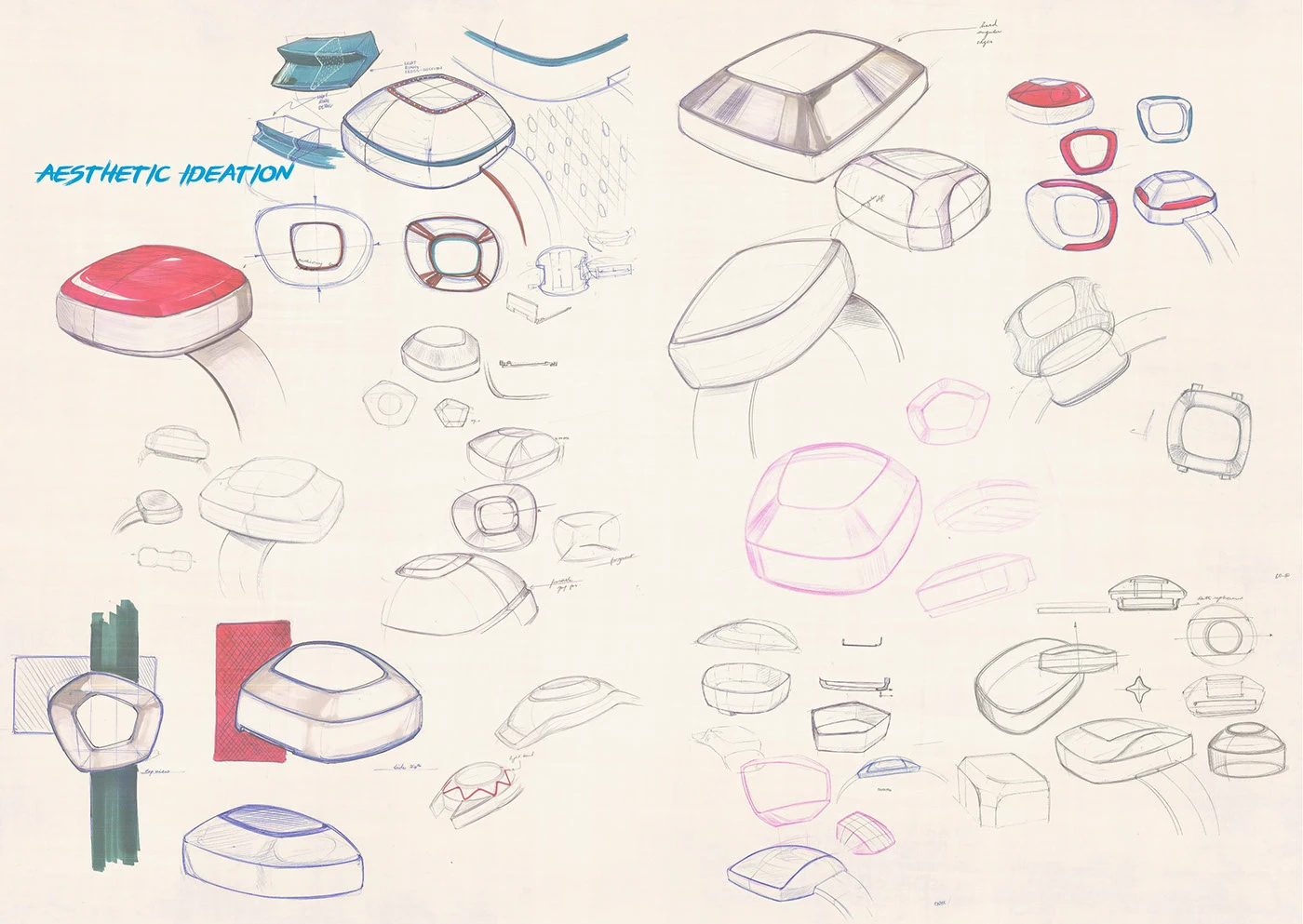
Aesthetic ideation, color and silhouette passes across the housing before the form settled.

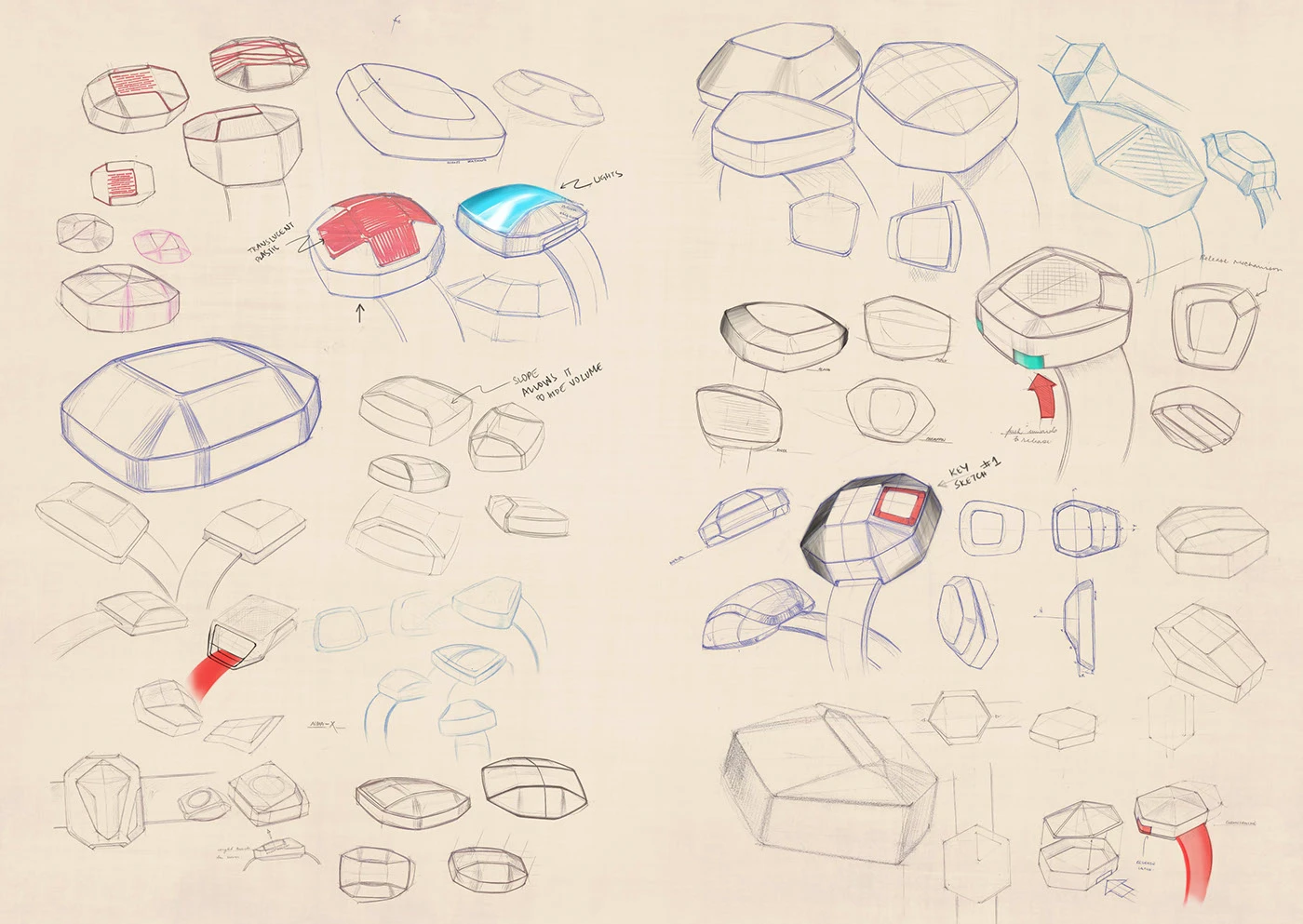
Aesthetic ideation, exploring the housing silhouette, the speaker grille face and how the form sits on a moving wrist.

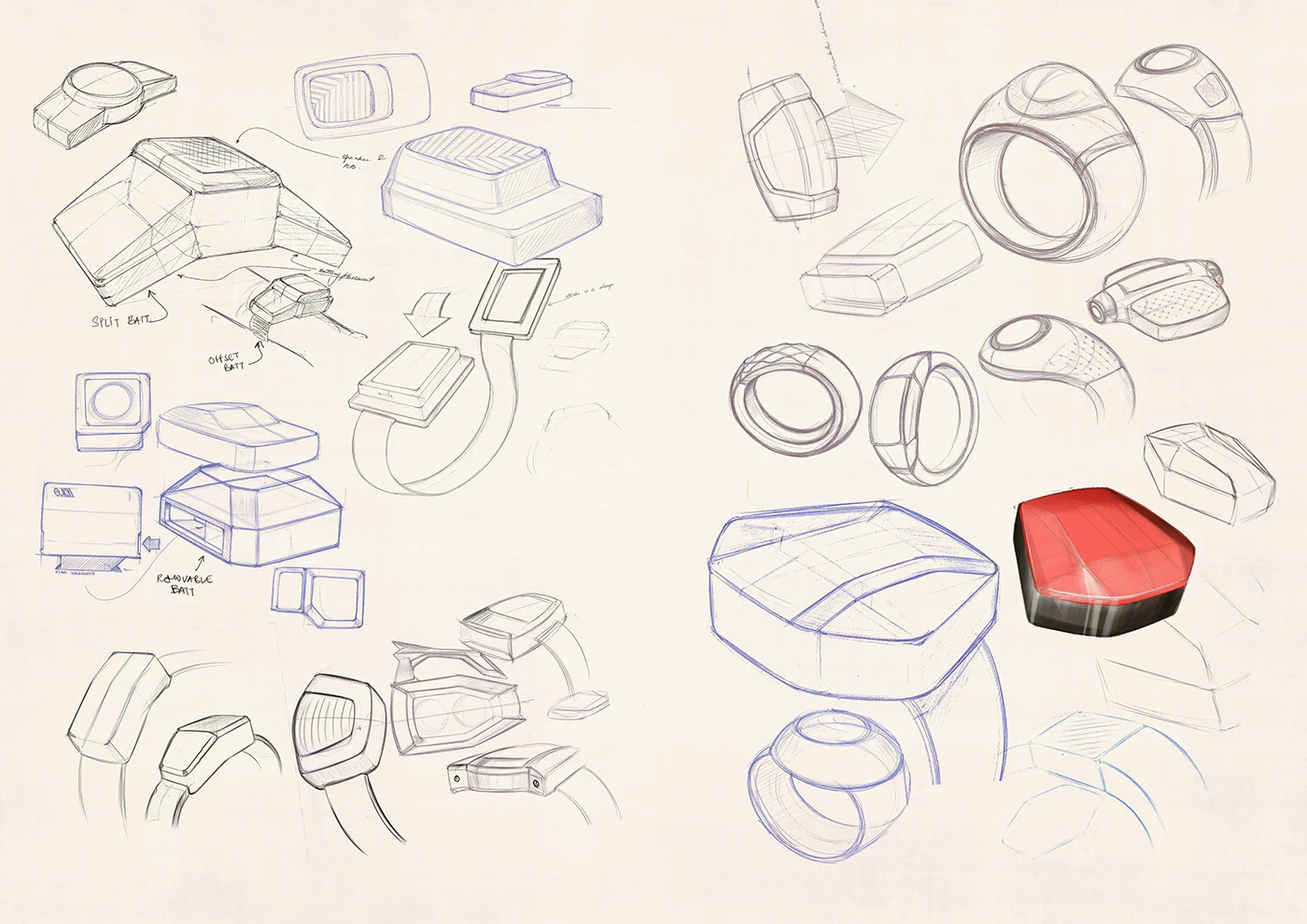
Battery placement and clip-mechanism sketches, split, offset and removable configurations, worked through before the first physical prototype.

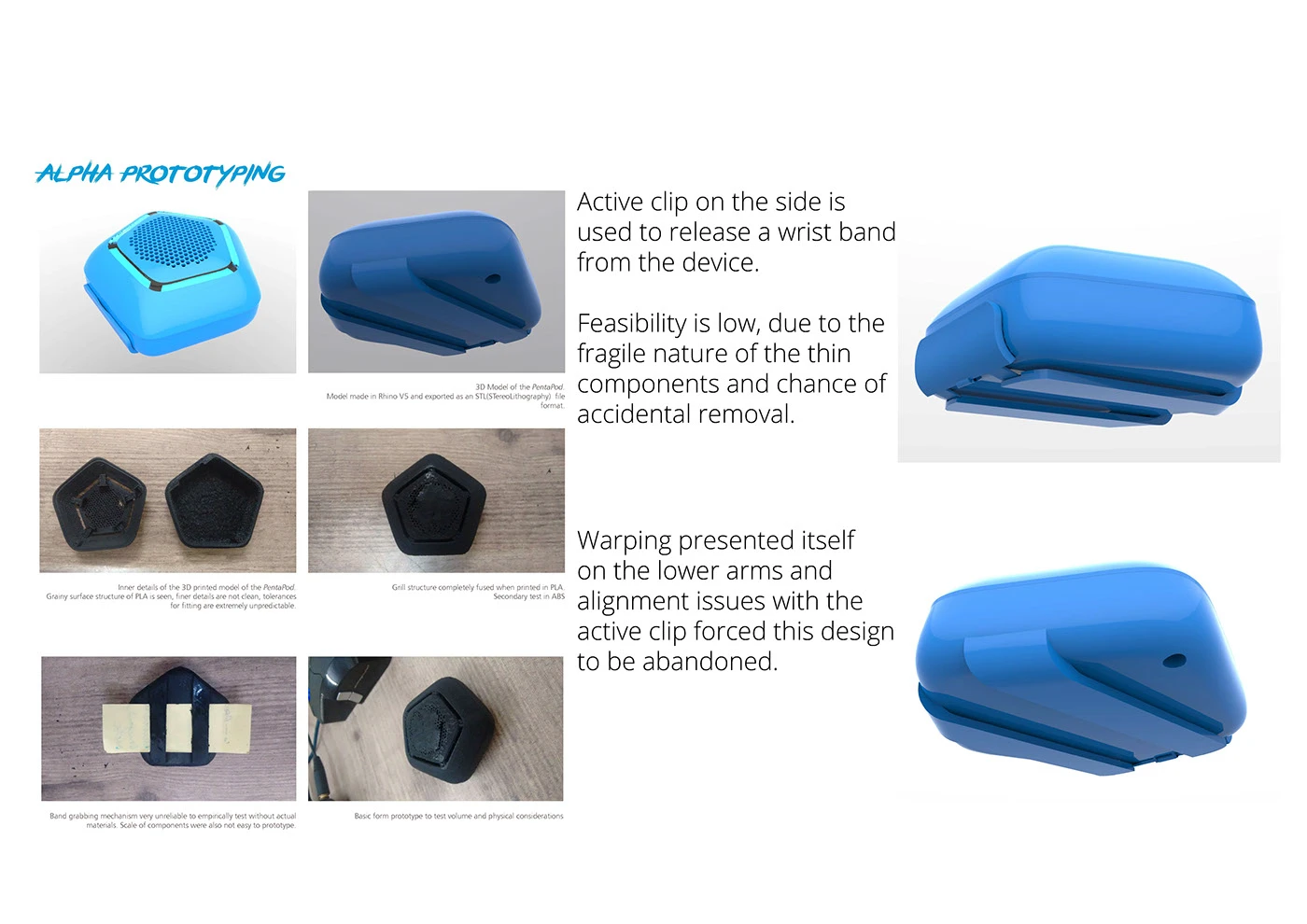
Alpha prototyping, an early active-clip-release form, abandoned: the thin release components were fragile, the lower arms warped in print, and the clip mis-aligned.

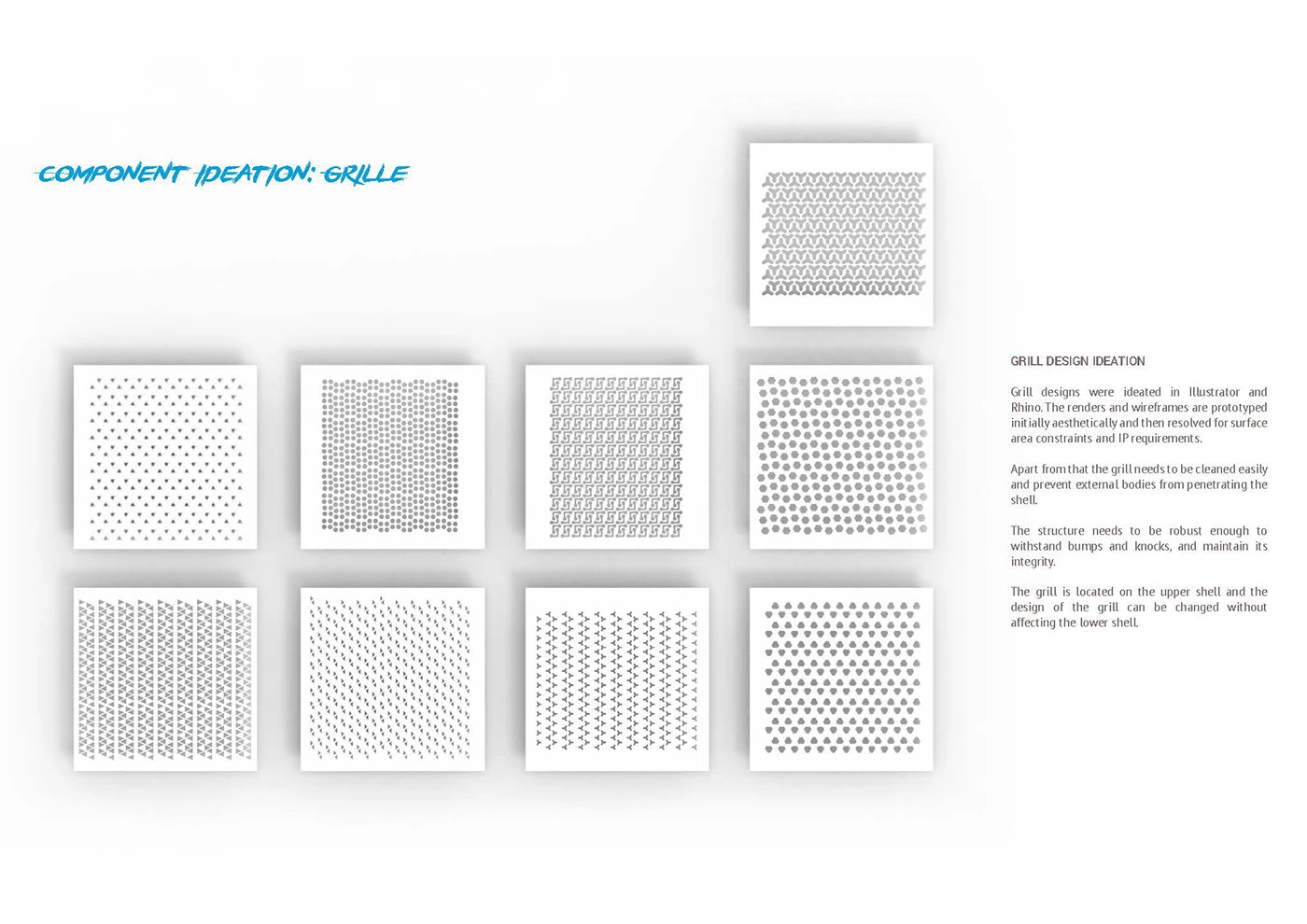
Grille pattern ideation, iterated in Illustrator and Rhino, then resolved for easy cleaning and to clear IP.

Strap and lug design, the call to ship a familiar, legacy strap rather than a custom quick-release lock, trading a 'take-home' detachable concept for reliability and a shorter learning curve.

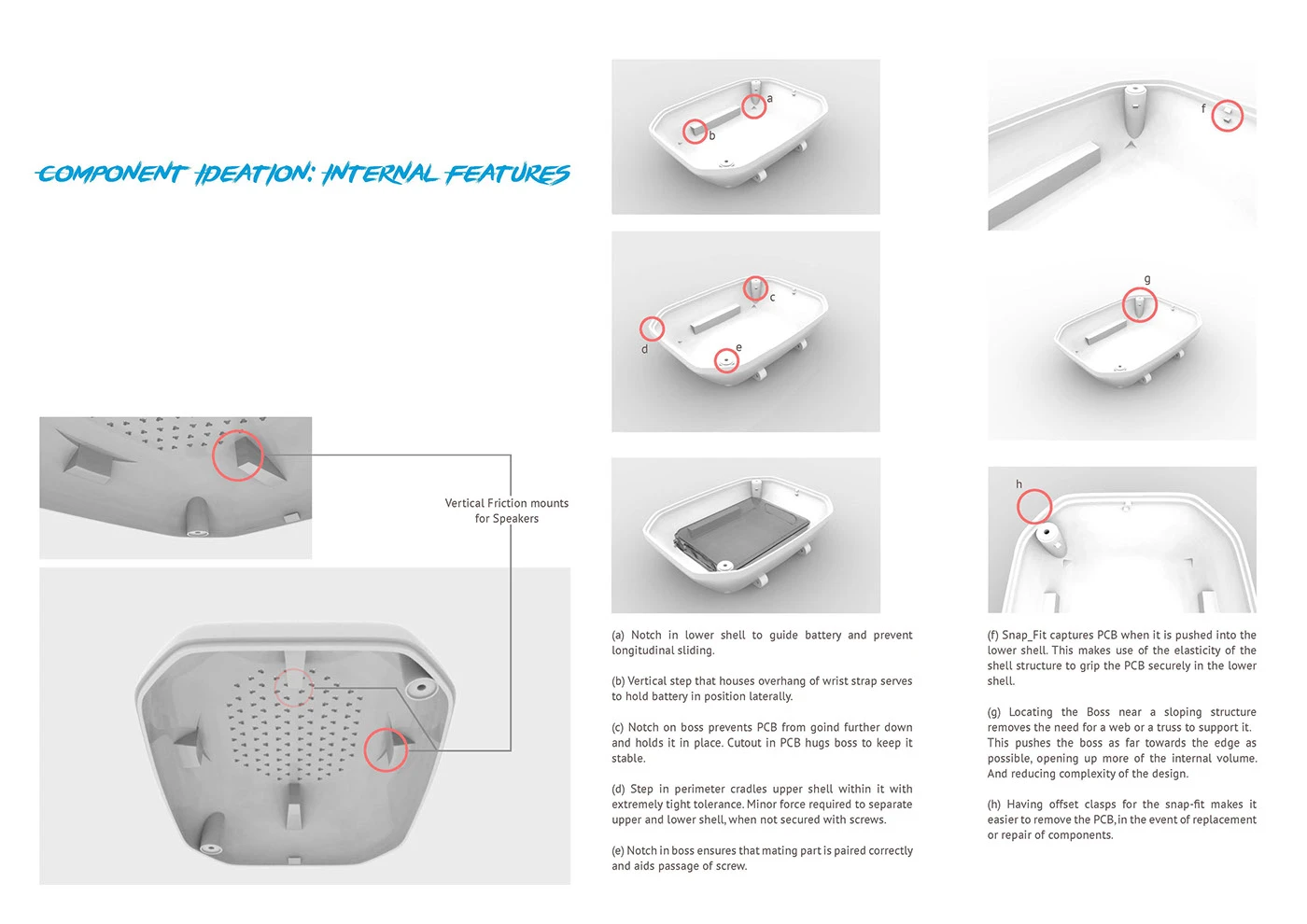
Internal feature detail: the notches, bosses and snap-fits that locate the battery and PCB and let the shells separate cleanly for repair.

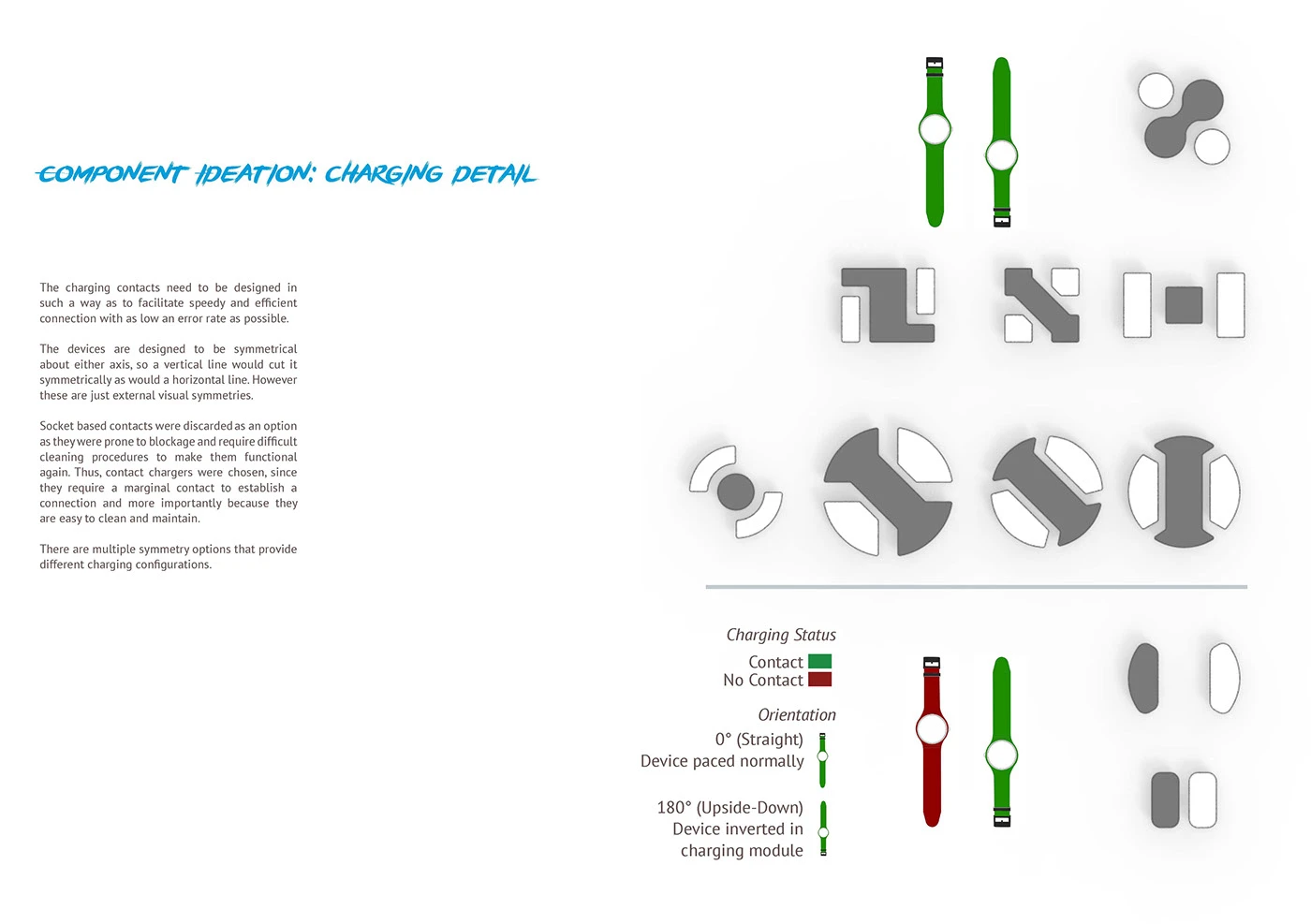
Charging detail: symmetrical contact charging weighed against sockets, so a unit drops into a cradle either way up and still connects.

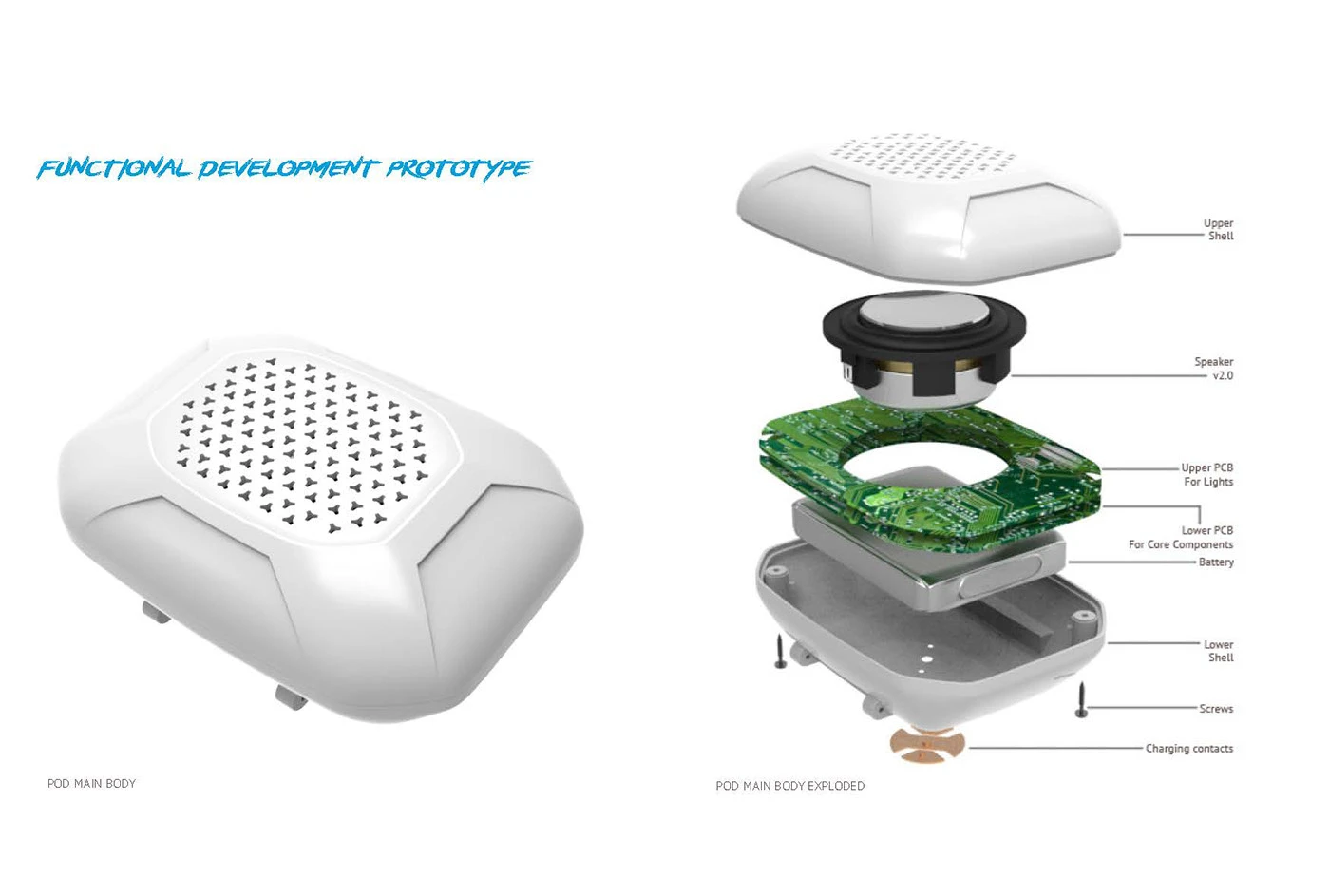
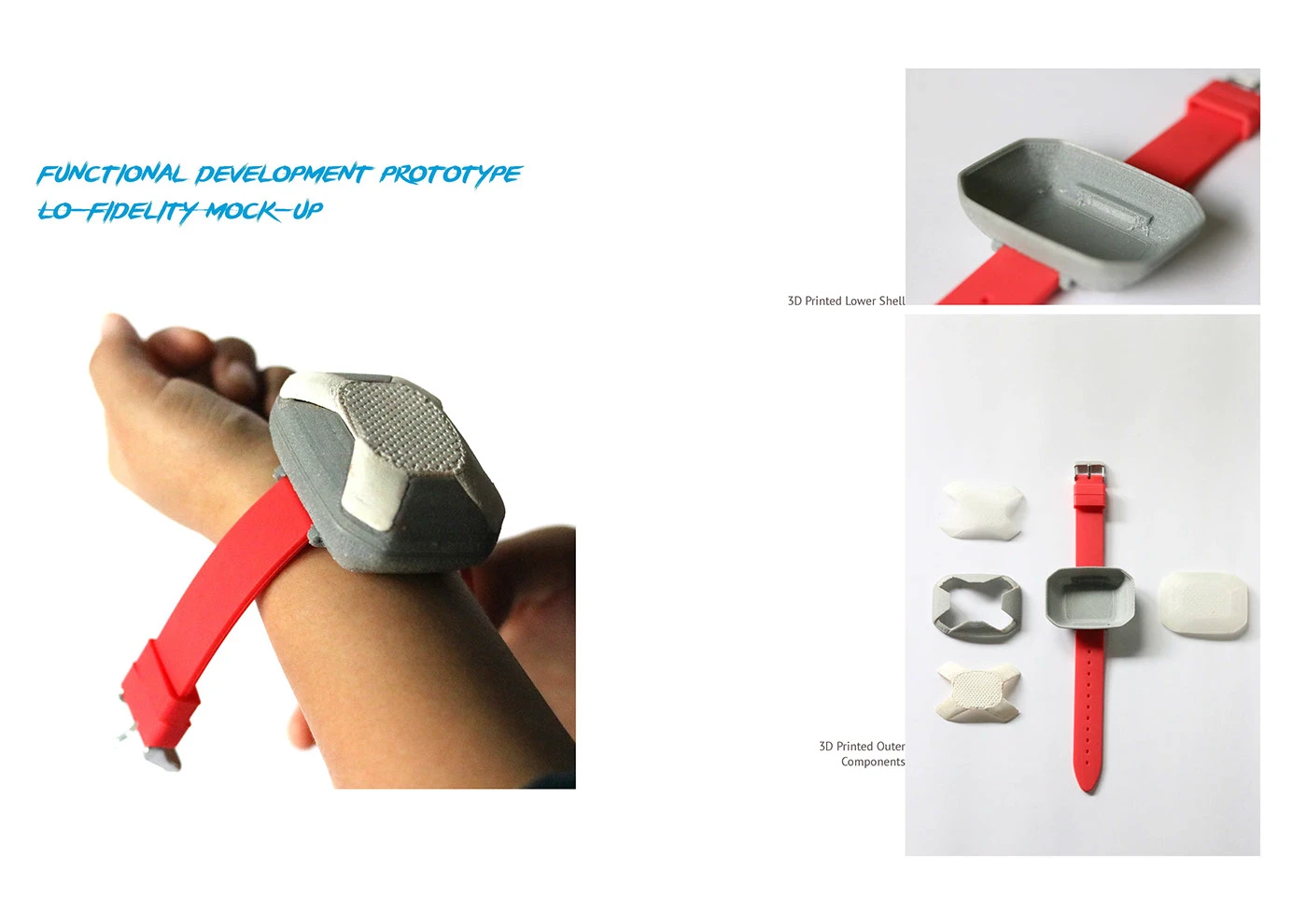
Functional development prototype, the resolved v2 architecture: upper shell, speaker v2.0, separate PCBs for lights and core components, battery, lower shell and underside charging contacts.

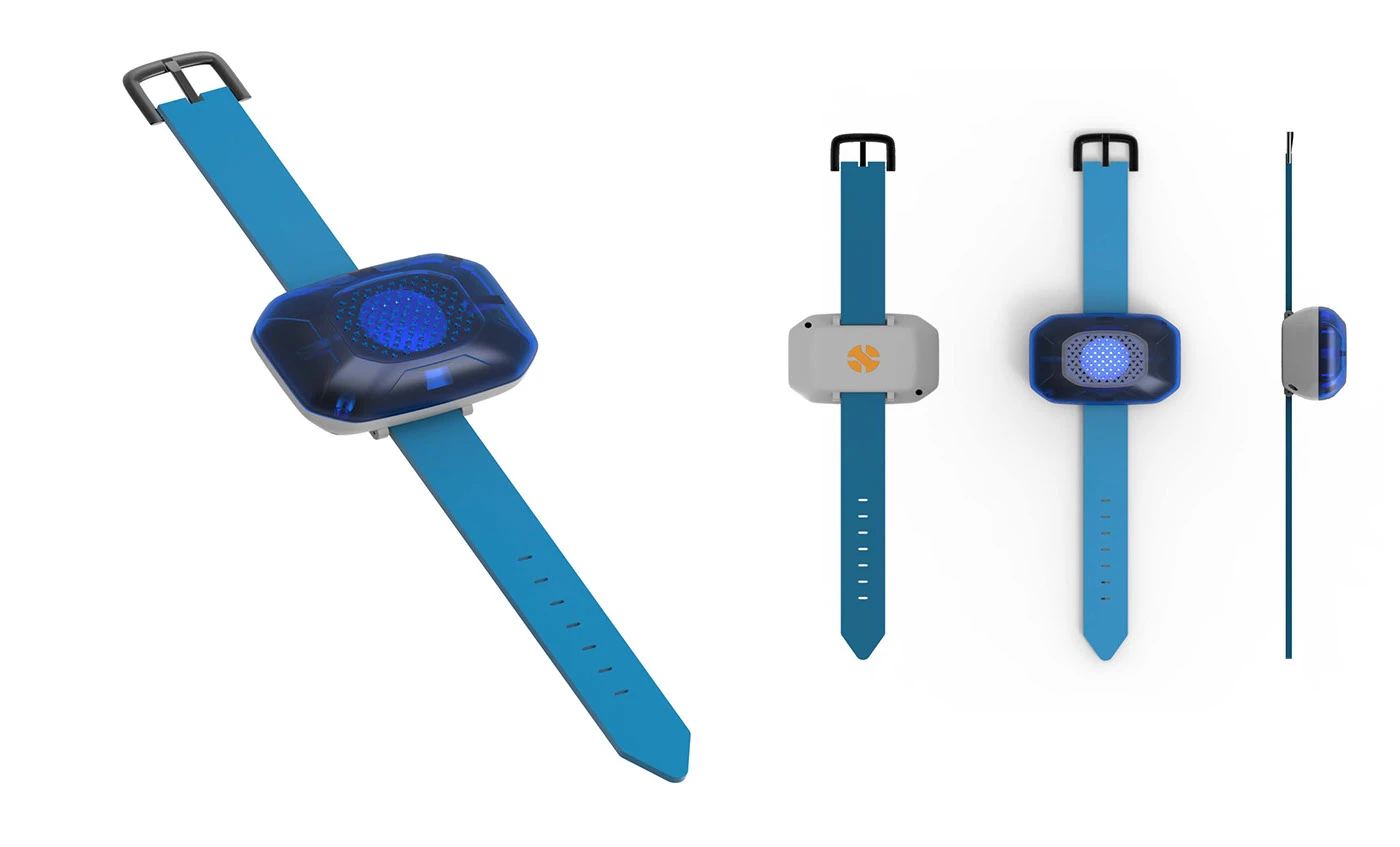
Final renders, the resolved wrist unit with its lit grille, shown front, back and in profile on the silicone strap.

Lo-fi mock-up worn on the wrist, 3D-printed shells and outer components, checked for fit and feel on a real arm.

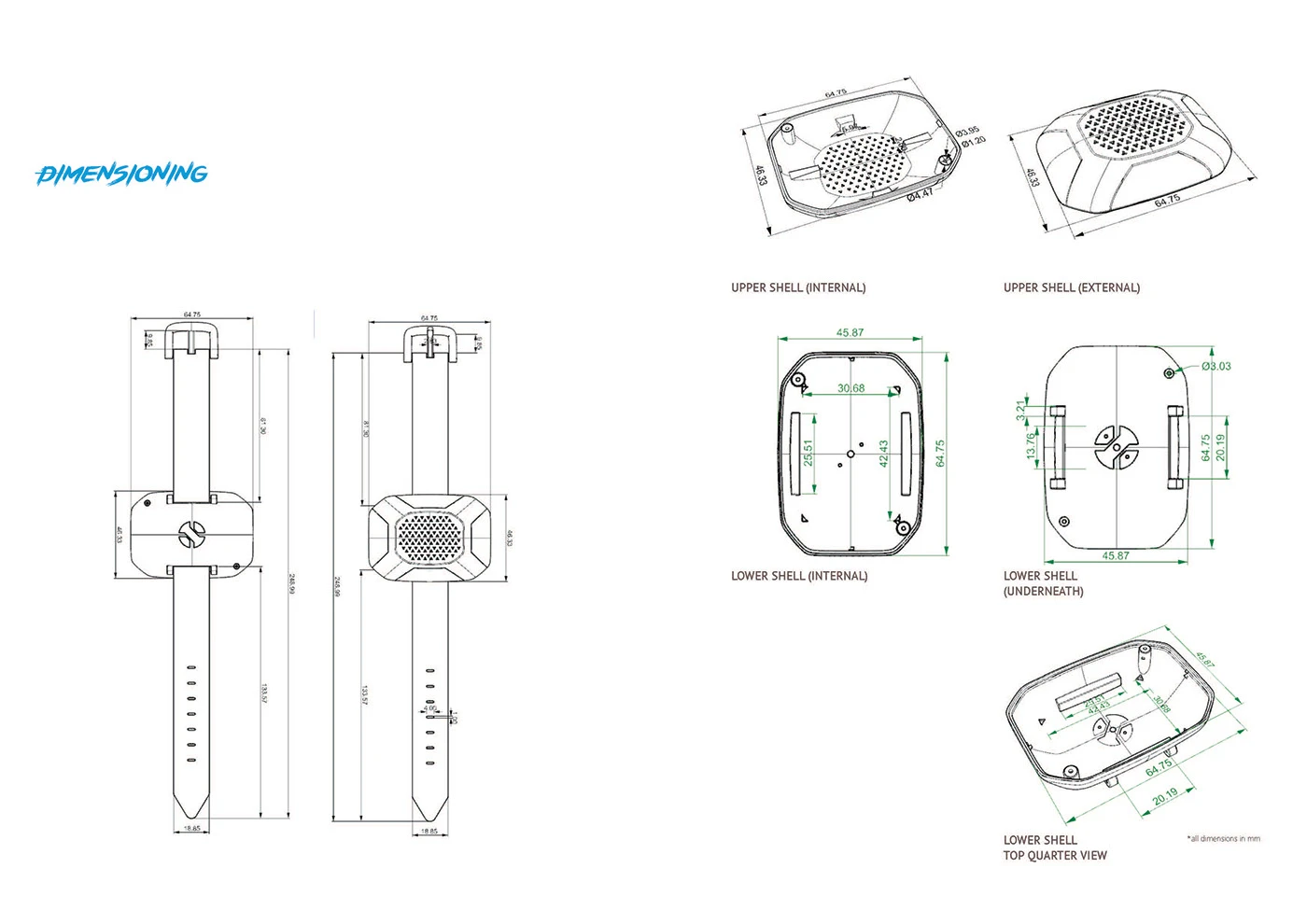
Dimensioning: the full shell and strap drawn to millimeter tolerances, ready to hand to manufacturing.

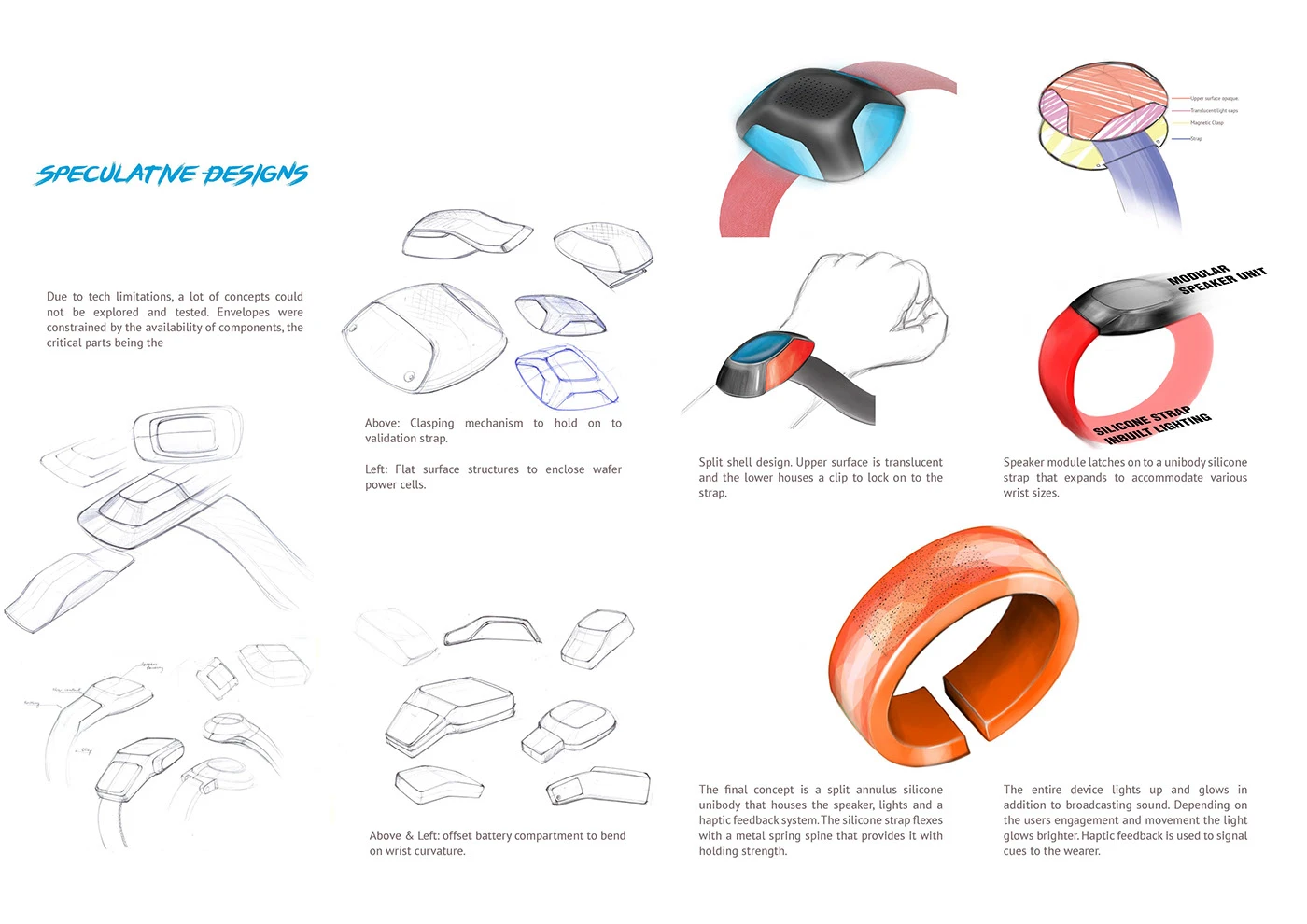
Speculative designs beyond this cycle's constraints: a unibody silicone strap with an integrated, modular speaker and haptic feedback.

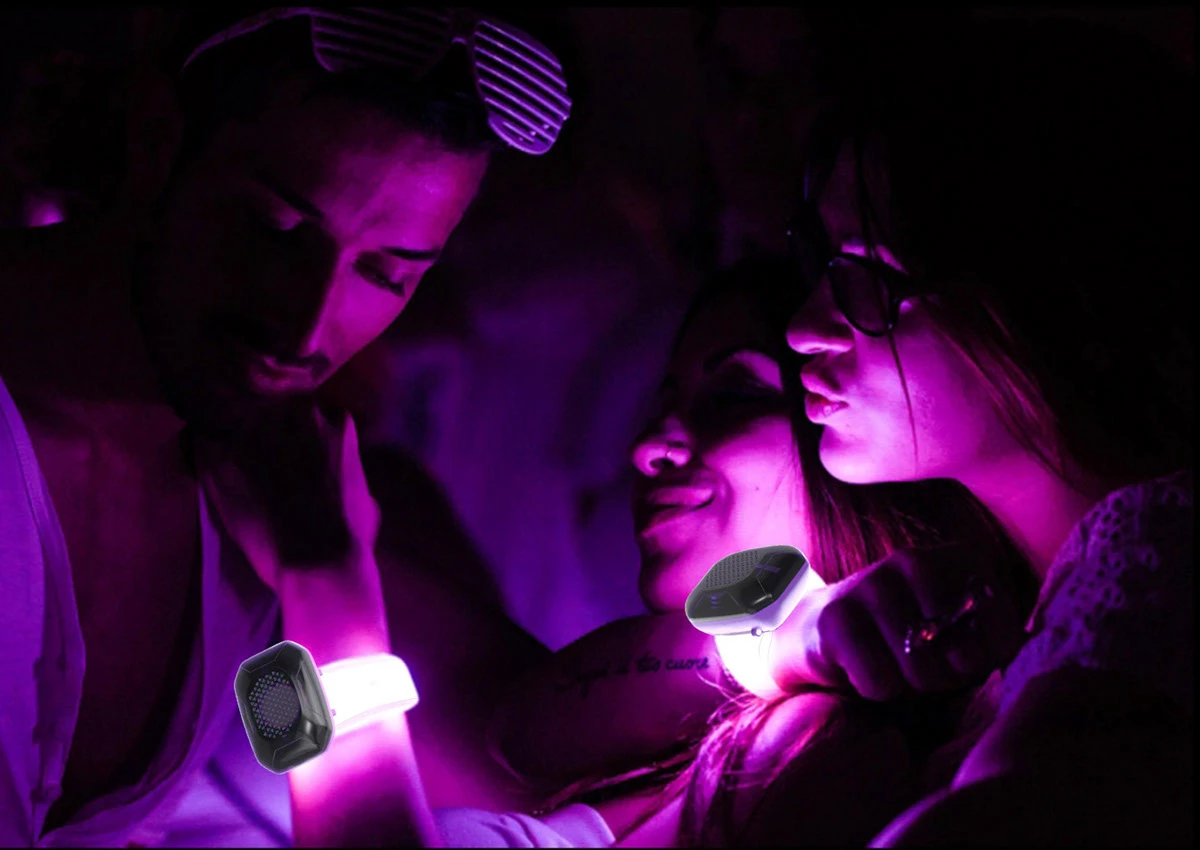
PODS in use, the device glowing in a darkened crowd, sound and light on the wrist.

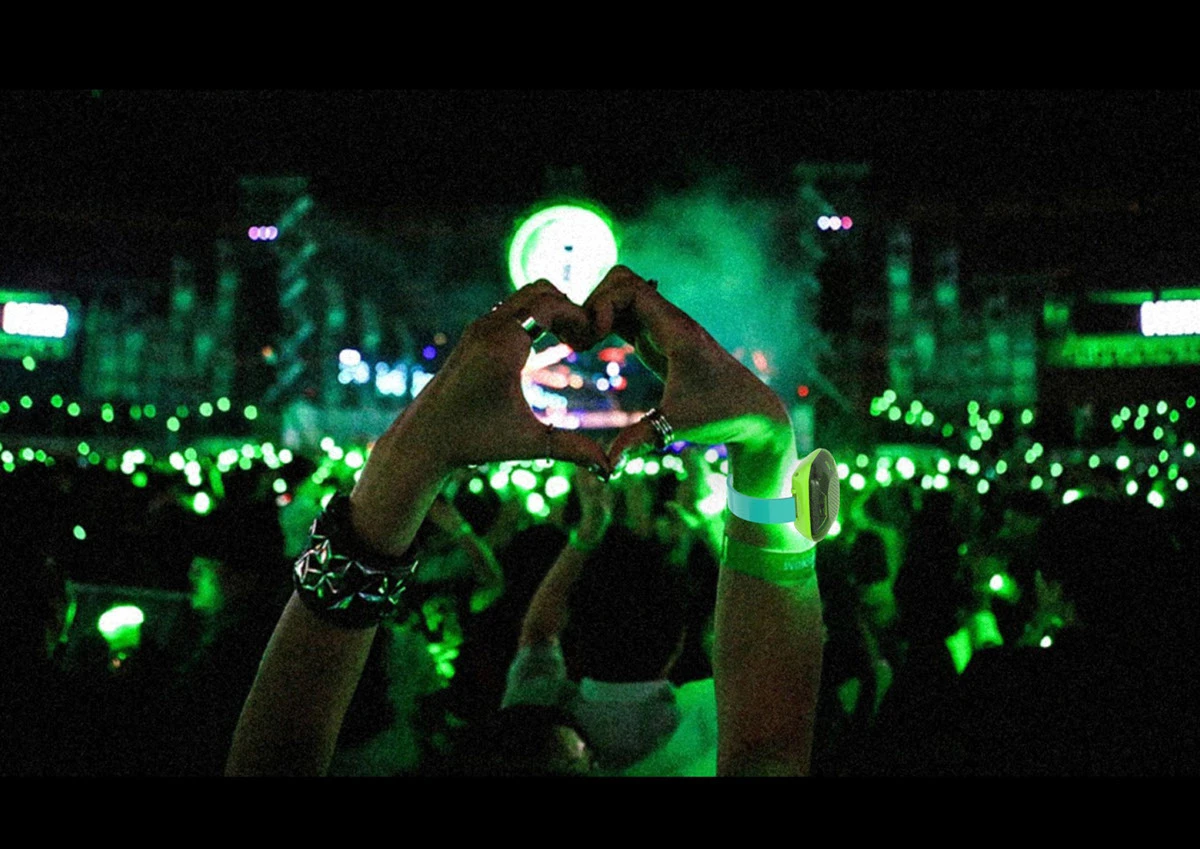
Every band a point of light, the wearables turning a concert crowd into a synchronised field.


Designed at IIT-Bombay for SoundRex, an early-stage hardware startup, as the design and development of custom wearables for large-format audio delivery. Published 2019. See the full project on Behance →

A few decisions I’d defend:

Where the speaker lives, the wrist, not the chest or neck. The brief was “a body-worn speaker,” which left the most consequential question open: where on the body. I ran an ergonomic and anthropometric pass across neck, biceps, torso and wrist, weighing how sound intensity carries, hygiene across shared single-event units, and how much each location restricts movement. The neck read loudest but was a choking/hygiene liability and felt like a “dog collar”; the torso slipped and disappeared under clothing. The call was the wrist: it’s the most familiar place to wear something, it keeps the device in the user’s own line of sight (so the light reads back to them), and a raised arm actually carries sound well in a crowd. The tradeoff is the wrist is one of the smallest surfaces to pack a speaker, battery and PCB into, which set the hard constraint the whole form and internal-architecture work then had to solve.
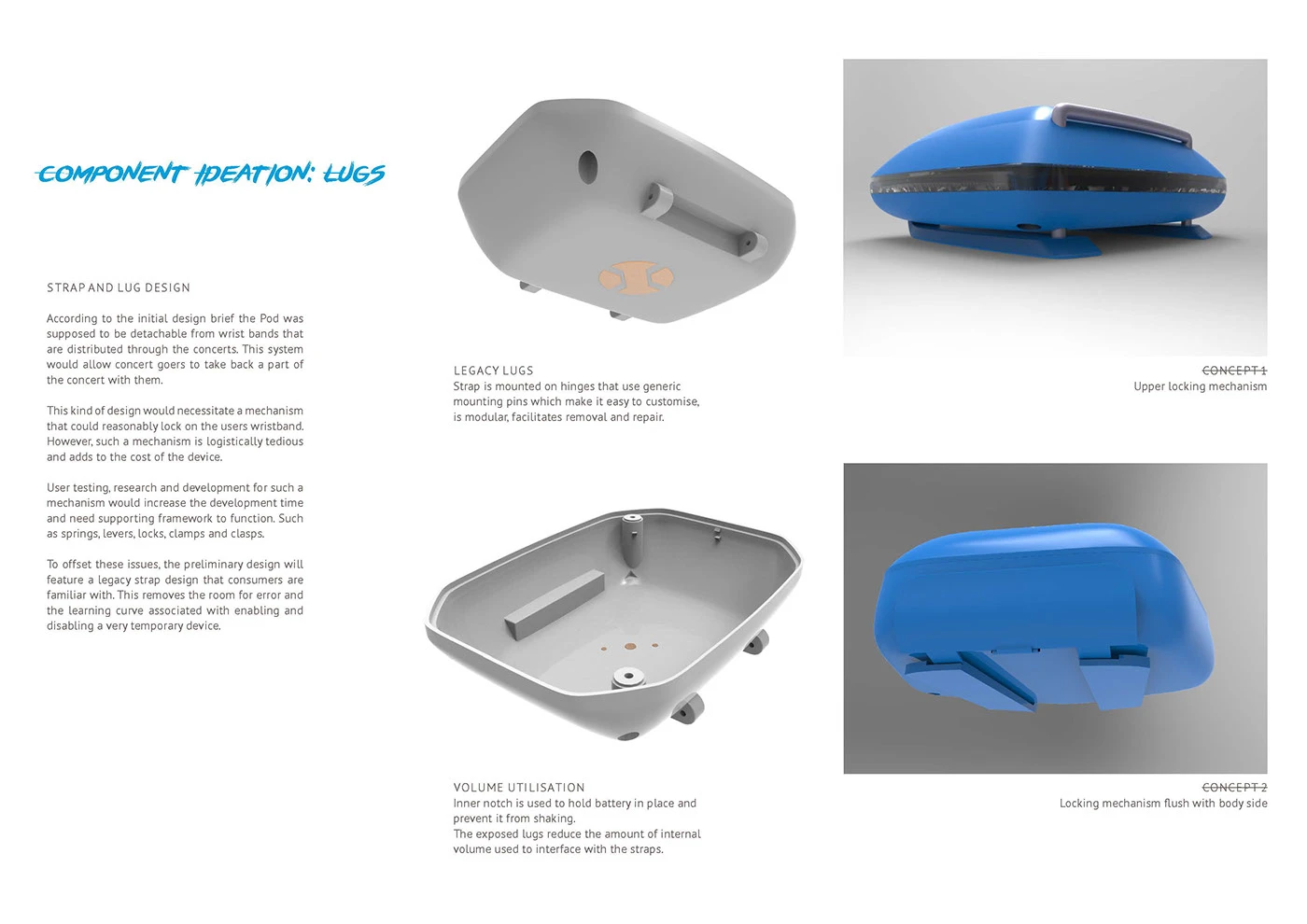
A familiar strap over a clever quick-release. The original concept was a detachable pod that clipped onto a separate validation wristband, letting fans “take a piece of the concert home.” I prototyped an active clip-release mechanism and it failed honestly: the thin release parts were fragile, prone to accidental removal, and warped in printing. I chose to ship a conventional, legacy silicone strap instead. The tradeoff was giving up a memorable take-home feature and some modularity, but for a device that’s handed out, worn for hours, and reclaimed across thousands of users, removing the learning curve and the failure point mattered more than the novelty. It also pushed the logistics model toward a stamped/validated single-use band rather than a fussy locking ritual at the gate.

Designing the system, not just the object. Because every unit was a startup’s asset to distribute, charge, track and recover, I treated the charging interaction and device logistics as part of the design, symmetrical contact charging (so a unit drops into a cradle either way up and still connects, instead of fiddly sockets that clog and need cleaning) and an RFID-linked ticket-to-device flow for handing out and reclaiming devices. The tradeoff was added cost and operational complexity per unit, but it’s what made the fleet of disposable-feeling wearables economically viable to run at scale.

← Back to work